We may receive a commission when you use our affiliate links. However, this does not impact our recommendations.

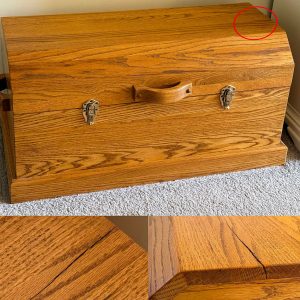
I had a project on which I needed to rout out a large area about 3⁄8” deep. It was a wooden case for a Nook reader, and the eReader had to fit into the excavation.
I had poor luck with my power router. It failed miserably. I had poor visibility of the bit, and the tool was extremely aggressive.
I decided to break out my large router plane, but the area to be routed was too large for it to span the opening from edge to edge.
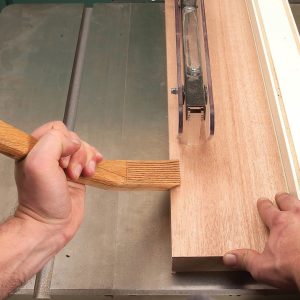
A light bulb went off, and I decided to make an acrylic auxiliary base for the router plane. The tool was already drilled with slots for an edge fence, so it was simply a matter of drilling the auxiliary base for 5⁄16” holes to align with these slots and another 11⁄4” hole for the router blade to pass through. I used two 1⁄4“x20 1” T-bolts, flat washers and wing nuts to fasten the base to the router. I had to counterbore the bottom of the base to fit the T portion of the T-bolt. I used a Forstner bit and chisel to shape the counterbore.
I eyeballed the hole that the blade came through – dumb. Let my experience be helpful to you. The blade came down on the plastic. Measure where the blade will come down before you drill.
I used a 3⁄8” acrylic sheet about 6 1⁄2” x 9 1⁄2“, but you can vary the dimension to suit your situation. Just make it wide enough to span the work edge to edge when at the extreme.
I was quite happy with the added stability of the router and I was able to plane the excavation quickly and smoothly. I think I will also find this auxiliary base useful to excavate fields in relief carvings. –Walter Lees