We may receive a commission when you use our affiliate links. However, this does not impact our recommendations.

When stropping my plane and chisel blades for that final honing, I always want to be sure that there is little to no chance that a freshly sharpened blade will slide off of the strop and accidentally hit something on my workbench. Additionally, I want to make sure that the strop is level and that it will not shift while I’m polishing sharp blades.
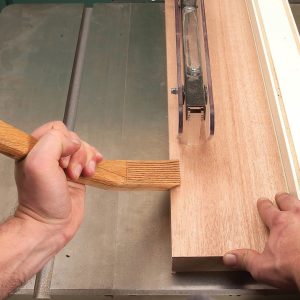
I found a simple way to keep my strops elevated and stable. After I flatten the block of wood I’m going to convert into a strop, I cut two rabbets along the bottom of the block on either edge. I’ve found 1⁄2” deep by at least 3⁄4” wide is about the right dimension.
This creates a large tongue that can be inserted in a vise rather than trying to squeeze the whole block in the vise to keep the strop stable, or positioning it between a tail vise and dogs atop the bench. It keeps the strop flat, stable and elevated above the workbench, reducing a chance strike on the bench or slipping free from the hold. –C. Travis Reese