We may receive a commission when you use our affiliate links. However, this does not impact our recommendations.
I don’t have a corporate-sponsored woodworking budget and – while this may come as a surprise to many – bloggers today are not paid a whole lot more than journalists yesterday. That means I probably follow the same budgeting methods in my woodworking as you do. I delay as many expenses as possible and read every e-mail newsletter from a woodworking source with the word “sale” in the subject line, always looking for a discount on the things I need. It’s ironic that many woodworkers get started because they are into the idea of living cheaply and making things themselves, but soon discover that this is not necessarily an inexpensive hobby.
This is part one of a 3-part series on how to cut woodworking expenses by at least 50%, as compared to the “dream shop” scenario that many woodworkers promote. I believe that it’s possible to have a lot of fun and make great progress in the craft without breaking the bank. Part one covers shop space and machinery. Part two will cover tools and materials, and part three will cover information and “other.” The common denominator in every section of these posts is to use creative problem solving at all times, which is a skill you want to hone anyway!
Shop space

Living cheaply, woodworking cheaply. It starts with shop space.
There’s a saying about land – “They aren’t making any more of it.” Workshop space could fall in that same, hard-to-find and hard-to-afford category. If you focus on just one area of woodworking in which to save money, focus on your shop.
One idea is to find shared shop space and split costs with other woodworkers. The drawback to this method is that unless you know your co-op partners well and are good at communication, you may find that you are always bumping into each other or getting into minor conflicts. Still, it’s worth checking with your local woodworking club or guild to see if co-ops are an option in your area.
I advocate for having your own shop, but being very smart about what you are paying for it. Utilize your personal network and community (in a nice way) as much as possible. Also, don’t just sit there and wait for someone to come to you. Put out an ad on Craigslist and via social media. Present the idea that you are a woodworker looking for unused shop space. You might be surprised at what is available, and how little you need to pay for it. I found a space this fall through my former college, and the cost is zero.
The most obvious answer is of course utilizing your existing space – whether it’s a garage or even an apartment. In my opinion (and I have tried) this answer is not ideal, because space is space and you are likely using it for something else already. Also, it can be quite isolating to work entirely on your own in what is basically a living space. But with enough flexibility and interest from neighbors and family, this can still be a great solution.
Machinery
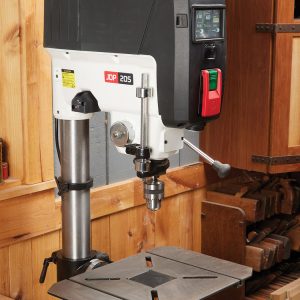
If you followed the shop space advice, you may find that some machinery is included in the bargain. Then it’s just a matter of getting familiar with what’s in place and making sure it’s safe to use.
But if you don’t have any machinery, the question is how much do you really need to buy? The easiest way to cut 50% in expenses here is to cut 50% of the items. You don’t necessarily need a table saw, for example. Handsaws will work. (Click here for “Handsaw Essentials” – the new book in our store.)
What about jointers and planers? These are very good to have, but realize that the hobby-sized models don’t get you all the way on every job. You will probably end up needing to find help in the broader community once again, so you may as well start that process now. If all you are doing is dimensioning lumber, you should be able to find some big machines to share through your local woodworking club or, again, via online channels.
Are you a woodworker who is already living cheaply?
Please leave your tips in the comments section below. And stay tuned for the next two posts in this series!
–Dan Farnbach