We may receive a commission when you use our affiliate links. However, this does not impact our recommendations.

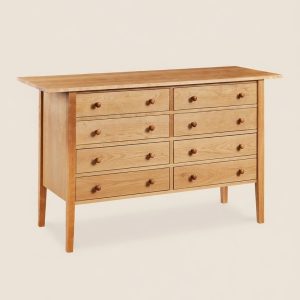
These last couple weeks I’ve gotten to break in my new Benchcrafted wagon vise while building a dry sink for the next issue of Woodworking Magazine.
The dry sink is enormous (it looked so small on paper). And every surface has passed under a handplane. The wide stock was prepped entirely by hand. The narrower stuff I processed first with a powered jointer and planer , and then handplanes.
I’ve been planing narrow and wide stock on edge, and the faces of wide panels. I’ve been planing with the grain, diagonally and across the grain with a fore plane, jointer plane and smoothing plane. I’ve been planing joinery with a plow plane and a fillister plane. And I’ve been planing mouldings with hollows and rounds and a beading plane.
As a result, I’ve been planing what seems like acres of pine. I’ve filled up the garbage can at the end of my bench twice with shavings.
So I feel confident in saying that the Benchcrafted vise has gotten a good workout with a lot of the tools you’ll find in a shop that blends both power and hand tools. And with each workholding challenge I presented to the Benchcrafted, it swatted them all down with ease.
The vise’s sliding block moves quickly along its threads, so you’re not spinning the wheel endlessly. And you can engage it with both subtlety and enormous force. The vise holds its position when you clamp a panel and want to plane across the grain but don’t want to bow the work , a delicate balancing act that would cause my old hillbilly wagon vise to slip.
And when I wanted to use the vise to really clamp something hard , such as a drawer side , it made the workpiece feel like it was physically attached to the benchtop. Totally solid. It also was robust enough to disassemble joints when used like a spreader clamp (this operation would pull my old vise apart).
So I’m sure you’re thinking: “Great, but is it worth $350?”
For me, absolutely. I spent about $250 to build my bench out of yellow pine, and so the $350 Benchcrafted vise means I still have a bench that works better than any other I’ve worked on in my life for less than half of the scratch I would pay for a high-quality commercial workbench.
Is it better than a traditional tail vise? So far, I think it is. We’ll see if the Benchcrafted sags in use like a tail vise does , only time will tell that. But what I like about the Benchcrafted vise compared to a tail vise is that I don’t have the large “no work” zone you get with a tail vise. You cannot pound or lean on a tail vise or it will quickly sag.
How does it compare to adding a quick-release vise with a big wooden chop? I think it’s a draw. I like having the full support of the Benchcrafted wagon vise, but I also really like the quick-release function of a steel vise. If you don’t have the money for a Benchcrafted vise, a quick-release vise in the end vise position of your workbench is the next best thing.
Some will balk at the price. Fine. This vise isn’t for you. Me? I’m sick of the low-quality vise hardware that has passed through our shop during the last decade. It used to be easy to buy fantastic vises from England and America. But now you are rolling the dice when buying new vises. I’ve seen decent new vises from the emerging economies, but I’ve also seen some stuff that went right back into the box and back to the seller. Junk.
There are no regrets with the Benchcrafted. It is impeccably made, overbuilt like something from the USSR’s space program and flawless in use.
And that’s good enough for me.
– Christopher Schwarz