We may receive a commission when you use our affiliate links. However, this does not impact our recommendations.
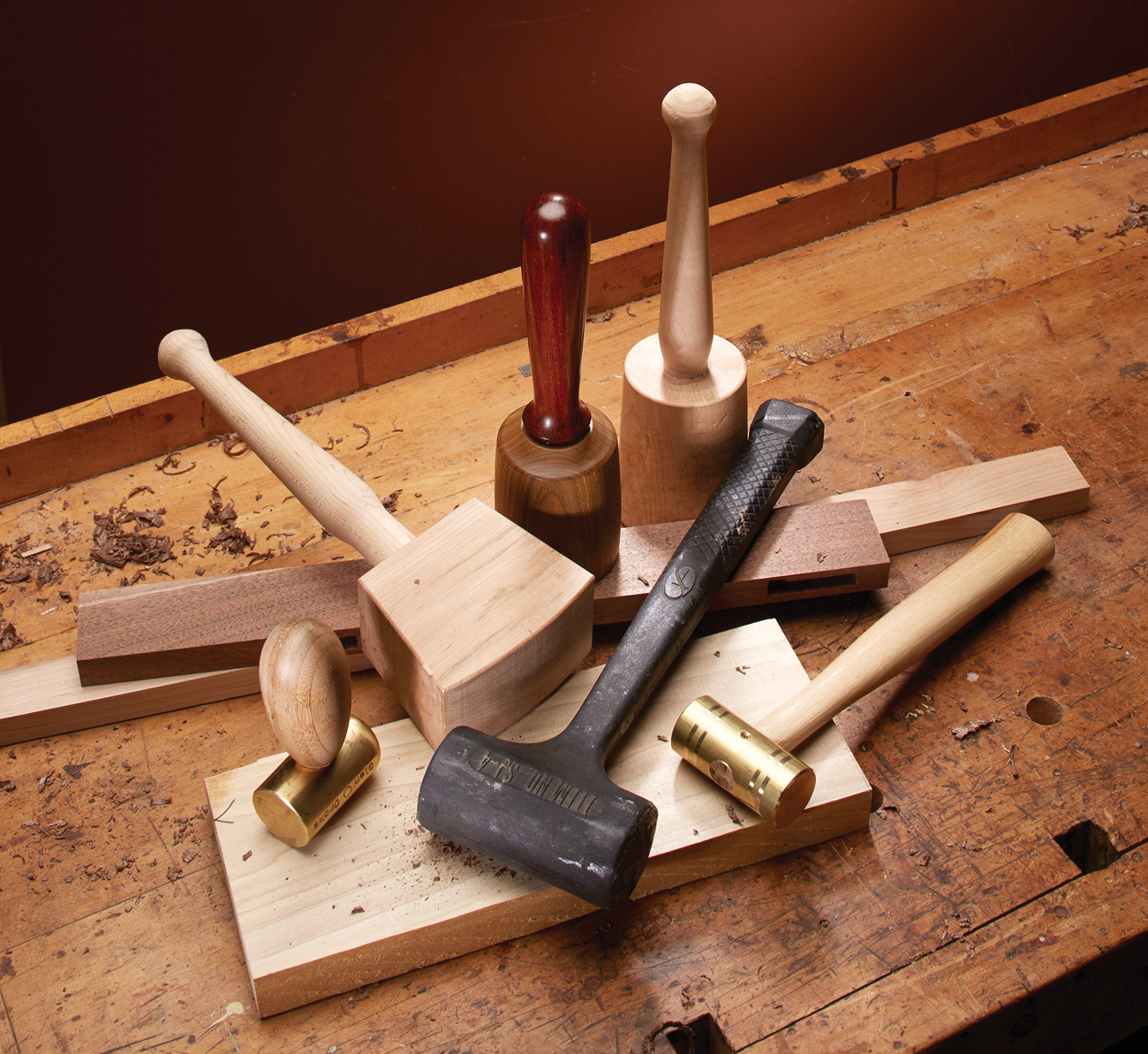
The better beater. Woodworking mallets come in all shapes and sizes, and in many different materials. The secret to choosing the right mallet for the task at hand is to evaluate the head.
It’s easy to get a handle on which whacker to choose.
If you’ve ever whacked a carving tool or pounded a joint using your palm or the side of your fist – I know you have because we’ve all done it – you know the result: a sore hand and unfinished business.
This is why we need mallets. And while a mallet is not supposed to compensate for dull tools or force an ill-fitted joint closed, it is a much-needed woodworking tool. In reality, any device will do in a pinch – I once used an old baluster for drawer dovetailing. But what mallets do we need, and why? Where do you begin?
eLearning: Learn the benefits of the mallet and other hand tools in “Mastering Hand Tools,” by Christopher Schwarz.
More on mallets: Read all of the articles about mallets on the PopWood website.
Head Case
Mallets generally fit into one of three categories. To determine what fits where, we need only examine the head. Traditional joiner’s mallets have large rectangular-shaped heads, the key word being “large.” These mallets are typically wooden and have a variety of duties in a woodshop, including assembly and, as the name implies, joinery.
The head of a carver’s mallet – most often turned or round in shape – is generally smaller in size. These mallets run the gamut when it comes to size and weight, and of what material it’s made. There are really two camps within this category: mallets made with wooden heads and those that have brass (or other metal) as the striking surface. A carver’s mallet of the non-brass variety is sometimes used for many of the duties covered by a joiner’s mallet, but you seldom see the reverse. And mallets with brass or other metal heads are most often used when carving.
The third group of mallets could be best described as “other.” This category is a catch-all for rubber mallets, dead-blows and the like.
Shape & Size for Joinery
Joiner’s mallets generally are two-piece construction with a handle fit into the head, either firmly attached or with the head sliding over a tapered handle. The head is large, wide and almost rectangular in shape. The business ends of the head are end grain, and are cut at an angle to establish better contact with the item being struck. The sides of the head are most often straight and flat, and can be used too. But I don’t recommend using mallet sides when you need to apply extra force.
The larger head of a joiner’s mallet allows woodworkers to easily strike their project or chisel – the required precision of that strike is lessened due to the wide surface. And the flat surface decreases the chance of a bad strike that could deflect the tool, especially if that tool has a round end.
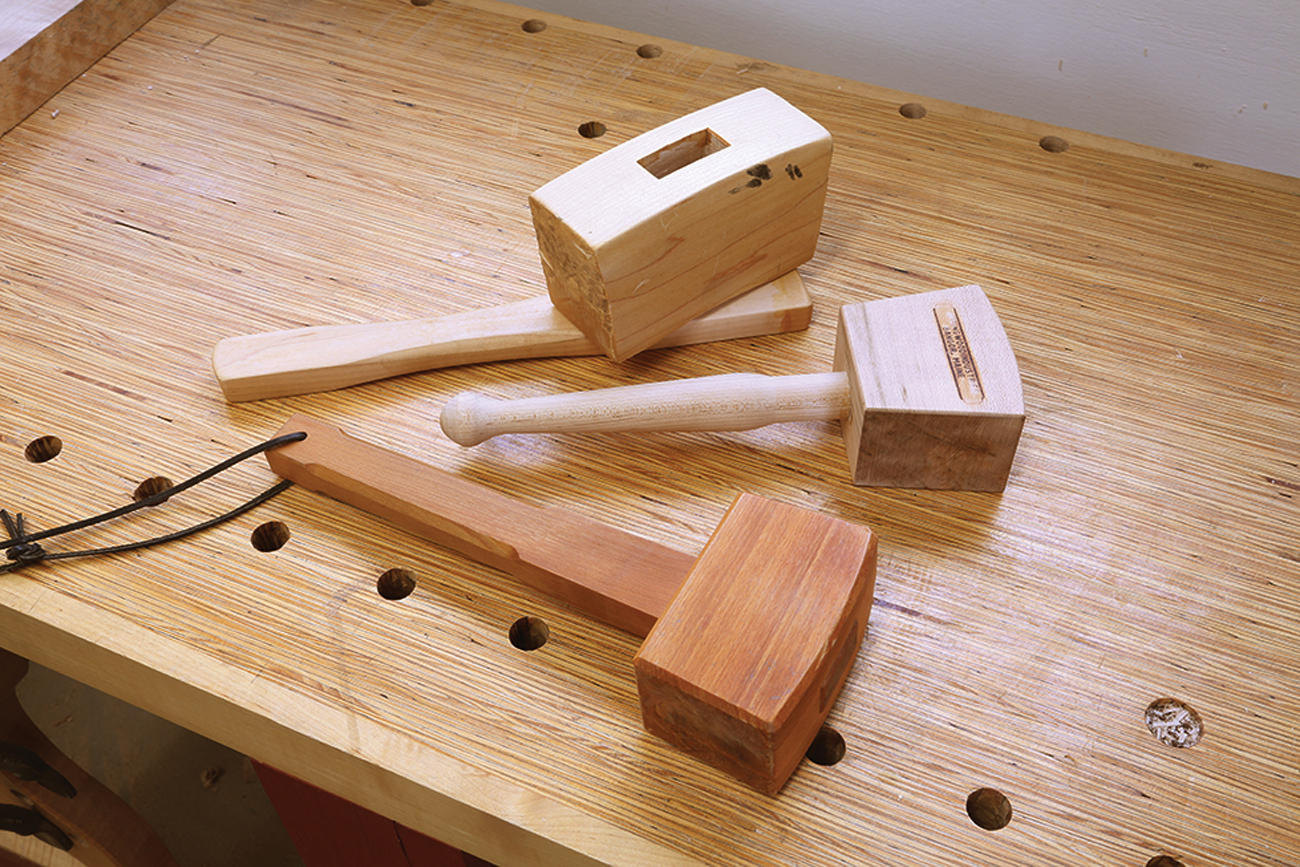
Variations. The overall shape of the joiner’s mallet is common, but sizes and weights vary dramatically.
Joiner’s mallets weigh anywhere from 12 ounces to nearly 24 ounces. (Timber framer’s mallets, which are similarly shaped, can be as heavy as 32 ounces.) A weight of 16 ounces or more offers plenty of punch for mortising work or when cleaning the waste out from between dovetails.
If you increase the mass of the head (larger size or added weight), you decrease the amount of force needed to do the work, but you increase the need for stamina and strength to use the tool over long periods of time. Some manufacturers add weight by soaking the mallet in boiled linseed oil. This also preserves the wood and keeps fiber crushing (and mallet degradation) to a minimum.
Beech is a favorite hardwood for many joiner’s mallets, but you’ll find maple, too. It’s best to use tightly grained, dense hardwoods.
What’s in a Name
Round mallets are known as carver’s mallets. But is that name suited to the tool? I’m willing to bet that there are more carver’s mallets doing joinery work than being used to assist with carving. (I began woodworking using a carver’s mallet; it was an old baseball bat that was shaped into a mallet.)
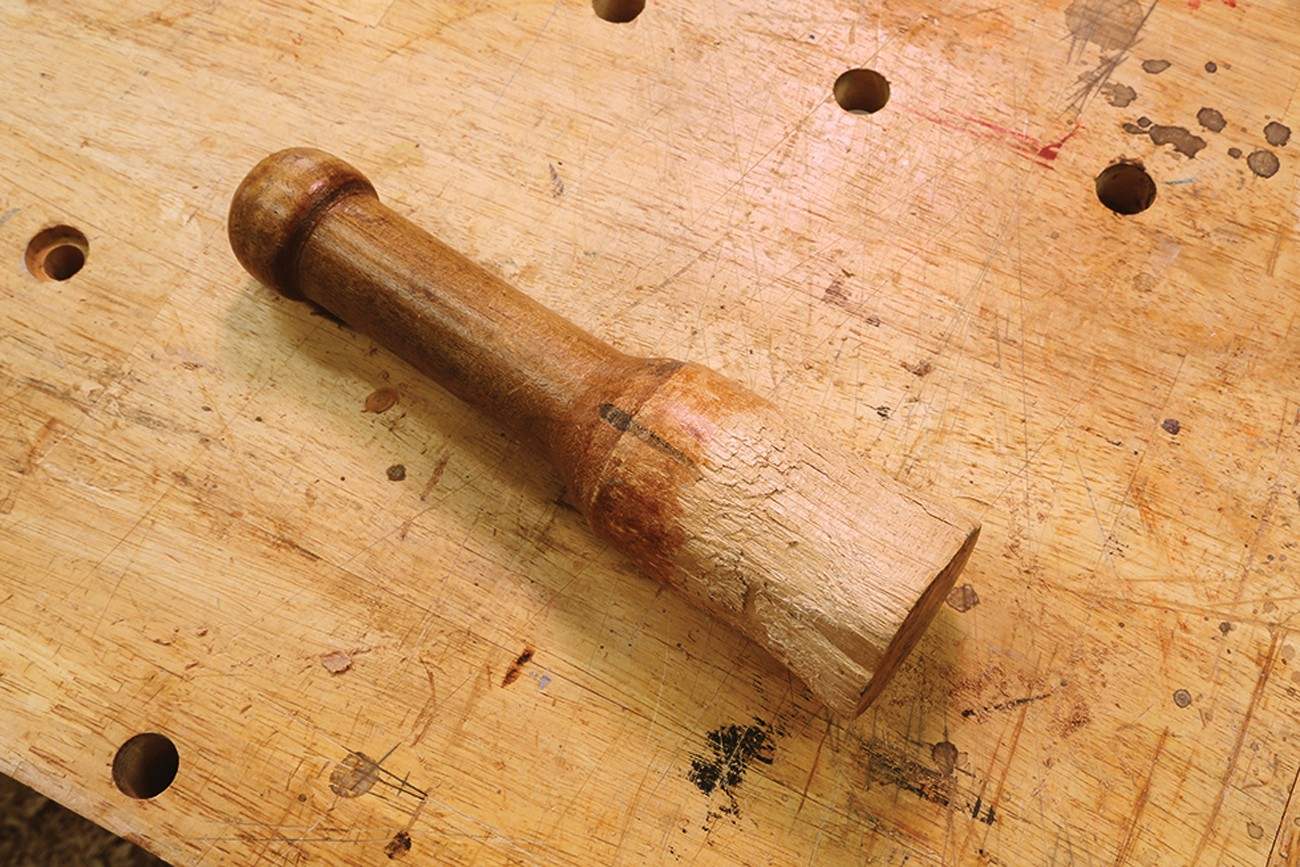
Old friend. Any wooden mallet will give up the ghost over time and need to be replaced. My first mallet has been retired, but it could still do the job if necessary.
Why not use a carver’s mallet for joinery? If you strike the round end of a chisel with a round mallet, you can easily deflect the blow in a direction other than that intended. While using the lighter mallet strikes typical for carving, that is an advantage. When making joints, it’s not necessarily a good thing. But if your mallet work is advanced, this is seldom a problem.
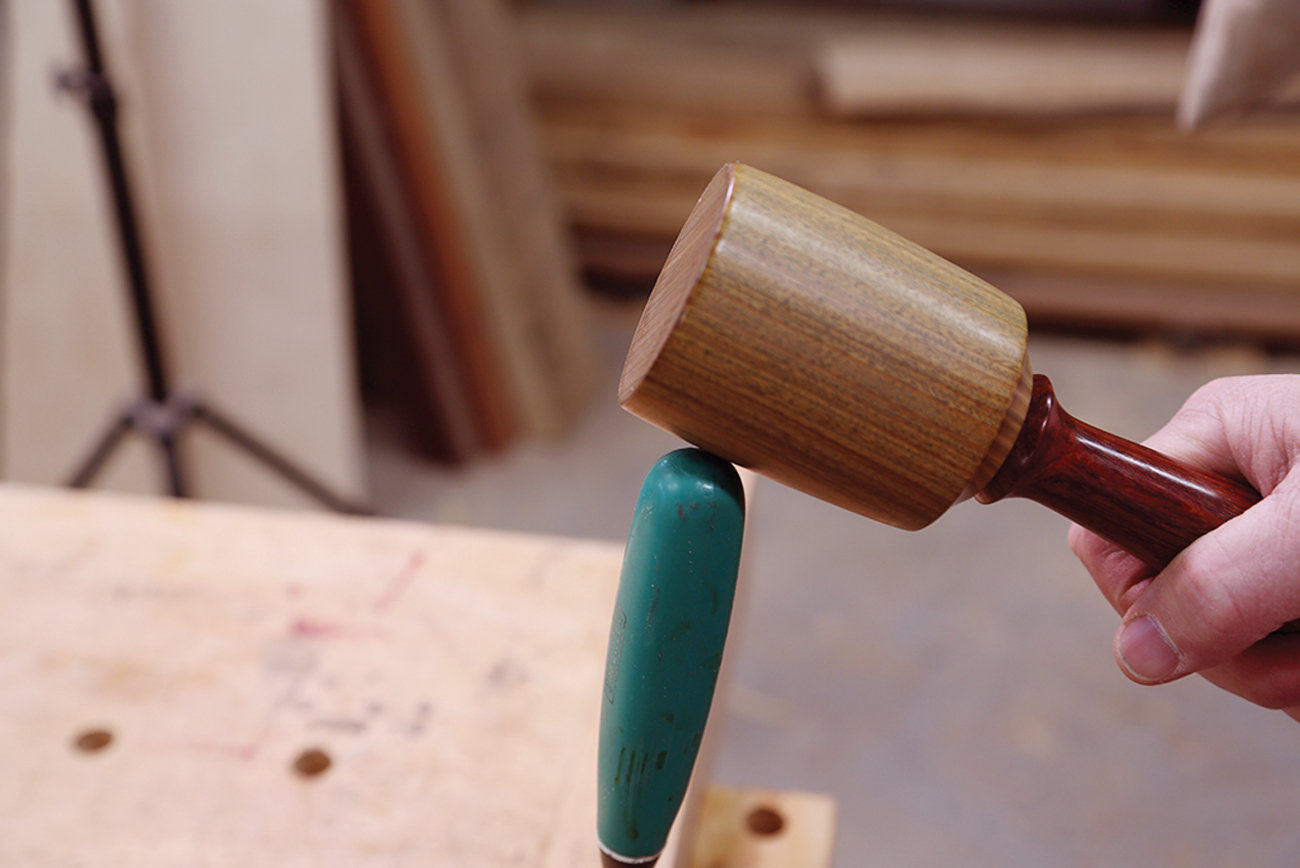
Direction deflection. A round mallet deployed against a rounded chisel handle can easily deflect the tool and result in a bad strike, which could turn your project to waste.
If you’re using a round-head mallet for joinery work, the weight needed to make the tool work its best is on par with that of a joiner’s mallet. Unlike a joiner’s mallet, however, you’re more apt to see many different wood species used for the head of a carver’s mallet. (Lignum vitae is a popular species in commercial mallets.) I believe this is because carver’s mallets are popular shop-made tools; it’s easy to raid your scrap bin for a variety of materials.
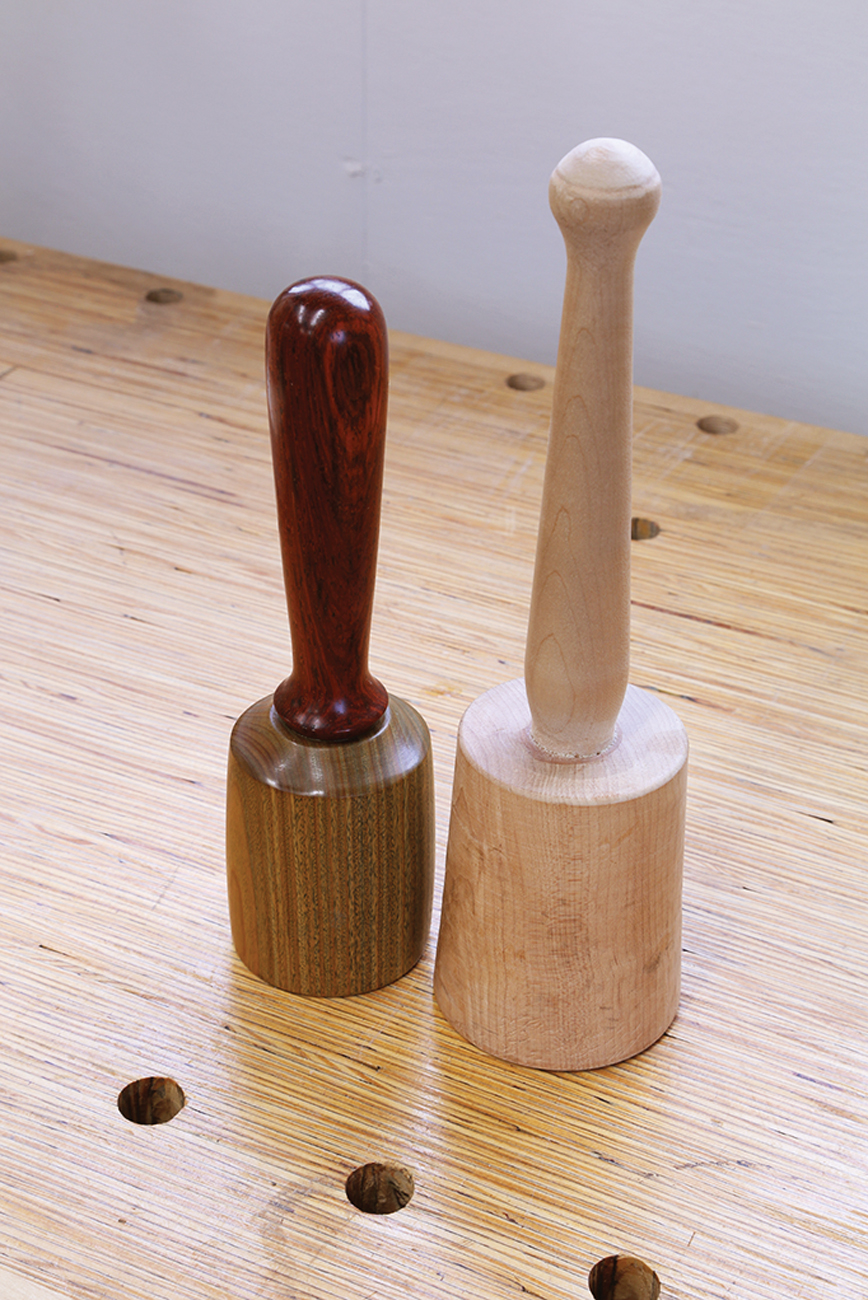
Your way. Because carver’s mallets are so easy to turn in a home shop, they are often created from a variety of different wood species, including exotics. And different species can be mixed or matched.
In many carver’s mallets, the handle-to-head intersection is integral because the mallet is turned from a single piece of stock. Combining two pieces (different species or not) requires the use of a joint. Many shop-made mallets use a simple connection such as a dowel joint. Some commercial carver’s mallets use a mechanical fastener buried below the surface.
Brass Changes Tasks
Whenever I see brass as the head of a carver’s mallet (bronze or steel, too), I think carving and light-duty work. I don’t think joinery. Brass mallets, in my opinion, are not to be used to whack your chisels when dovetailing or other joinery work. Light taps associated with carving are the perfect use of brass-headed mallets.
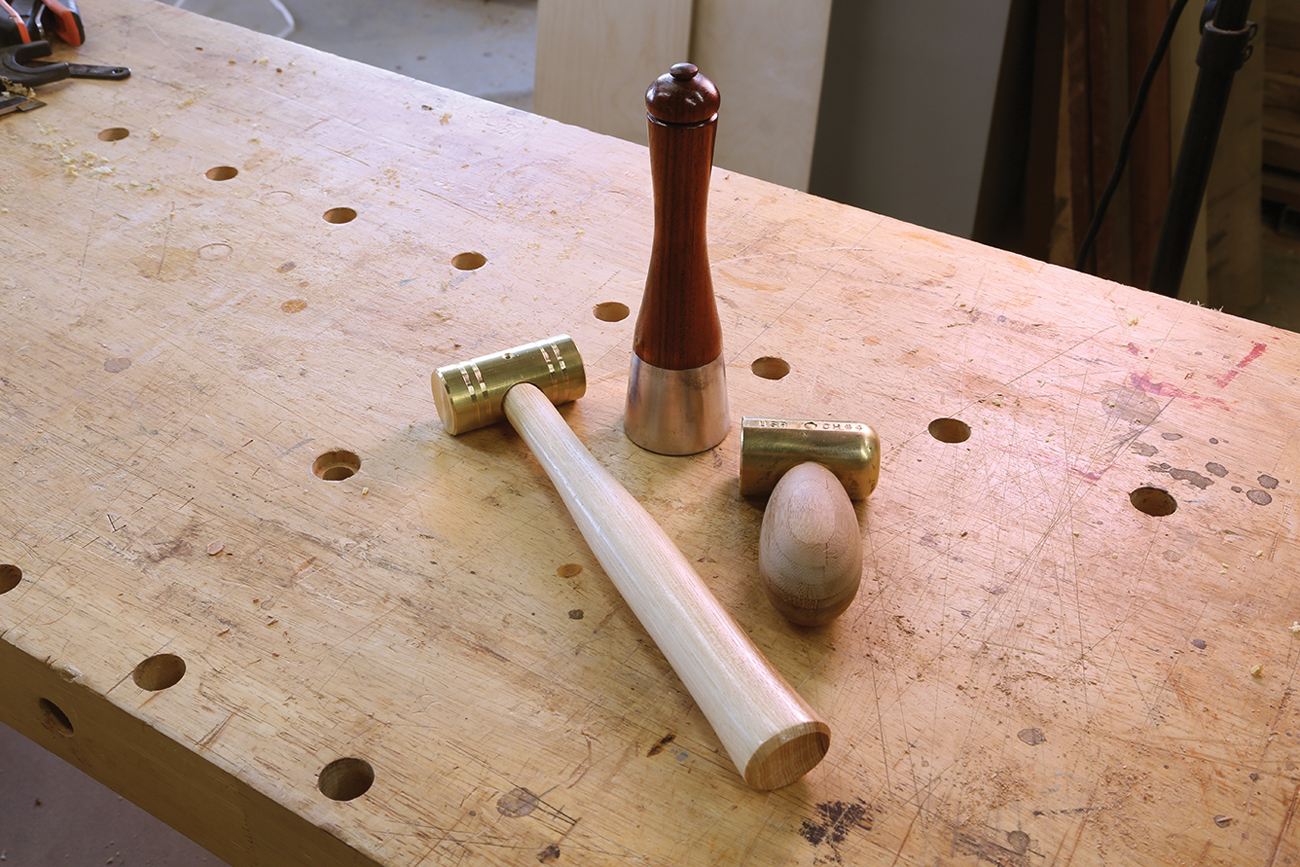
Use finesse. Metal-headed mallets aren’t for whacking out a set of dovetails or chopping mortises; these mallets are for swinging gently such as when carving.
Metal striking your chisels mushrooms the handles, which can eventually split them – this is also why regular hammers should be avoided for joinery work. There is one exception: If your chisels have metal rings or caps at the ends, striking the tool with a metal mallet is acceptable.
Brass mallets can weigh as much as joiner’s mallets and other carver’s mallets. Smaller brass-headed mallets – shaped similar to hammers – generally range in weight from 6 ounces to 14 ounces. (You can find examples that weigh considerably more.) In my opinion, these mallets are perfect for light work, including but not limited to driving pegs and setting plugs.
Build a Better Mousetrap
Toolmakers are seldom content with available products. Mallet manufacturers are no different. This desire to make better tools has led to a few mallets that incorporate different materials or processes beyond a good soaking in boiled linseed oil.
The most well-known modern change to a carver’s mallet is to wrap the business end with urethane. These mallets are quieter in use, but I’m not sold on them as a replacement for a joinery mallet. Why? When I use urethane-headed mallets, I don’t feel the transference of force from the mallet to the chisel is a one-to-one ratio. The softer urethane absorbs some of the force, which requires me to do more work to complete the task. Urethane mallets, however, are easier on your tools. If there’s other science involved, it’s beyond me.
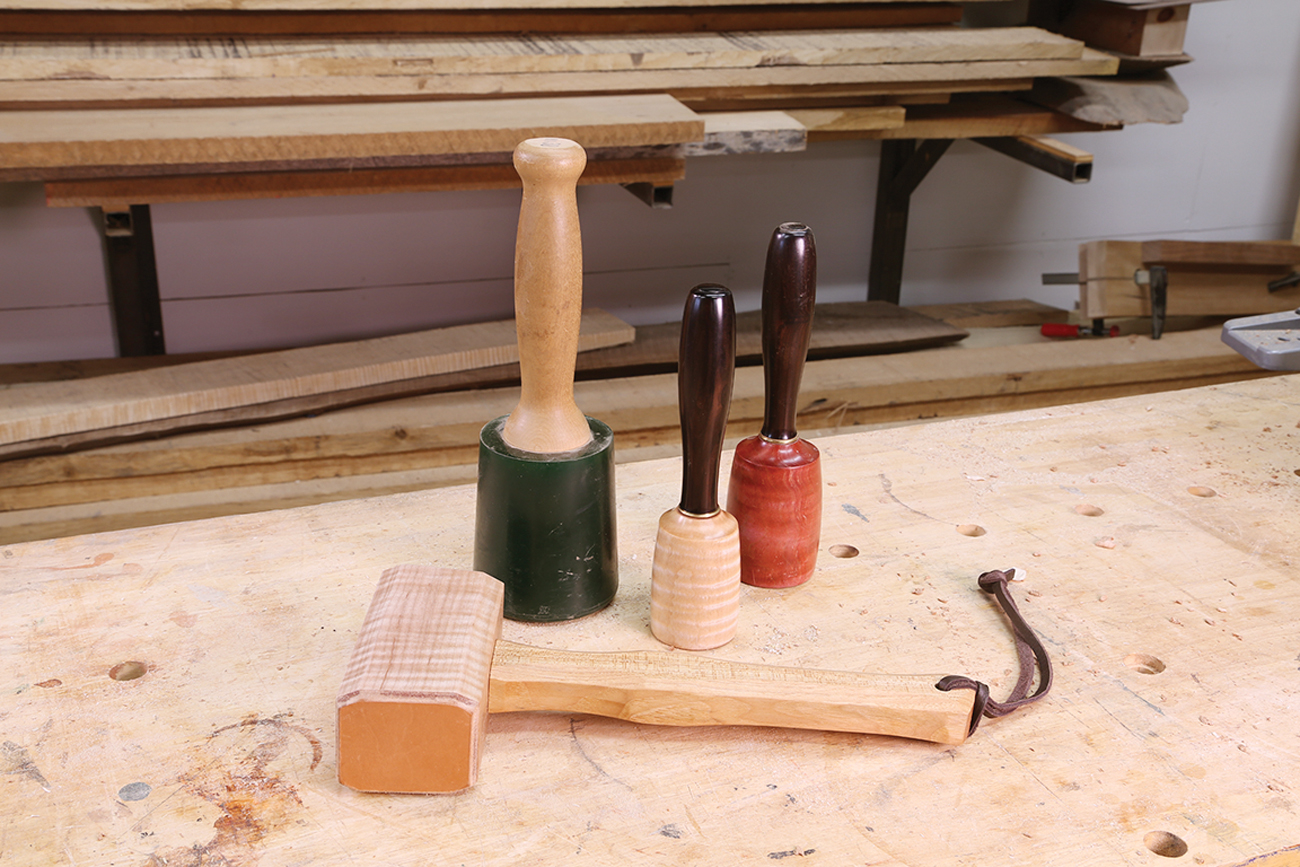
Build it better. Mallet makers are determined to make better tools. Here you see urethane-wrapped, infused and leather-faced mallets. Urethane is easier on your tools while the infused mallets are more resistant to wear.
At the other end of the scale are the infused mallets made by Blue Spruce Toolworks. An acrylic-polymer resin fills the wood pores completely to prevent the fibers from crushing when used. The resin also adds weight. I’ve chopped many dovetails using one of the round mallets and find it exceeds my expectations.
Other Shop Mallets
When it comes to assembling projects in my shop (or taking them apart), I prefer a mallet with less punch. A urethane-wrapped mallet works well for this, but I like a dead-blow hammer or a rubber mallet. In my experience, wood mallets, no matter the design, tend to crush the wood or leave dents when striking projects.
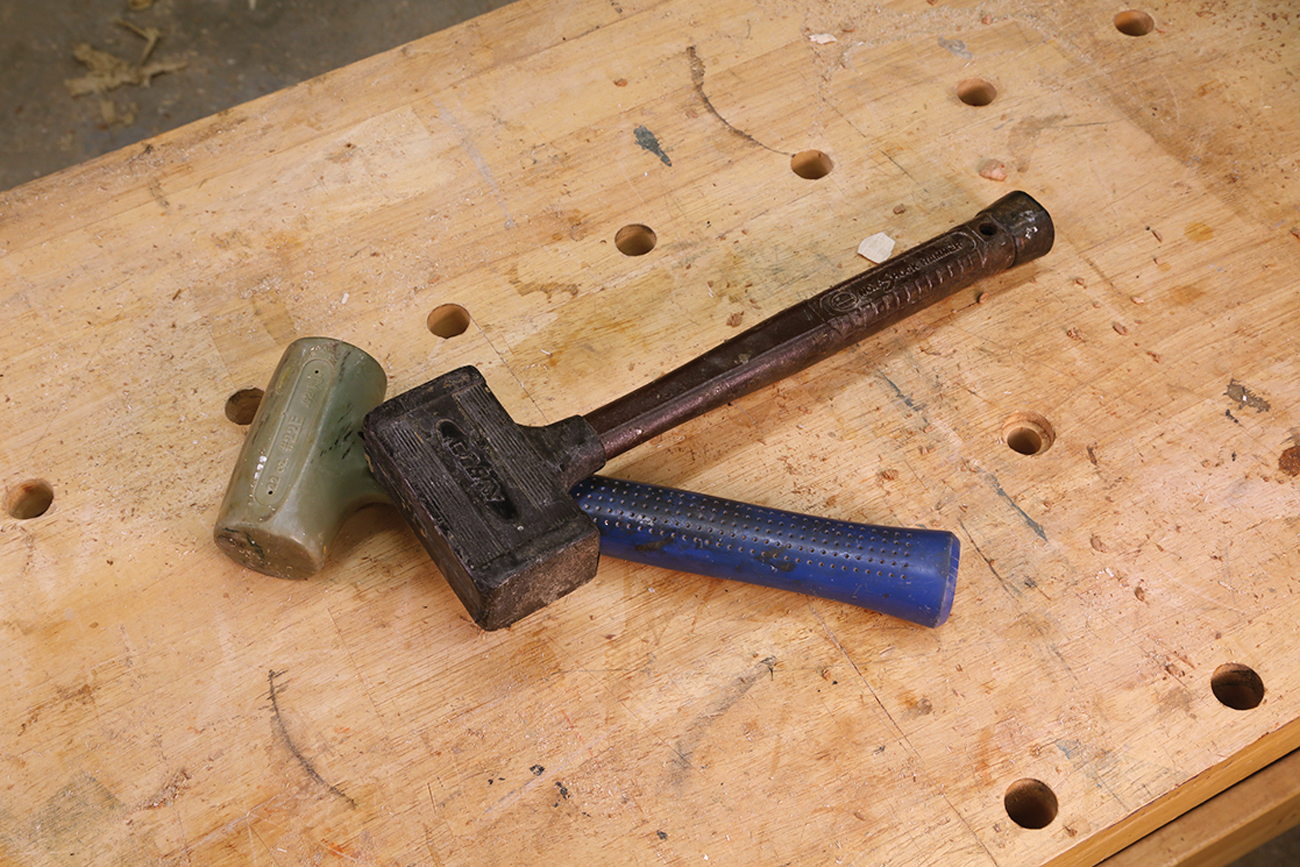
Less bounce. Dead-blow and other rubber mallets are designed for minimal rebound and are less likely to mar your workpiece.
Our shop dead-blow is made of urethane (no surface bruising) and has shot loaded inside to keep the mallet from bouncing off the project. Minimal rebound makes better use of the applied force. The same holds true for a rubber mallet, except there is no shot inside. In my home shop, a rubber mallet is the tool I use for assembly or when flushing the edges in a panel glue-up. One of these shock-absorbing mallets should be included in your tool arsenal.
Drive it Home
If you’re using a carver’s mallet for joinery, you owe it to yourself to try a joiner’s mallet. When I switched, I discovered that my dovetail work improved. (It could have been the result of better strikes, or it could be as simple as added weight.) If you switch, keep your carver’s mallet, too. It works best for finesse work and can be the force behind carving tools. And every shop should have a dedicated mallet for grunt work, so stop bruising your project (and your hands) and get a dead-blow. Brass mallets? Sorry, I don’t own one.