We may receive a commission when you use our affiliate links. However, this does not impact our recommendations.

My first Stanley shoulder plane (a No. 93) was the worst plane I ever bought. The sole was more than 1/8″ out of alignment, and it took me a couple hours on a belt sander to even get the tool working.
That dog of a tool was built during the sunset days of Stanley’s U.K. plane production, and I’ve always imagined that my plane had been made by someone who was drunk, hungover or having a stroke.
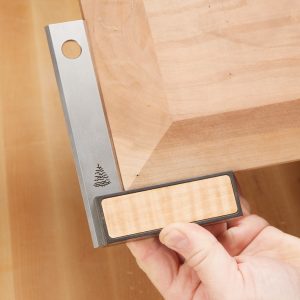
So when the new Stanley Sweet Heart No. 92 showed up on my desk last week, I was skeptical. (Note: This tool is a loaner, so it will go back to Stanley after it has had a workout at Woodworking in America.) I took the tool out of its sealed box and checked the sole with a machinist square.
Ah-ha! The sole was out of truth. Probably by a couple thousandths of an inch. Maybe more.
This morning I decided to look at all the shoulder planes in our shop, and compare them to the Stanley. And here’s the funny thing: Almost all of them have some problems with their soles. (The exception was the Veritas Large Shoulder, which was dead square. I didn’t get to check my Lie-Nielsen 073 because it’s at home.)
Most of these planes have performed fairly well, but they all have problems when you try to do persnickety work. You have to massage the position of the cutter to get the results you want. (The exceptions being the Veritas, which is always dead on, and my Lie-Nielsen at home, which is also always bang-on.)
So I decided to true up the soles of several shoulder planes today and see if it improved their performance. I’m sure there are better ways to true up a sole than what I am about to describe, but this following procedure works.

I took a 2×4 and trued it up on the jointer. Then I stuck a piece of 40-micron sharpening sandpaper to the face of the 2×4 and secured this to my benchtop with holdfasts.
Next I took a piece of plywood and set it on my bench in front of the sandpaper. I rested the shoulder plane on the plywood, hung its sole off the edge and stroked it back and forth over the sandpaper. After about a minute of work I checked my result. The sole was improving. About three minutes later, the sole read dead flat to my square.
Then I sharpened up the A2 iron. The unbeveled face of the iron was dead flat, which is always a nice surprise to see. It polished up quickly. Perhaps too quickly for A2 , I’ll have to get this iron tested to see how soft it is. In any case, I’m not complaining.

I checked the plane for bed errors (it had none) and put it to work.
I quite like the tool, but I like rhino-horn-style shoulder planes (the horn is the proboscis at its toe). Megan Fitzpatrick reported that the plane had too many sharp arrises. I agreed and knocked them down with some sandpaper. Robert Lang didn’t like the way the tool fit his hand when he pulled the plane toward him , the horn dug right into his palm.
He also wished that the rear curve on the top of the plane was 1/4″ shorter. And actually, after looking at photos of the original No. 92 and 93, the rear curve used to be shorter.
I hold my shoulder planes differently , I didn’t have a problem and found it comfortable.
So here’s the bottom line: I’m going to make this plane my primary user until I have to give it back to Stanley. It’s worthy of a hard workout.
Shoulder planes are difficult tools to make (ask any toolmaker), so the fact that Stanley’s is so close is a good sign about what I might find as I set up the rest of the tools in the line.
The No. 92 is available from a wide variety of retailers for about $110 to 120, including Woodcraft and Amazon (which has the right model number but an outdated photo).
Other Shoulder Plane Resourses
– Read (for free) the article I wrote about premium shoulder planes for the Fine Tool Journal. It’s now available on WKFineTools.com. When you are really bored, check out all my articles on WKFineTools.com here.
– I wrote a good deal about shoulder planes in my book “Handplane Essentials,” which is available in our store. It’s a nice, big, made-in-the-USA trip into the world of planes.
– David Charlesworth knows more about setting up shoulder planes than anyone I know. His Lie-Nielsen DVD “Furniture Making Techniques: Five Topics” contains an excellent section on shoulder planes.