We may receive a commission when you use our affiliate links. However, this does not impact our recommendations.
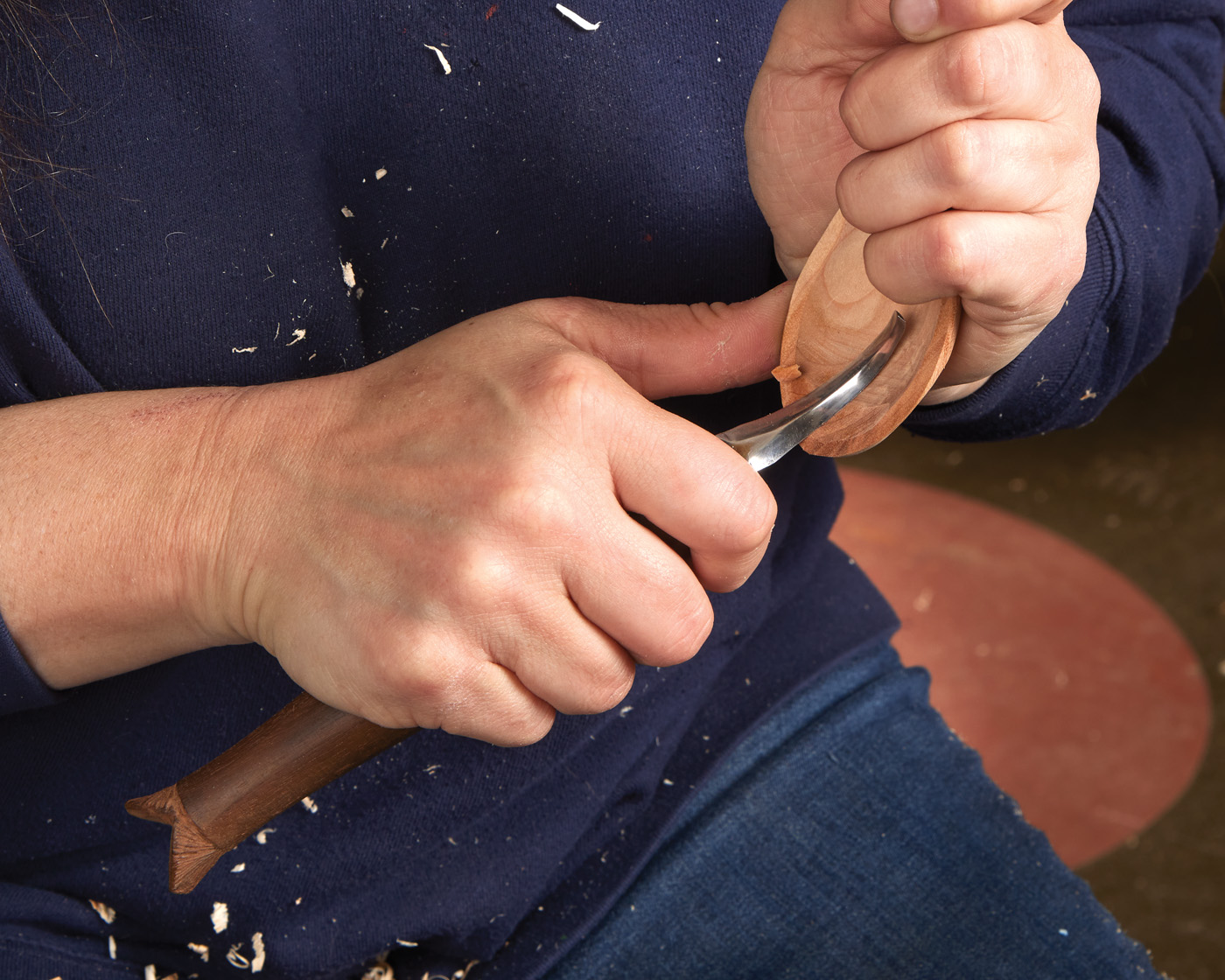 Get a razor edge on tools that are tricky to sharpen.
A dull tool is a dangerous tool. A lot of people struggle with sharpening their tools, but it is important to keep your tools sharp. A sharp tool requires less effort to use, and offers more control.
With that said, it’s helpful when you’re first learning to sharpen an edge to take a marker and highlight the bevel of your tool. This can help you better identify if you have hit your knife’s edge or if you have missed any spots.
Tools Needed
- Sharpening stones
- Leather strop
- Honing compound
- 5/8“ round dowel
- 5/8“ scrap block
- Wet-dry sandpaper
(400-1500 grit) - Sharpie Marker
Sharpening Your Hook Knife
Once the bevel of your hook knife has been colored with the marker, place the knife in a holding device. I am using my pattern maker’s vise for this step. When sharpening my hook knife, I like to use wet-dry sandpaper wrapped around a 5/8“ scrap block and a 5/8“ round dowel. Start with 400 grit sandpaper and work up to 1500 grit.
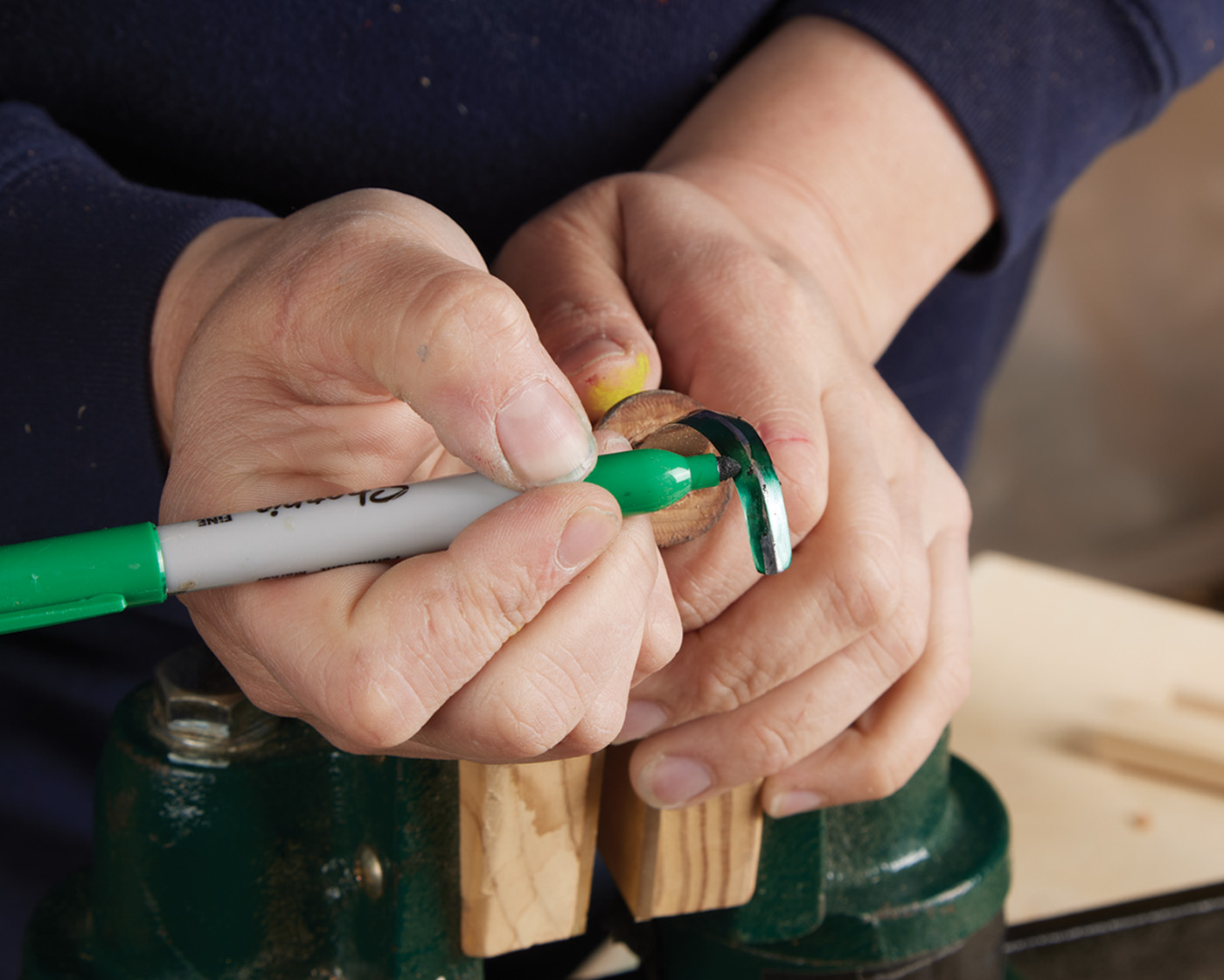
1 Mark the knife’s edge with a Sharpie marker.
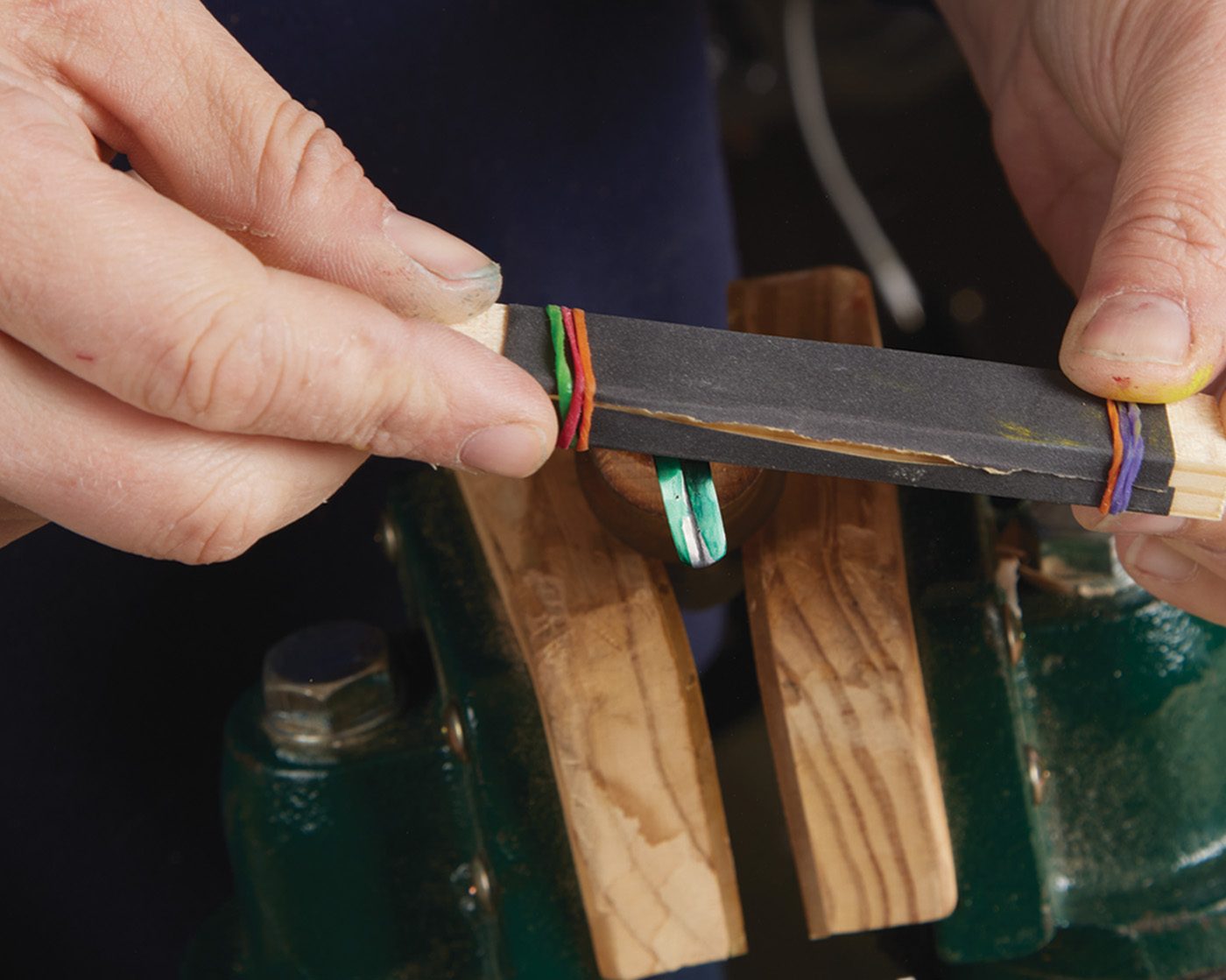
2 Use a flat scrap block wrapped with sandpaper to work the outside of your hook knife.
Working the outside bevel of the hook knife first, take the scrap block and gently push it from the center of the hook knife towards the outside cutting edge. Repeat this motion across the entire bevel of the hook knife until all of the marker color has disappeared. Check on the other side of the hook knife to see if you have raised a burr. If you have not raised a burr, color your bevel again, and repeat the steps until you can feel a burr. When you feel a burr, flip the hook knife around. You want to knock off the burr you just created and nothing more. To do this, take the round dowel and gently glide it along the inside of your hook knife. Feel the edge. Once the burr has disappeared, flip the hook knife around and continue the same steps through your remaining grits.
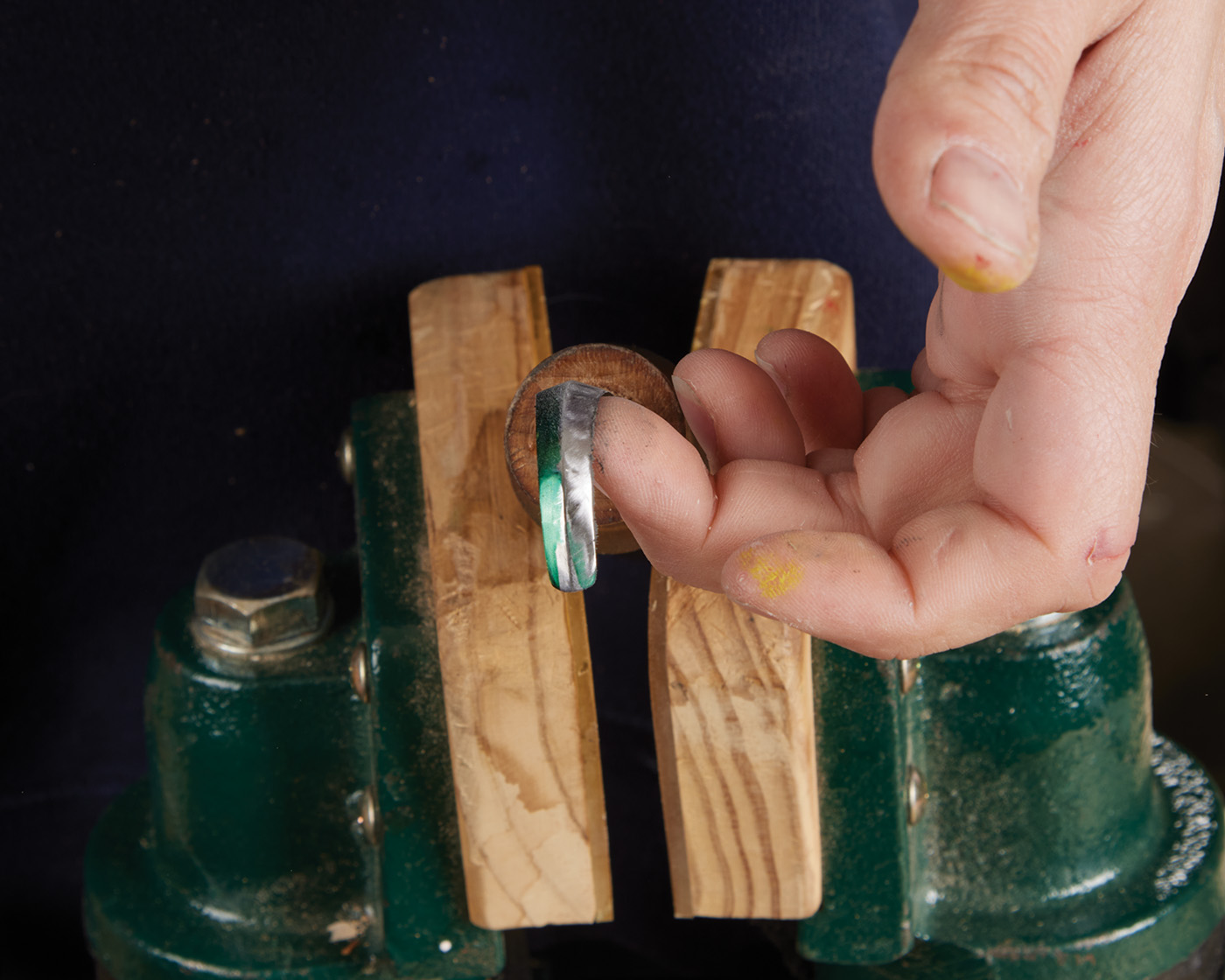
3 Feel the other side of your knife to see if you have raised a burr.
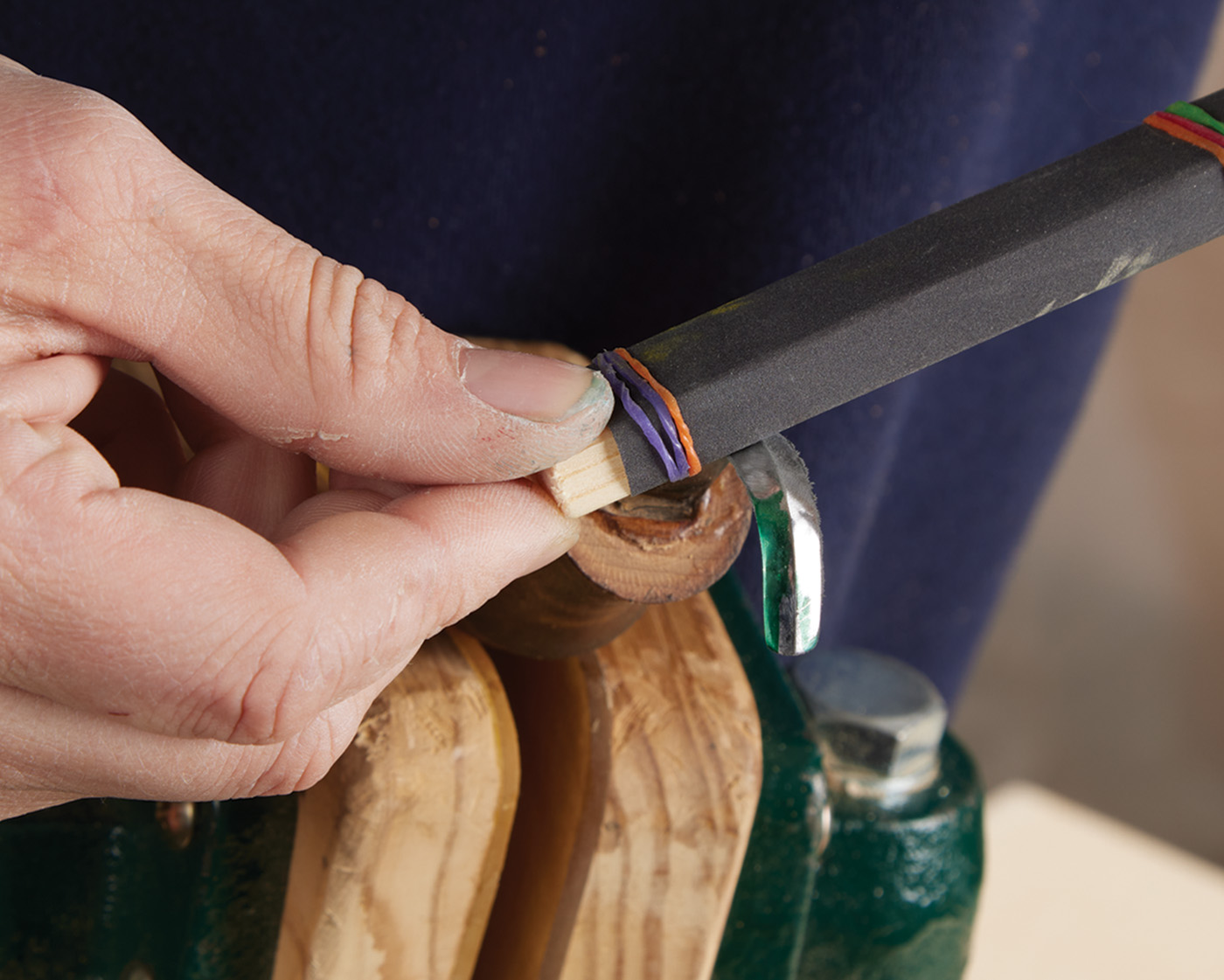
4 Angle the sandpaper scrap block to match the angle of your hook knife’s edge. Start with the block on the center of your hook knife’s bevel.
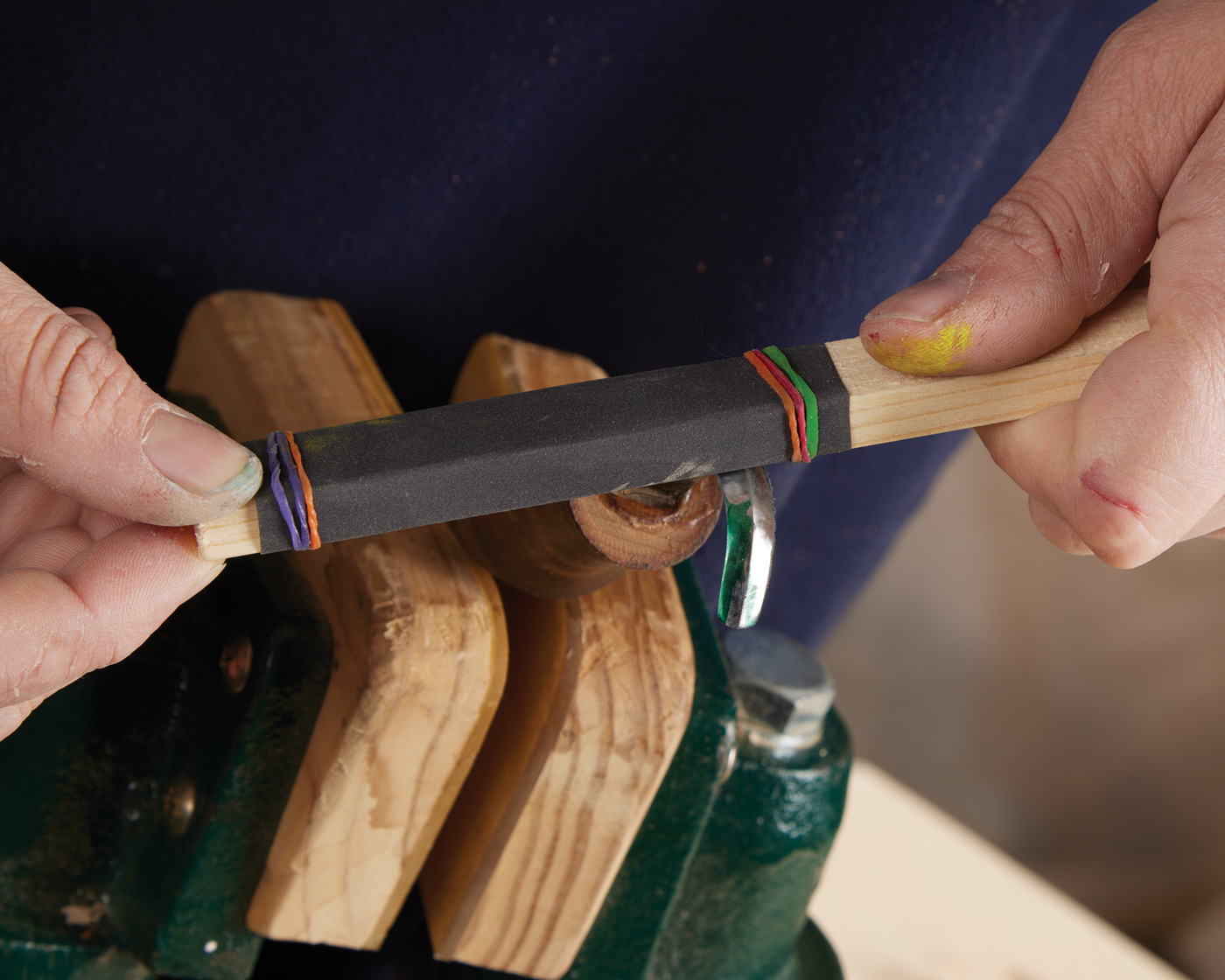
5 Drag the block, following the bevel angle, towards the outside edge of your hook knife.
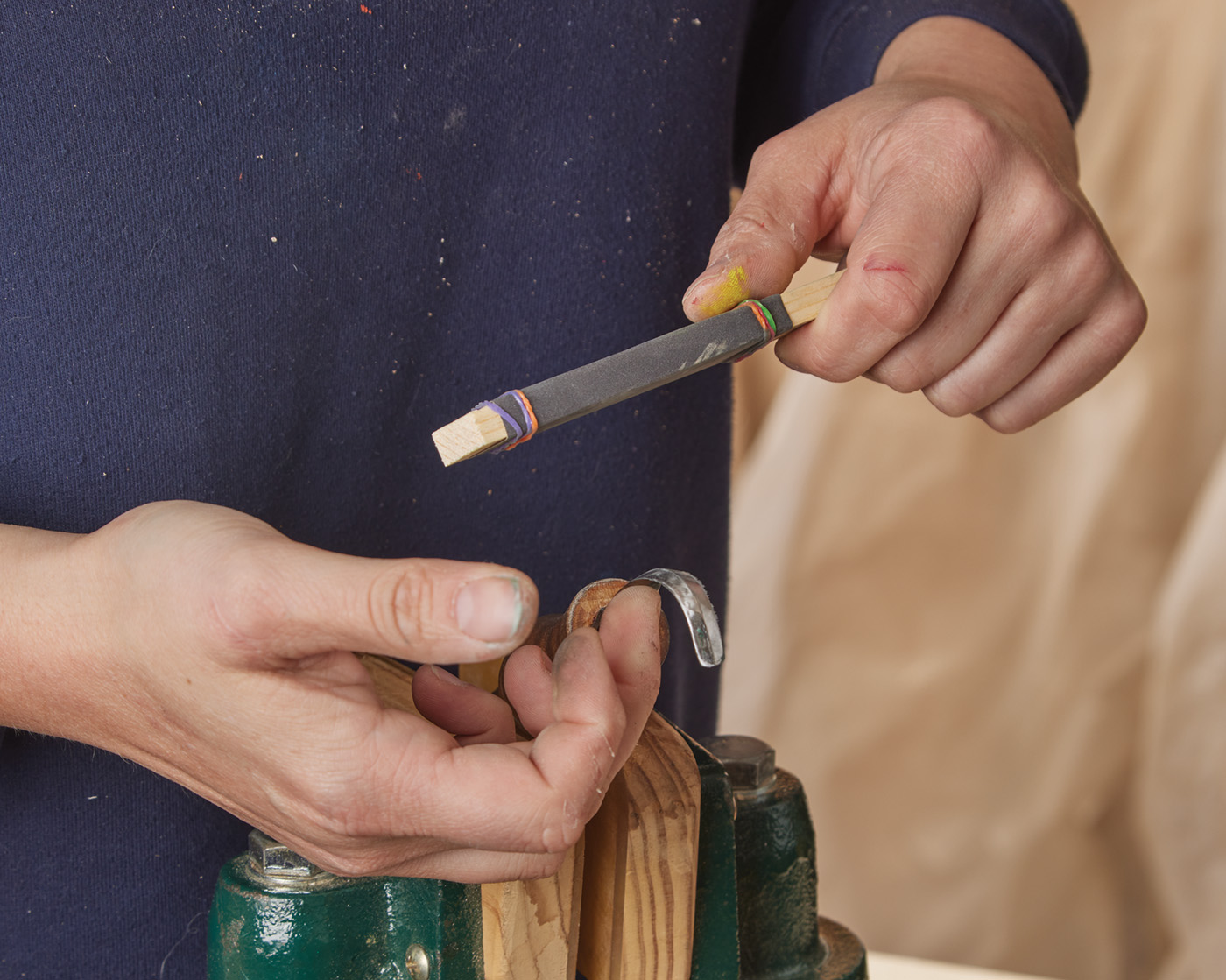
6 Use your fingers to feel for a burr.
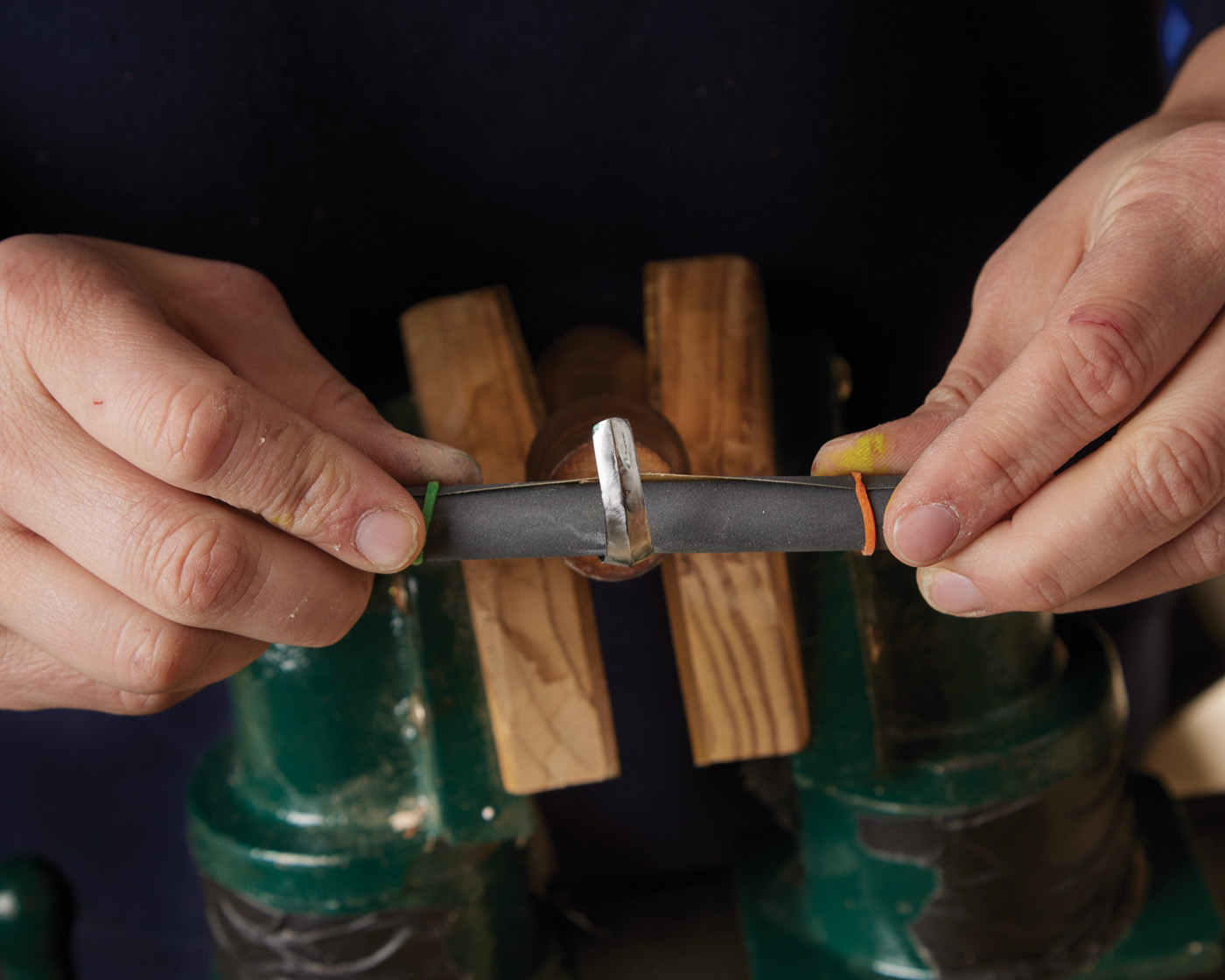
7 Use the rounded dowel to knock the burr off the inside edge of your hook knife. Start with the dowel in the center of your knife.
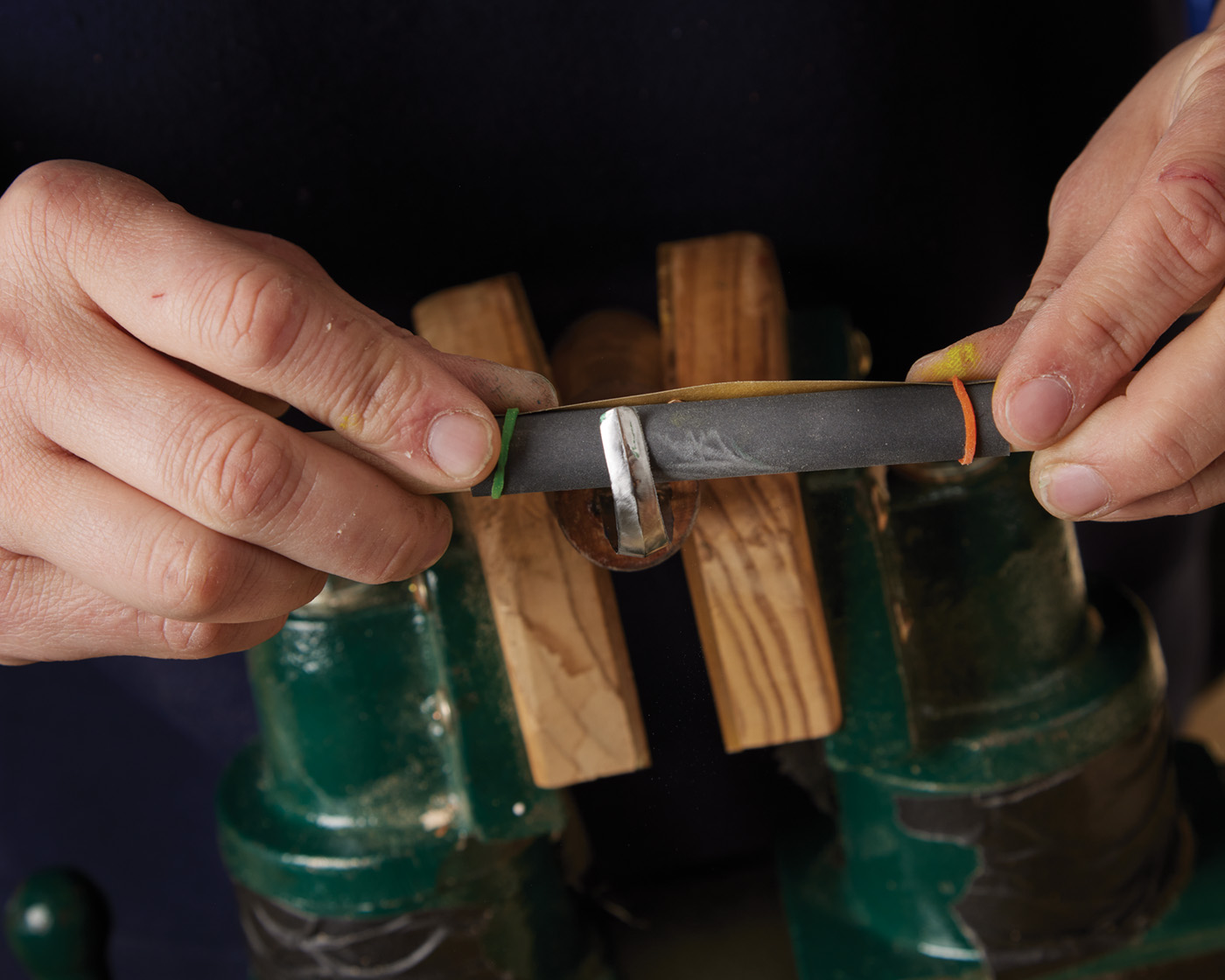
8 Pull your dowel towards the outside edge of the hook knife.
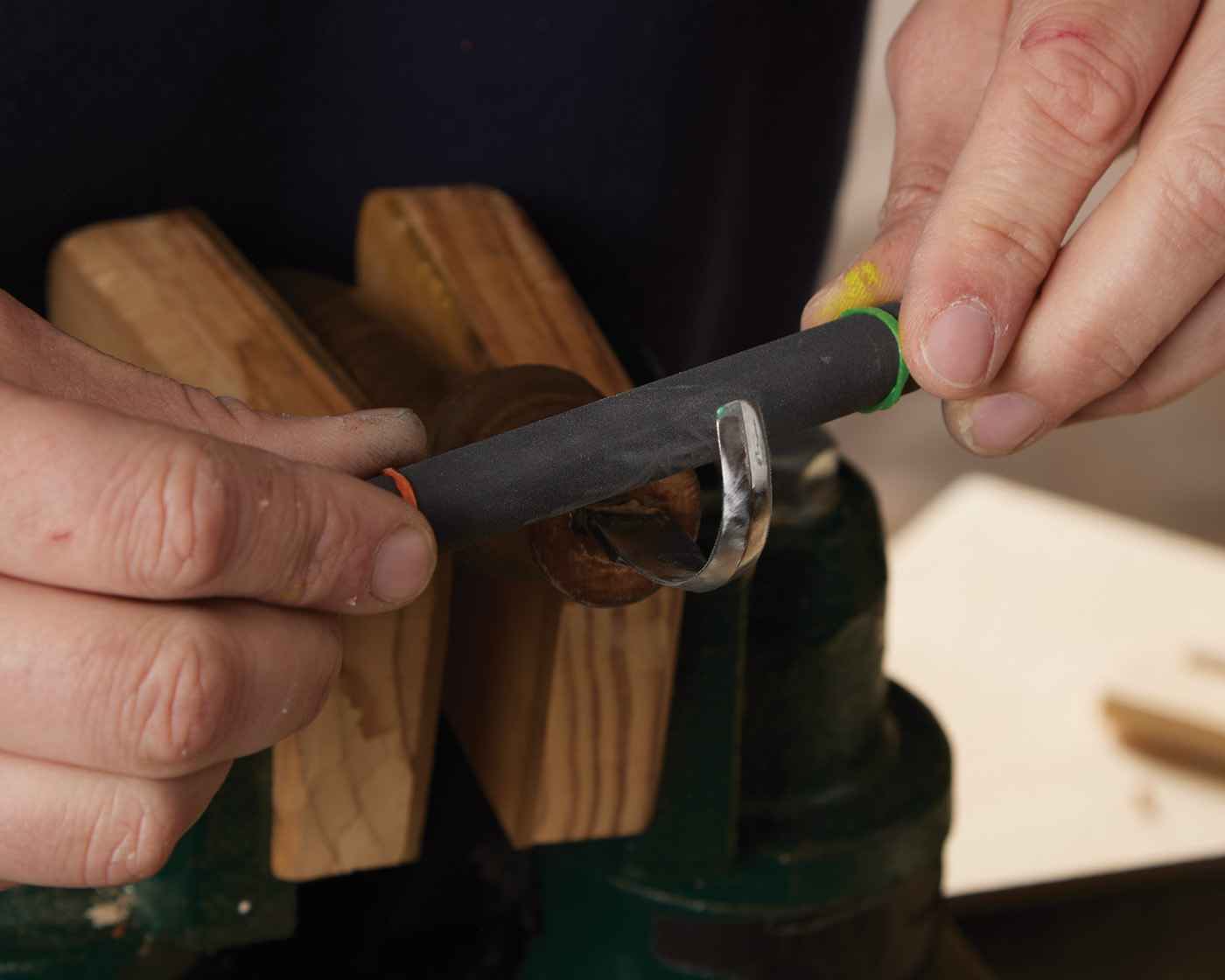
9 Repeat the steps until the burr has just disappeared.
The final step is to hone your edge. I use a leather strop and honing compound to do this. My leather strop has a long flat surface and a rounded edge so that I can work most gouge profiles front and back. Apply a fresh layer of honing compound to your strop. Using the same motion as with the sandpaper, strop the edge. The surface should shine such that you will be able to see your reflection on your gouge when you are done stropping both sides.
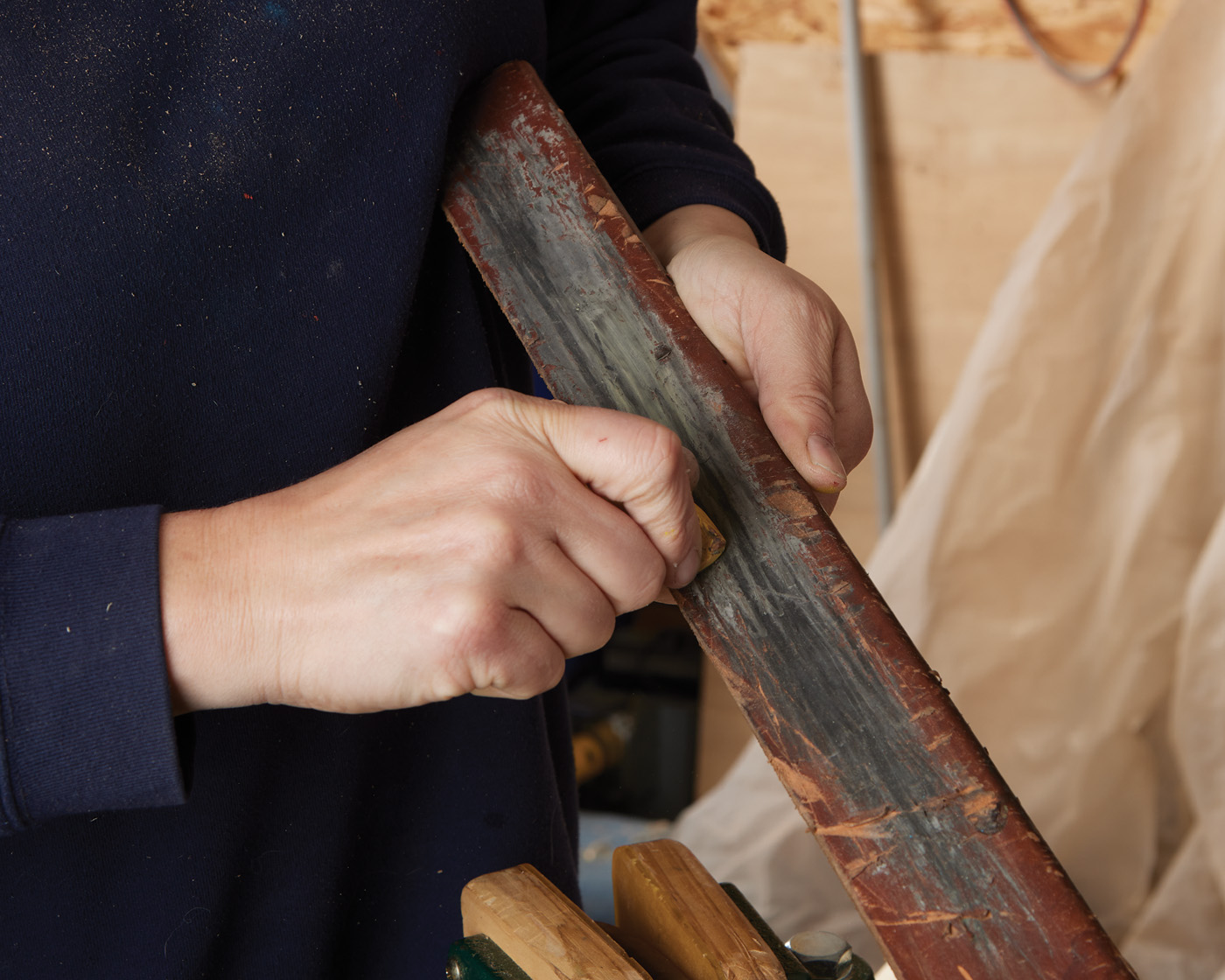
10 Apply honing compound to the flat side of your strop.
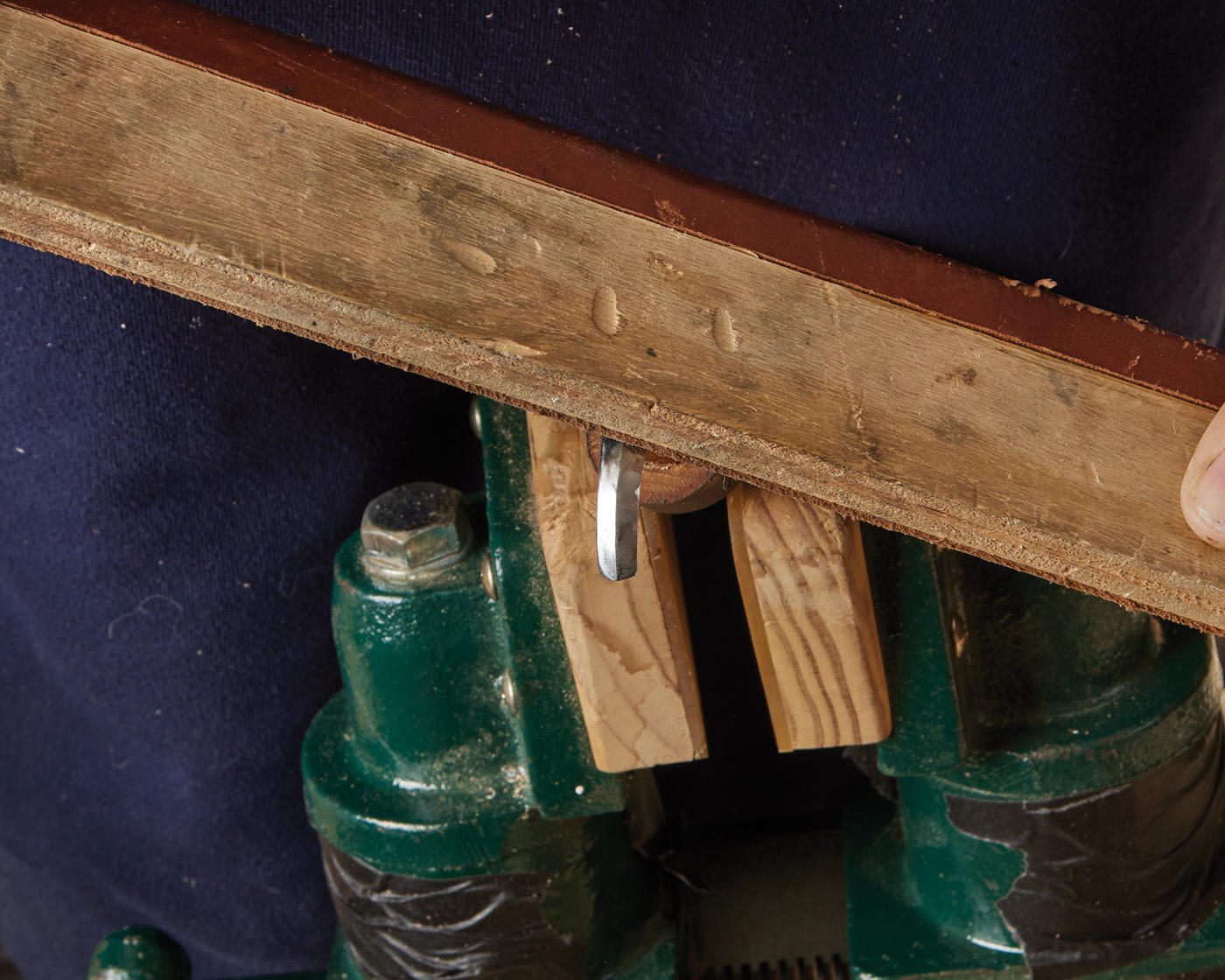
11 Use the same motion as the straight dowels to hone the outside edge of the hook knife.
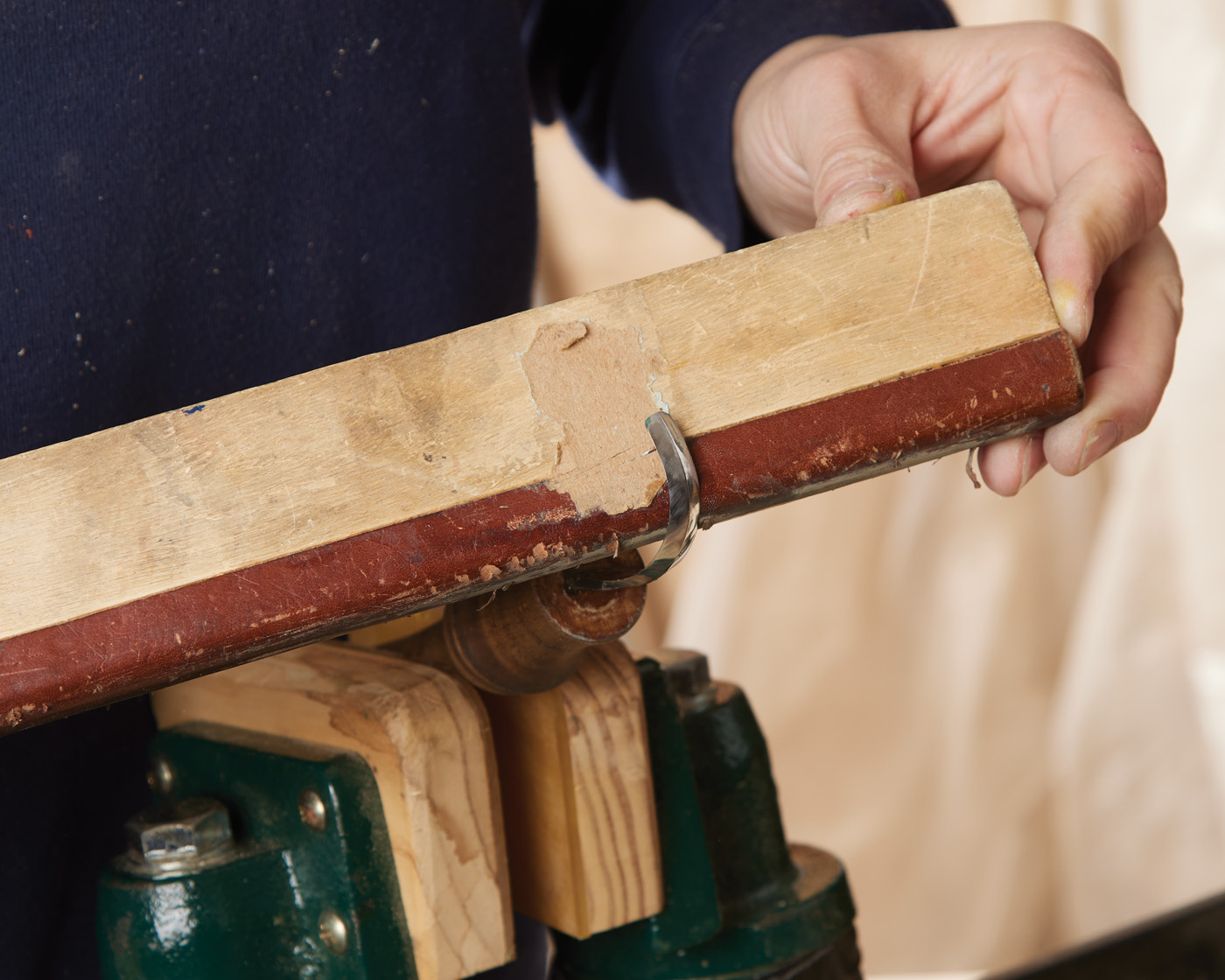
12 Apply honing compound to the rounded edge of your strop. Use the same motion as the rounded dowel to hone the inside edge of your hook knife.
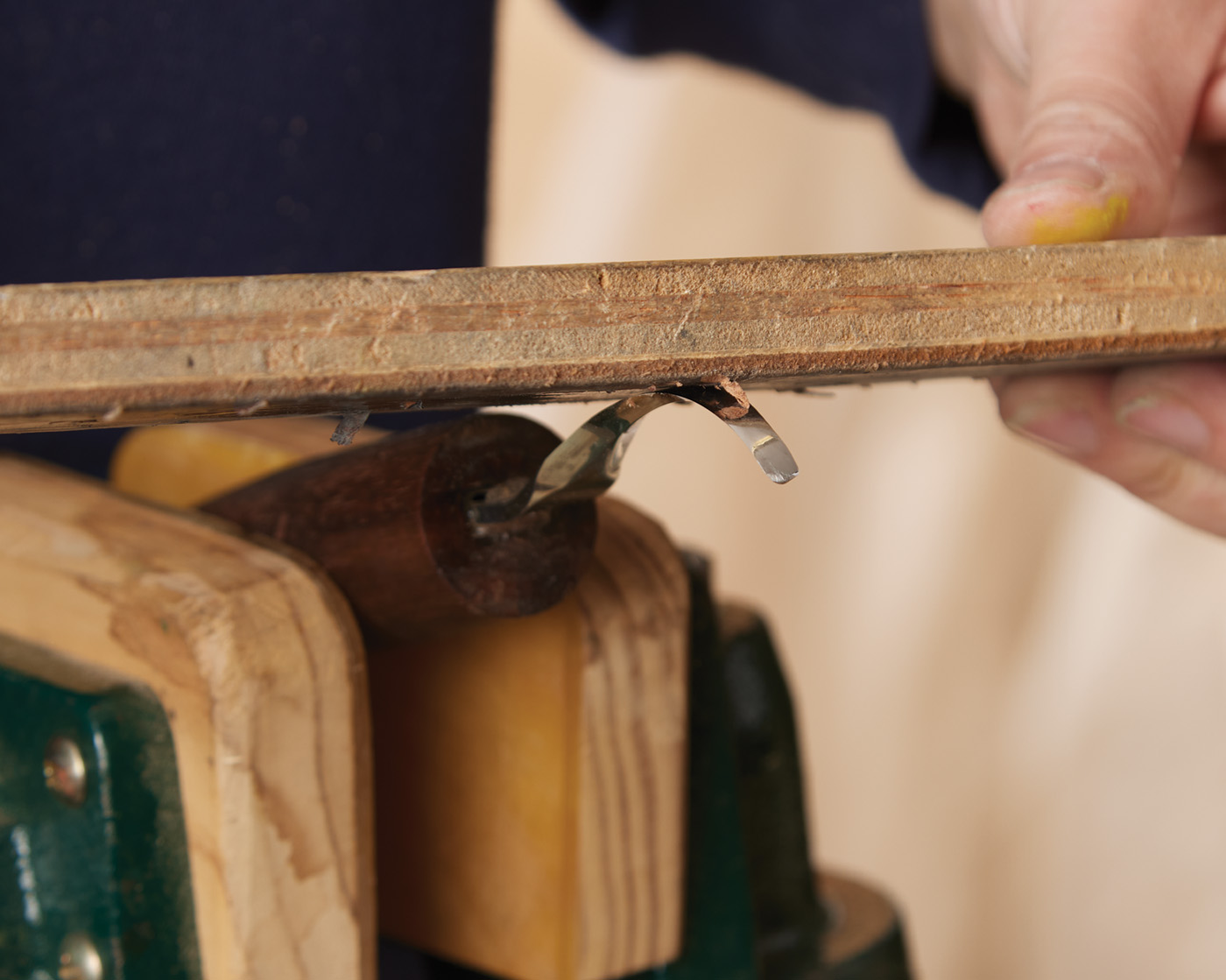
13 Angle the strop to match the angle of your hook knife’s edge. Start with the strop on the center of the hook knife’s bevel. Drag the strop, following the bevel angle, towards the outside edge.
Sharpening Your Straight Knife
A straight knife is simple to sharpen, but requires the right approach. For the acute bevel on my straight knife, it’s almost impossible to use any form of guide. So, freehand it is.
I like to use Arkansas oil stones for sharpening my straight knife as they require less maintenance than water stones, but use whatever sharpening apparatus you have on hand. Use a marker to mark the knife’s edge, just like you did with the hook knife above.
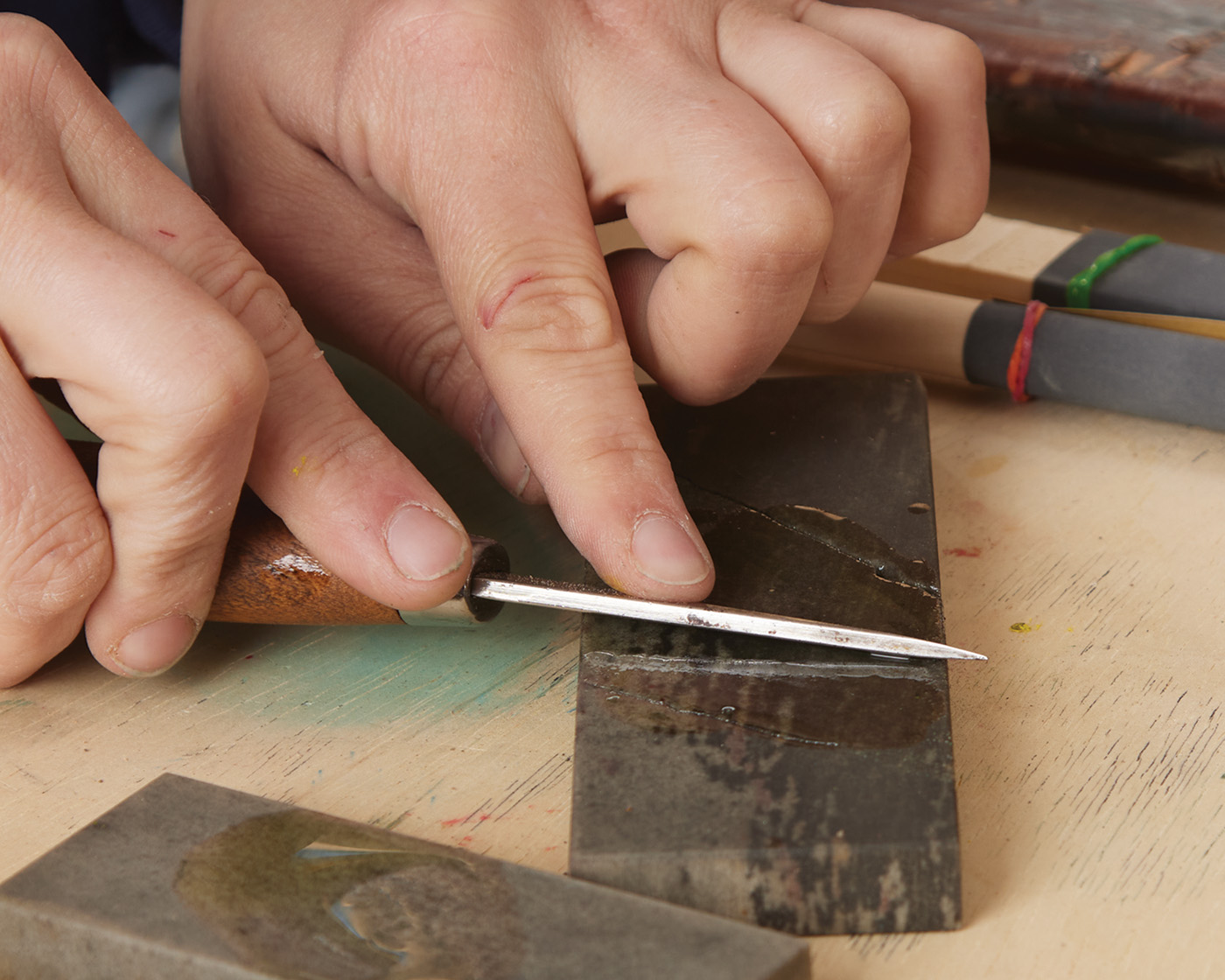
14 Rock your knife gently on your stone until you land on the bevel.
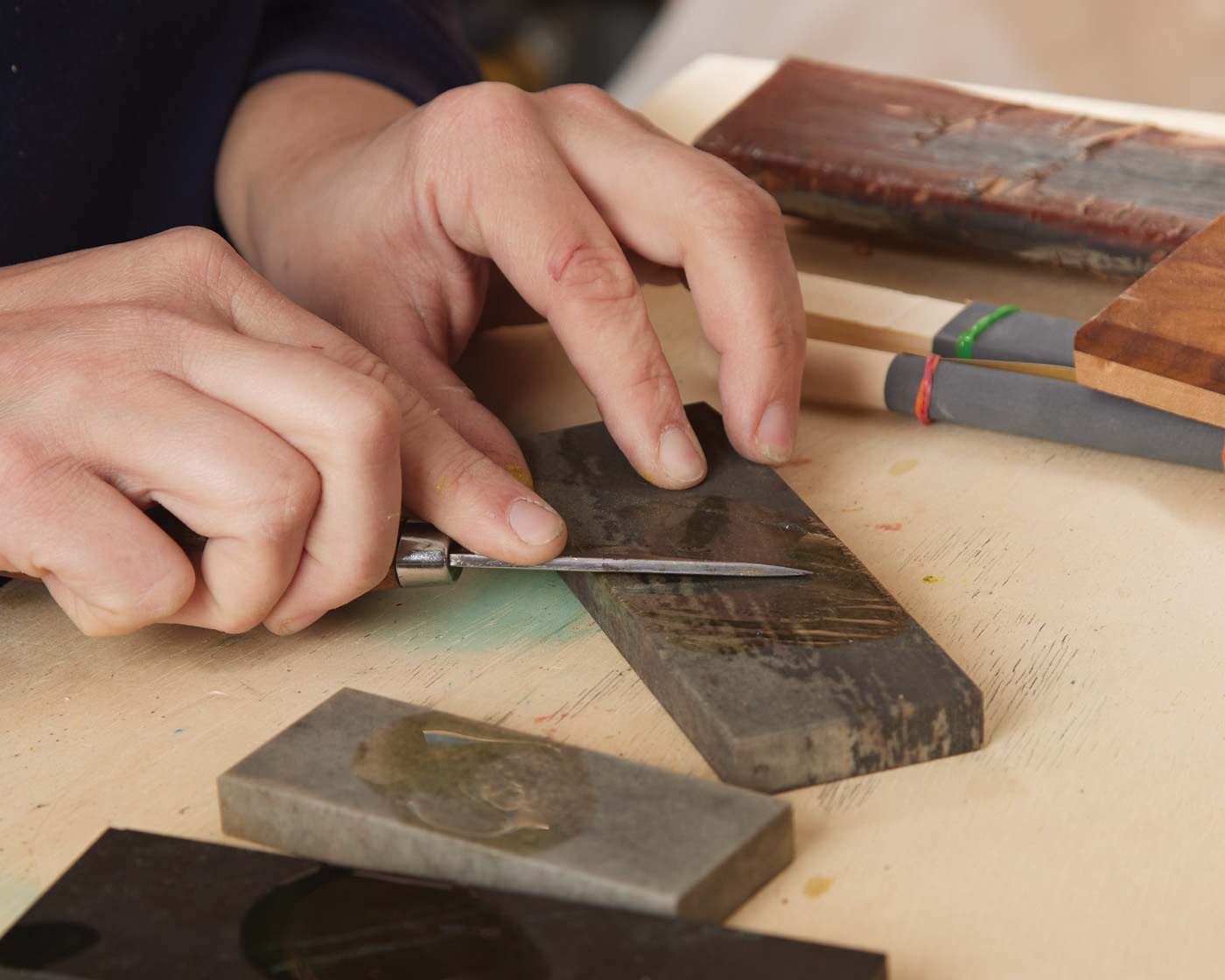
15 Run the knife gently over the stone without lifting the spine of the knife until you raise a burr.
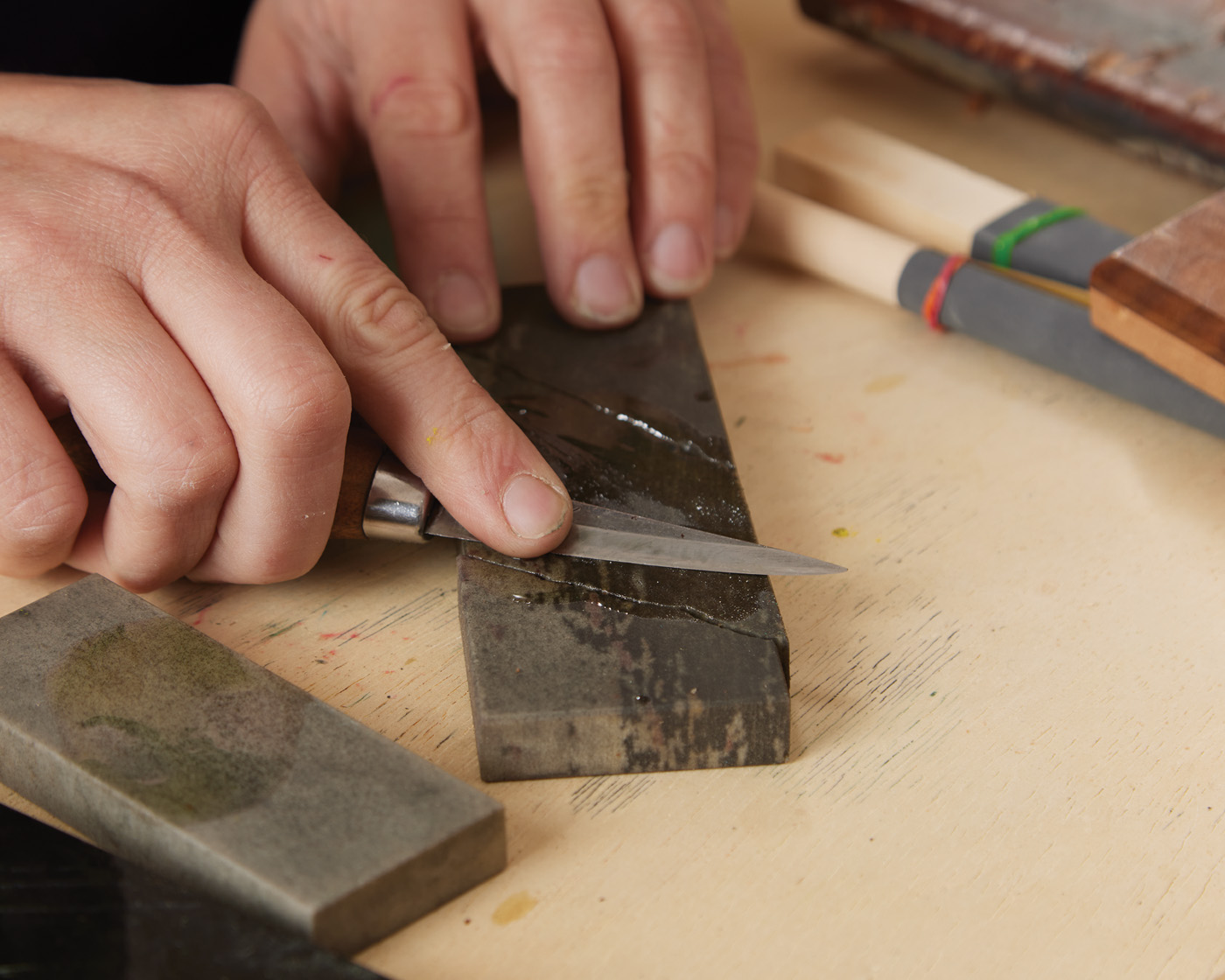
16 Do the same motion on the other side to just knock off the burr.
To find the bevel of your knife, rock the knife gently back and forth on the stone until you hit it. Once you have found the bevel, run the knife gently over the stone without lifting the spine of the knife. Repeat this step until you can feel a burr raised on the other side of the knife. Once a burr has been raised, flip the knife over and repeat the same motion until the burr you raised has disappeared. This should not take long. Move through the stones, repeating the same process. The last step is to strop the knife using the same motion along the flat edge of your strop. The edge should shine when you are done.
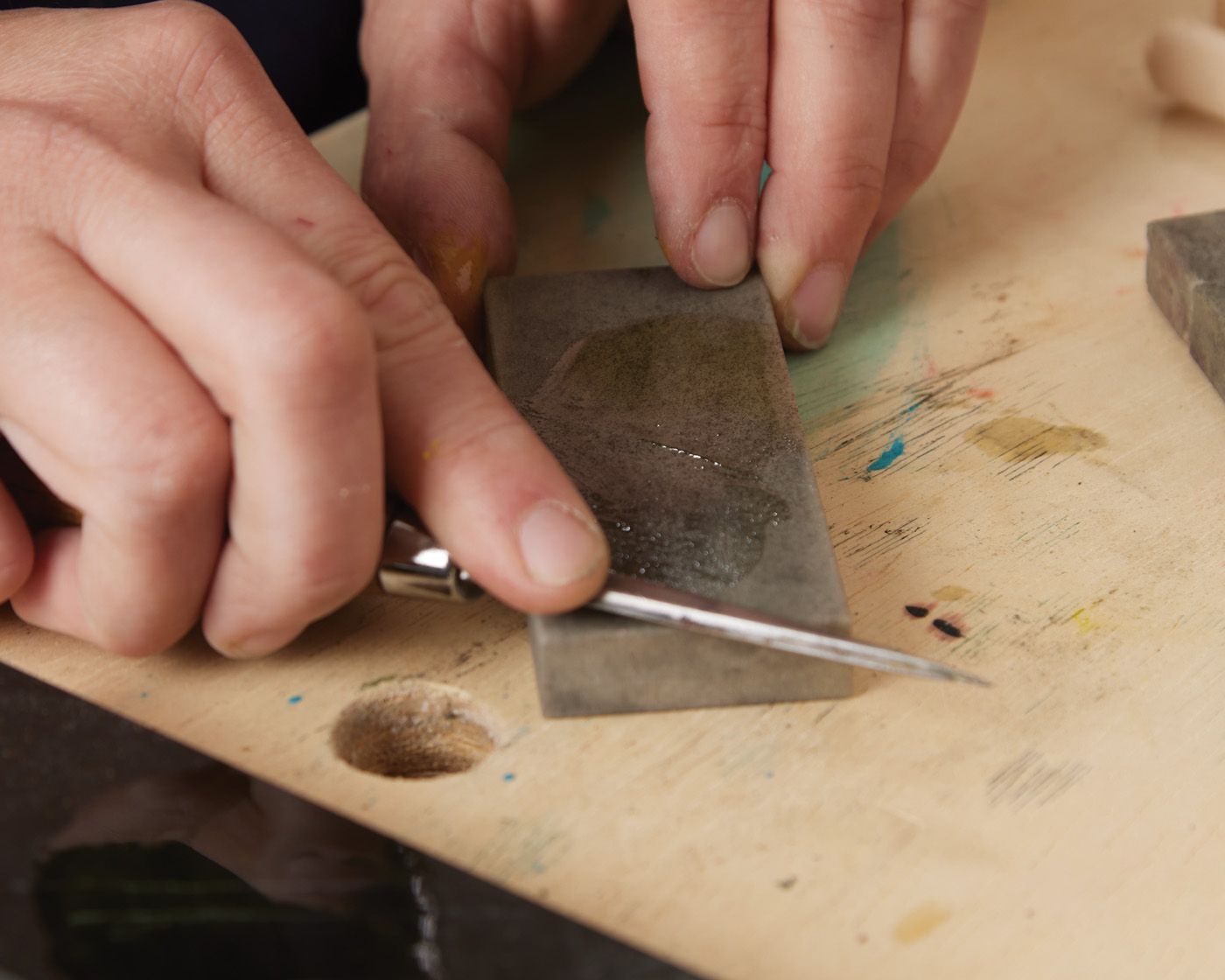
17 Move on to the next sharpening stones.
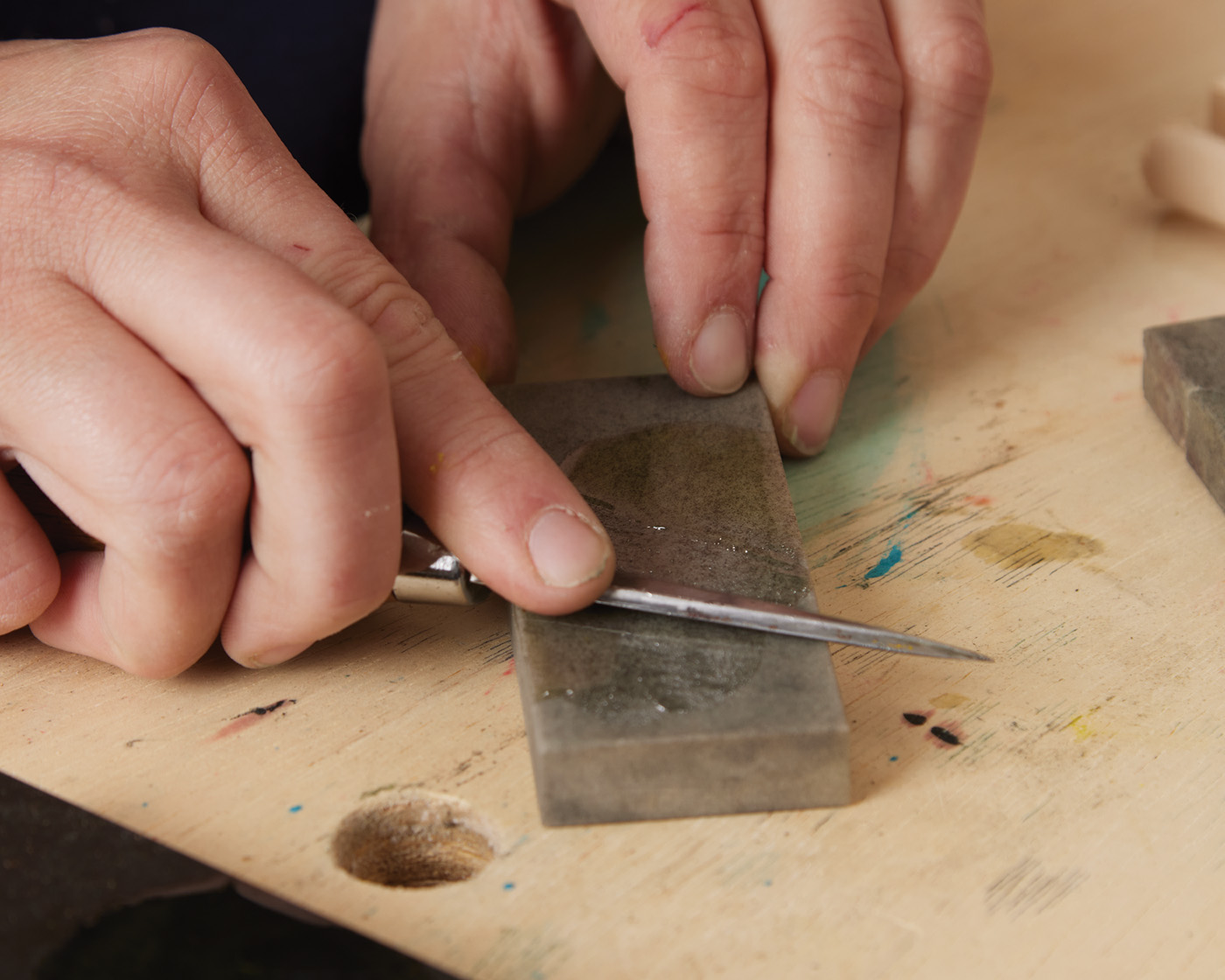
18
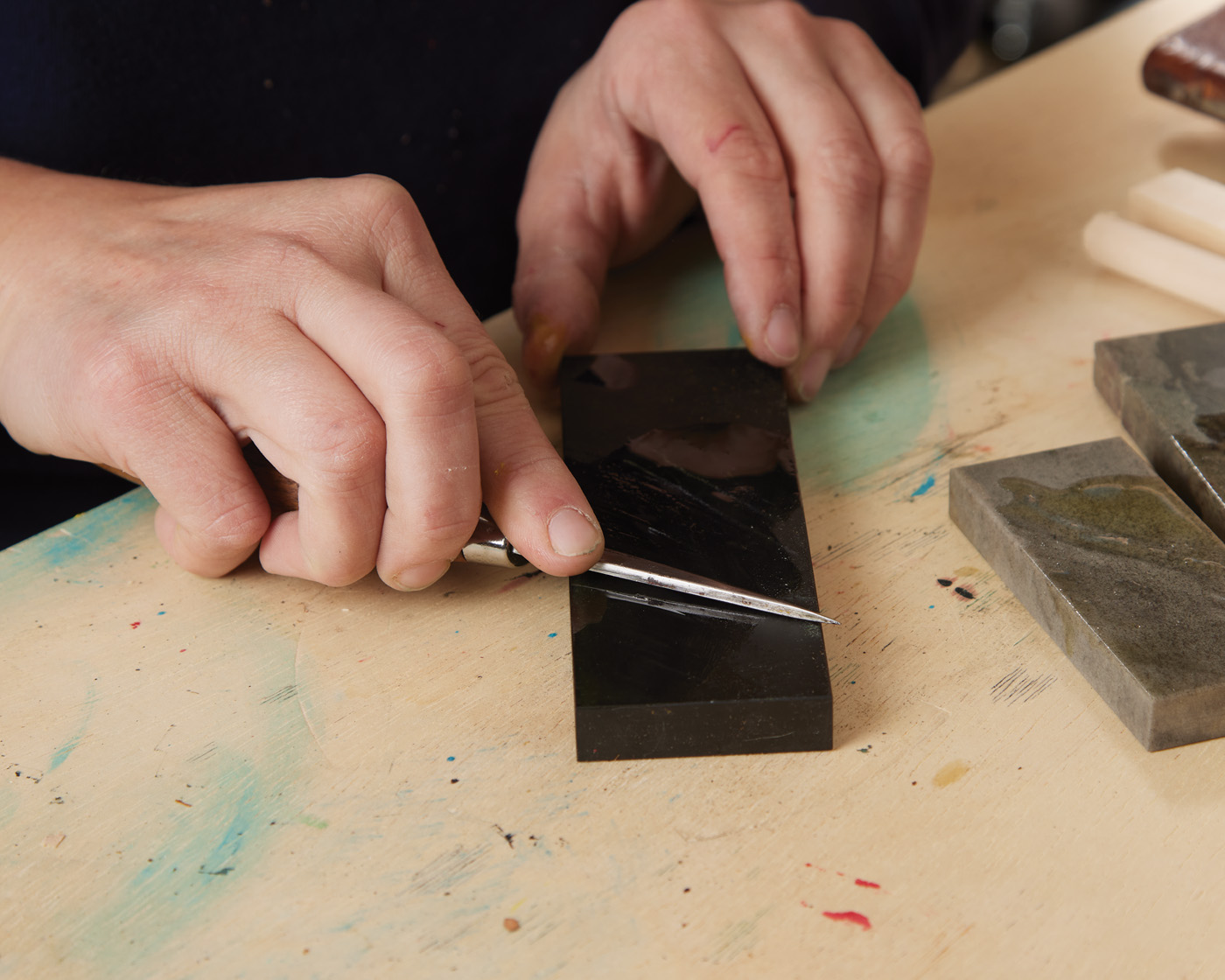
19 Keep moving through your stones until you get to the last stone to complete your sharpening.
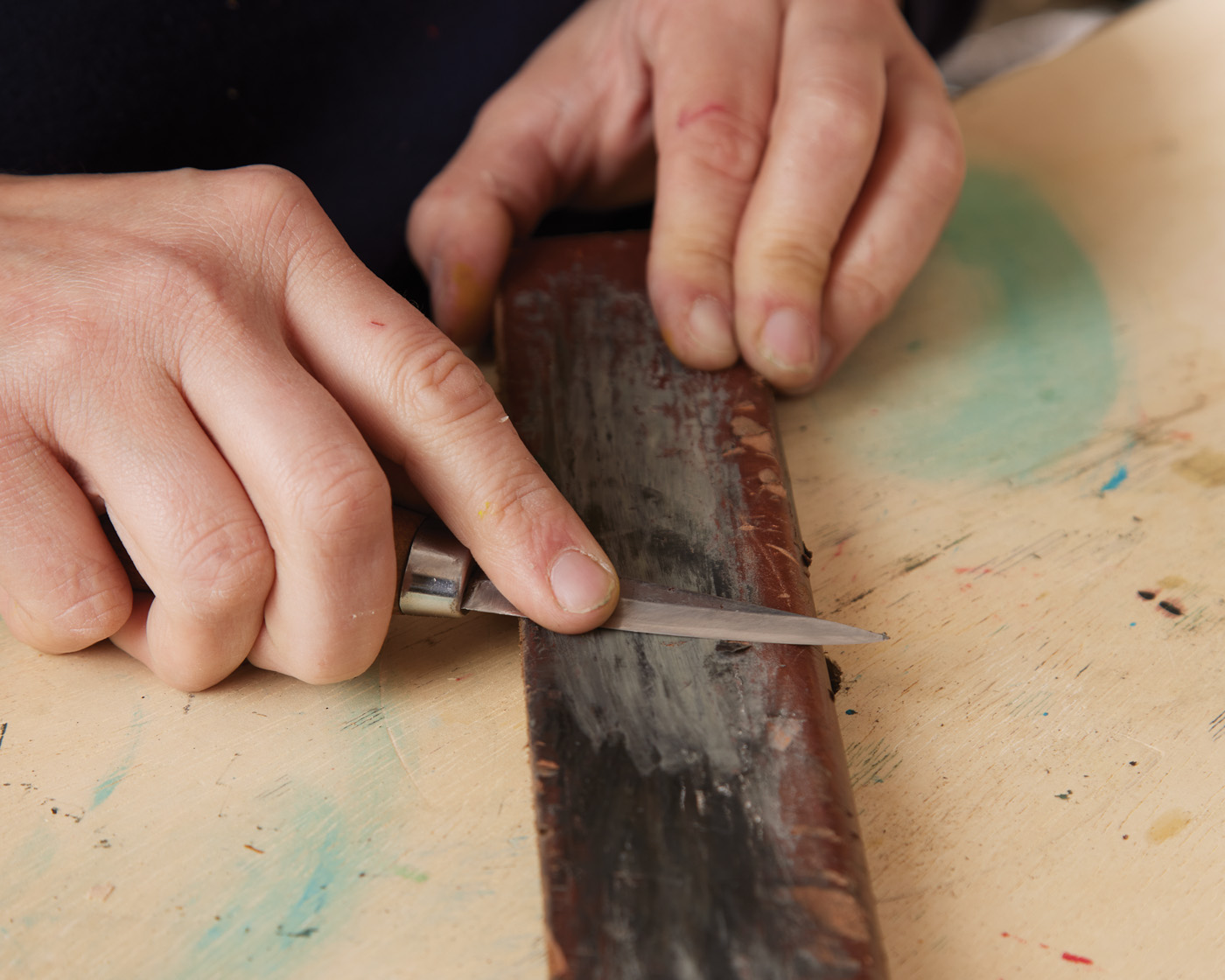
20 Use your leather strop to hone your knife’s edge.
A Final Note
As you carve with your knives, come in and strop your edges occasionally. This will keep your edge crisp and lessen the amount of sharpening you have to do to your tool.