We may receive a commission when you use our affiliate links. However, this does not impact our recommendations.

A couple years ago I finally got to go to Winterthur, the DuPont’s estate in Delaware that is a shrine to early American furniture. Right as our tour of the collection was about to begin, the docents segregated me from the gaggle of chattering blue-haired old ladies.
In retrospect, the docents were probably afraid I was going to mug them in the Marlboro Room.
In any case, it was a lucky turn of events. I and the two guys with me with were paired with our own personal docent for a tour. When she found out that two of us were furniture makers, she gave us little flashlights.
“I know your type,” she said. “You’re gonna crawl under the highboys.”
And crawl like slugs we did. I learned a lot about casework that day, but the most lasting memory was getting to examine the sides of some of the grandest bonnet-top highboys I’ve ever seen. These were masterpieces of design. And yet, on almost all of them the side panels were split. Plus the panels would never pass muster in Ethan Allen. You could feel and see the regular scallops of the smoothing planes. Heck , the undulations were so regular and obvious that you could tell what width the craftsman’s smoothing plane was.
And that was the most beautiful thing I saw all day.

Handplaned surfaces are not perfect. And thank goodness. They have a slight irregularity to them that I embrace. While it is entirely possible to tune a smoothing plane to produce a surface that looks like a machine dressed it (I’ll do it at shows to impress the power-tool guys), that’s not my goal. I aim to remove tear-out but to leave my mark.
So what does this look like?
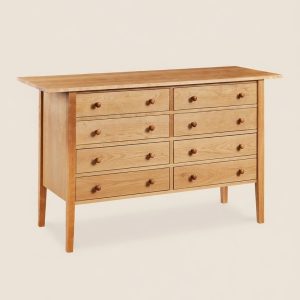
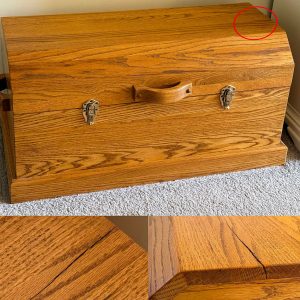
Close up, it looks like crap. The photos above show every little detail of my work on a tabletop of the server I’m trying to complete this week. You can see how I angled my plane to begin my stroke, which reduces chatter at the beginning of a pass. You can see evidence of toolmarks everywhere when you get close enough.
When this top gets a finish on it (oil followed by lacquer), these hallmarks will become less obvious, but they will still be there for someone who knows how to look. For me, they are as telling about my work as my name that I’m going to stamp on the leg.
– Christopher Schwarz

Looking for More Woodworking Information?
– Sign up for our newsletters to get free plans, techniques and reviews HERE.
– Looking for free articles from Woodworking Magazine? Click HERE.
– Like hand tools? Read all our online articles on hand work HERE.
– Want to subscribe to Woodworking Magazine? It’s $19.96/year. Click HERE.