We may receive a commission when you use our affiliate links. However, this does not impact our recommendations.

I drove to Indianapolis last weekend for dinner. Chris was demonstrating there at a Lie-Nielsen show, a friend who lives in California cashed in some frequent flier miles and flew in, and it’s always fun to see Angie and Alex and the rest of the show gang. And Chris has been raving about Brugge Brasserie, a restaurant that specializes in crepes, and has excellent French fries served with myriad dips. He was right to rave , I’d drive 100 miles again for those fries (and farther to see my friends, of course).
But before dinner, I stopped by the show , and couldn’t resist the pretty, shiny toys. I blew my monthly cheese budget on a low-angle block plane. When we got back to the office, Chris showed me how to check it for bed errors. I neither expected nor encountered any, but it doesn’t hurt to check (even at the store). Here’s how:
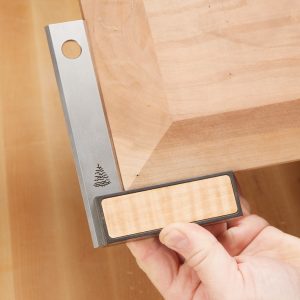
Pull the blade and check it for square. As you can see in the picture above, the bevel on this blade is ground just slightly out-of-square, though not enough to cause trouble for this “test.” I marked the high corner on the flat face so I can easily identify it when I put the blade back in the plane. (Were the blade way out, I’d need to regrind the bevel square before I could use it as a reference for bed errors , so were I in a store and that happened, I’d ask for a different blade.)
Now secure the blade in the plane and advance it into the mouth opening. Sight down the sole and use your thumb and index finger to square the blade in the mouth by eye , you’ll see a consistent black line all the way across the mouth when you’re there. 
If the square blade (or almost square blade) won’t line up, you may have a bed error. Ask for a different plane.
If all seems OK, retract the blade to working position, look at the blade in the mouth to make sure it still looks square, then take a shaving on a piece of scrap , you should be able to get a consistent shaving across the width of your test piece.
– Megan Fitzpatrick