We may receive a commission when you use our affiliate links. However, this does not impact our recommendations.

Traditional cut nails can be made from pretty soft steel, especially the useful cut headless brads. As a result, you have to be careful when installing them. Here are some of the things that can go wrong and how I deal with them.
1. Your pilot hole is too shallow. One early book on woodworking advises you to drill a pilot hole that is one-half the length of your nail. This advice works in softwoods, but it can be a disaster in hardwoods. When a soft nail reaches the end of the pilot hole it can bend. This is a sudden failure: tap, tap, doink. The best solution is to pull the nail with nippers (is this a racist term? I hope not) and drill the pilot deeper.
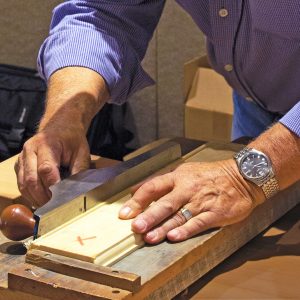
2. Your hammer skills stink. When working inside casework, it can be tough to get the hammerhead right where you want it , particularly when driving nails at an angle for toenailing or simply angling them to help wedge your components together. When this problem happens, I usually have only a small amount of the nail that’s proud and getting the nippers (should these be called the “Japanese Extractors?”) in there to pull the nail can be difficult.
If there’s just a little bit of the head that’s proud, I’ll snip it off (with snippers, the nipper’s sharp friend). Then I’ll file the soft steel flush with the work. This might seem excessive, but you don’t want anyone catching their hand on a nail or the nail’s head interfering with a drawer’s fit.
I use a fine file without a handle. I lay it flat on the wood and push it forward, then lift the file, move it back then push again. Files cut on the push stroke. Dragging one backward over your nail will dull the file. If you start filing wood that’s OK; it generally leaves a nice finish behind.
3. You split the work. Either your pilot hole is too small, you are too close to the end of the board or you oriented the cut nail in the wrong direction (you want its wedge shape to bite into the end grain of your board that’s on top). The solution: Pull the nail, wick yellow glue into the split piece and wrap the repair in painter’s tape. Put a clamp on it. When the glue is dry, redrill the pilot hole (perhaps enlarging it a tad) and try again.
Cut nails sound like a pain, but they really are worth the trouble. They hold better than wire nails and look better in traditional projects. Nothing looks as odd as a piece of 18th-century furniture made with drywall screws and pneumatic finish nails. I buy my nails from Tremont Nail, which offers a wide range of cut nails.
– Christopher Schwarz
Looking for More Woodworking Information?
– Sign up for our newsletters to get free plans, techniques and reviews HERE.
– Looking for free articles from Woodworking Magazine? Click HERE.
– Like hand tools? Read all our online articles on hand work HERE.
– Want to subscribe to Woodworking Magazine? It’s $19.96/year. Click HERE.