We may receive a commission when you use our affiliate links. However, this does not impact our recommendations.
Here are the online extras for the February 2026 issue of Popular Woodworking Magazine. Interested in having the magazine delivered directly to your mailbox (physical or email) six times a year? Subscribe here. Want to get access to the entire Popular Woodworking website, plus digital access to the current issue? Become a member.
Scandinavian Skew Chisel Online Extras
Making your own skew chisel is a fairly simple process. I’m far from an experienced metalworker or sharpener, and I was able to create a good blade shape by modifying a 25mm Pfeil #1 Fishtail Gouge. The key thing is to start with a #1 if you are using a fishtail gouge — higher numbers have a concave shape to the blade. I used a bench grinder and Dremel to shape the gouge, then sharpened it using my normal sharpening method. Here are the steps to follow:
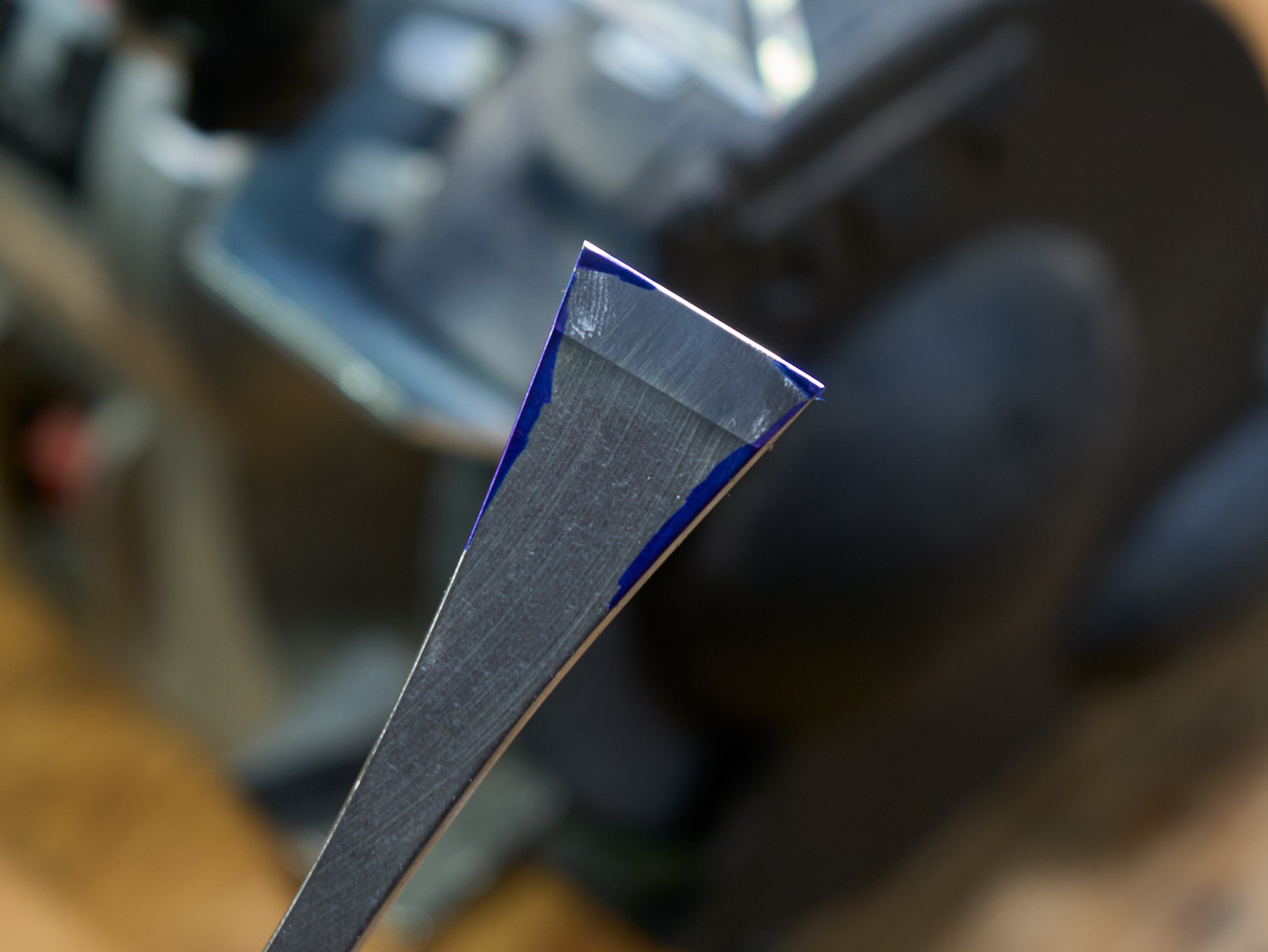
1 Start by marking the material you want to remove. I did this in two phases.
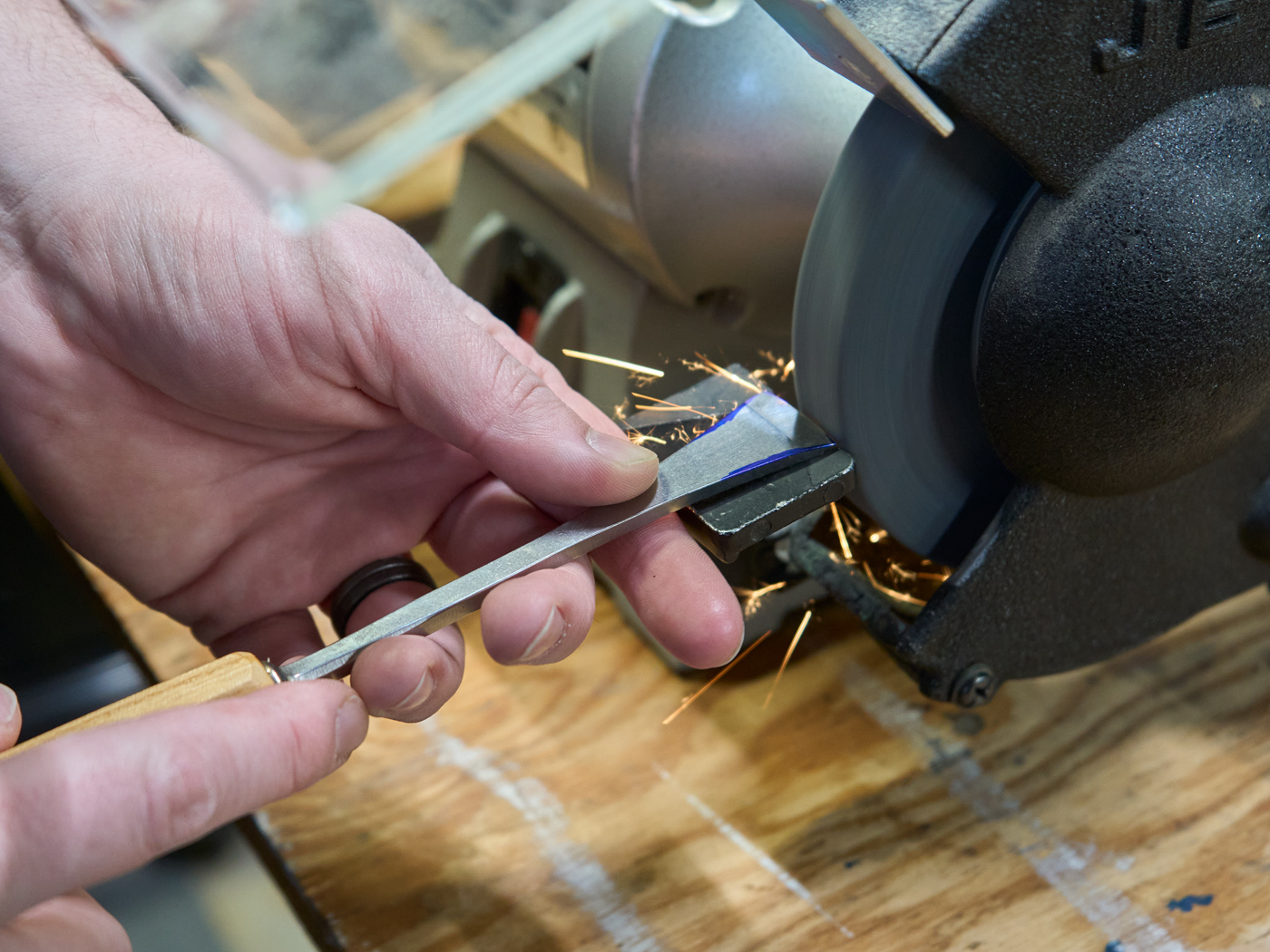
2 Start shaping the chisel on the bench grinder. Yes, it feels odd to do, but it’s necessary.
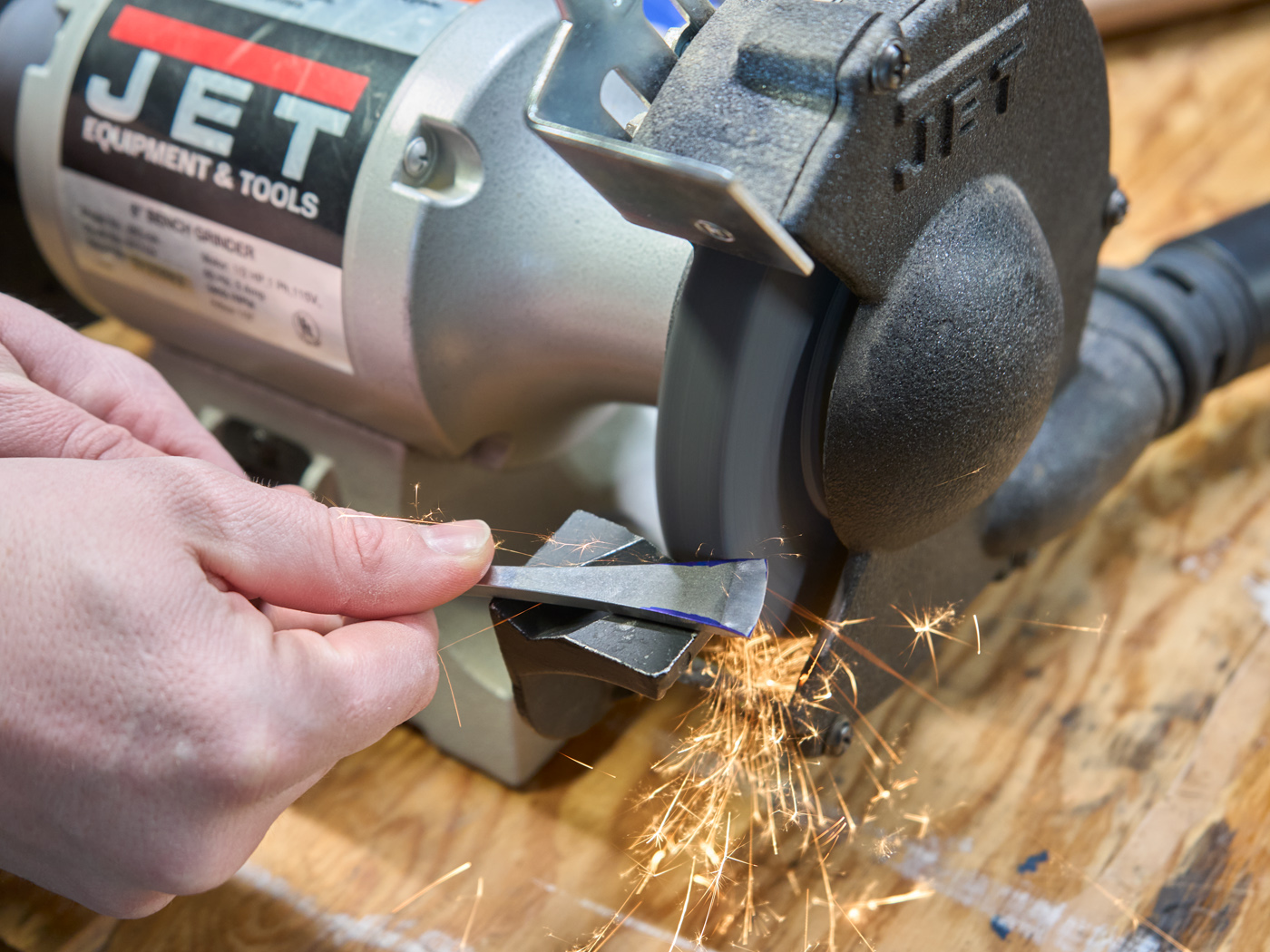
3 The edges are shaped as well.
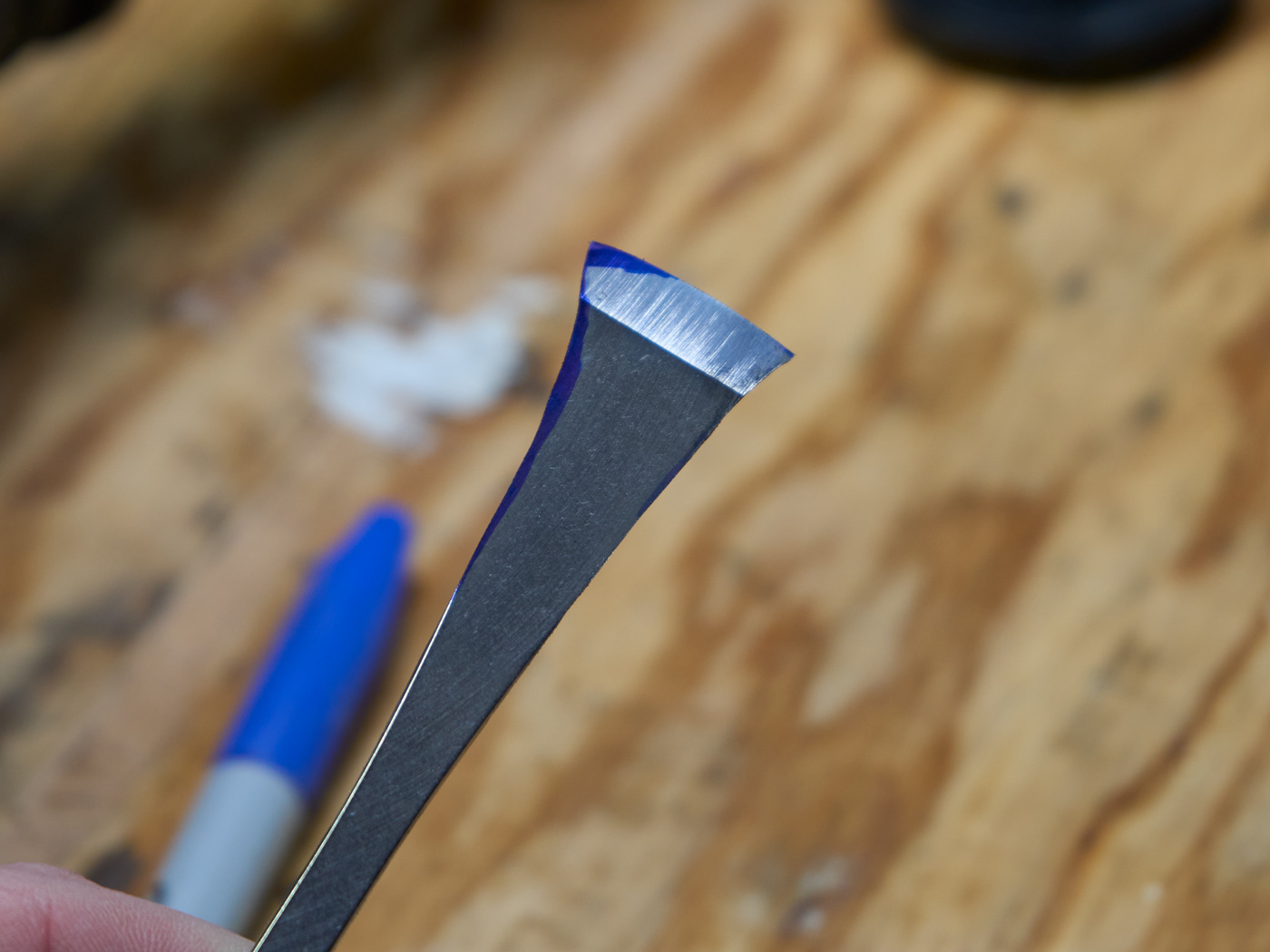
4 Now that the blade has a gentle curve, I want to add the angle and cut deeper on one side.
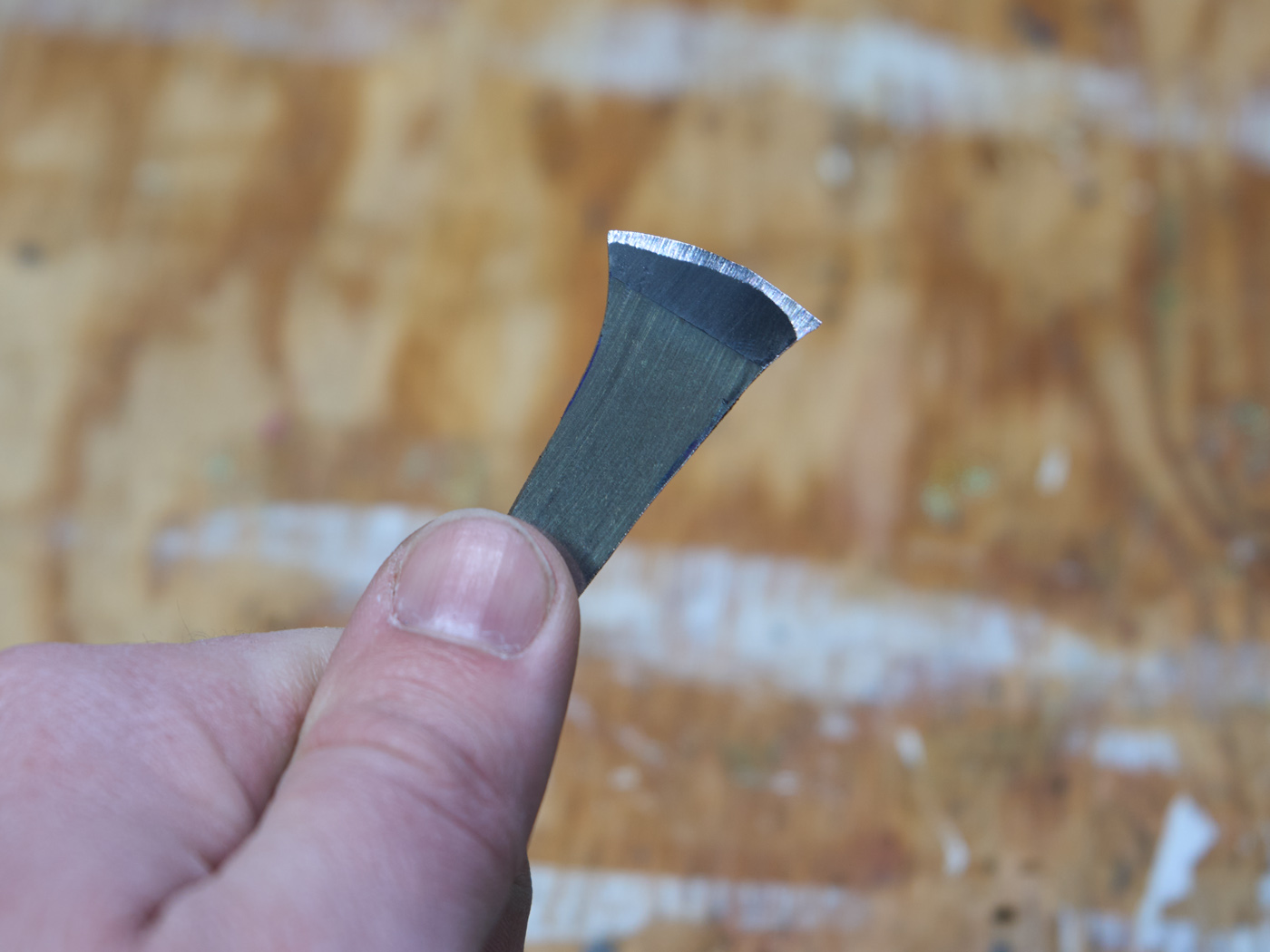
5 While dialing in my shape, I started to rough-sharpen the blade on the bench grinder as well.
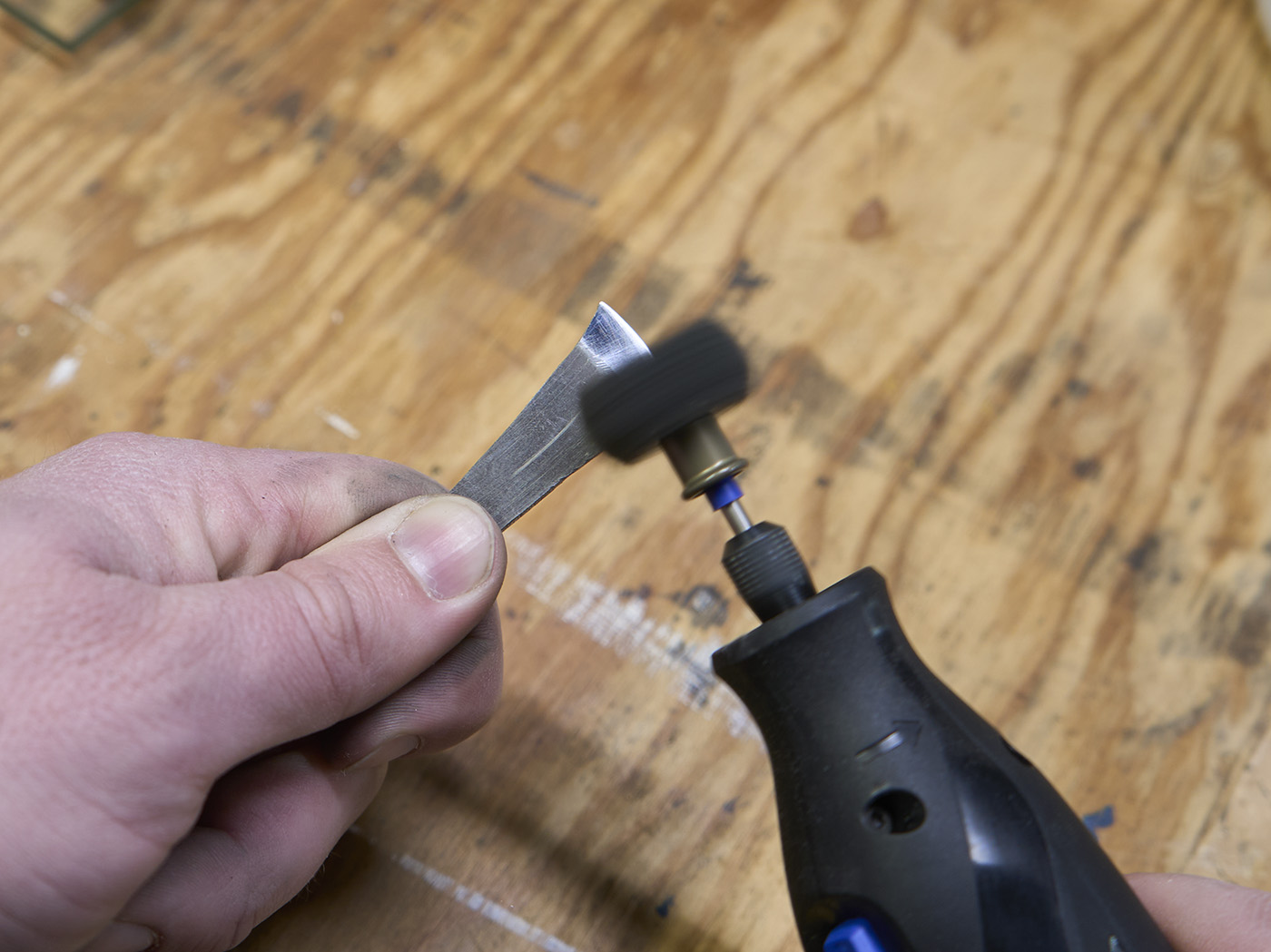
6 I used a few different Dremel attachments to help create the rounded profile. I found that using a rotary tool gave me a higher level of control for this step.
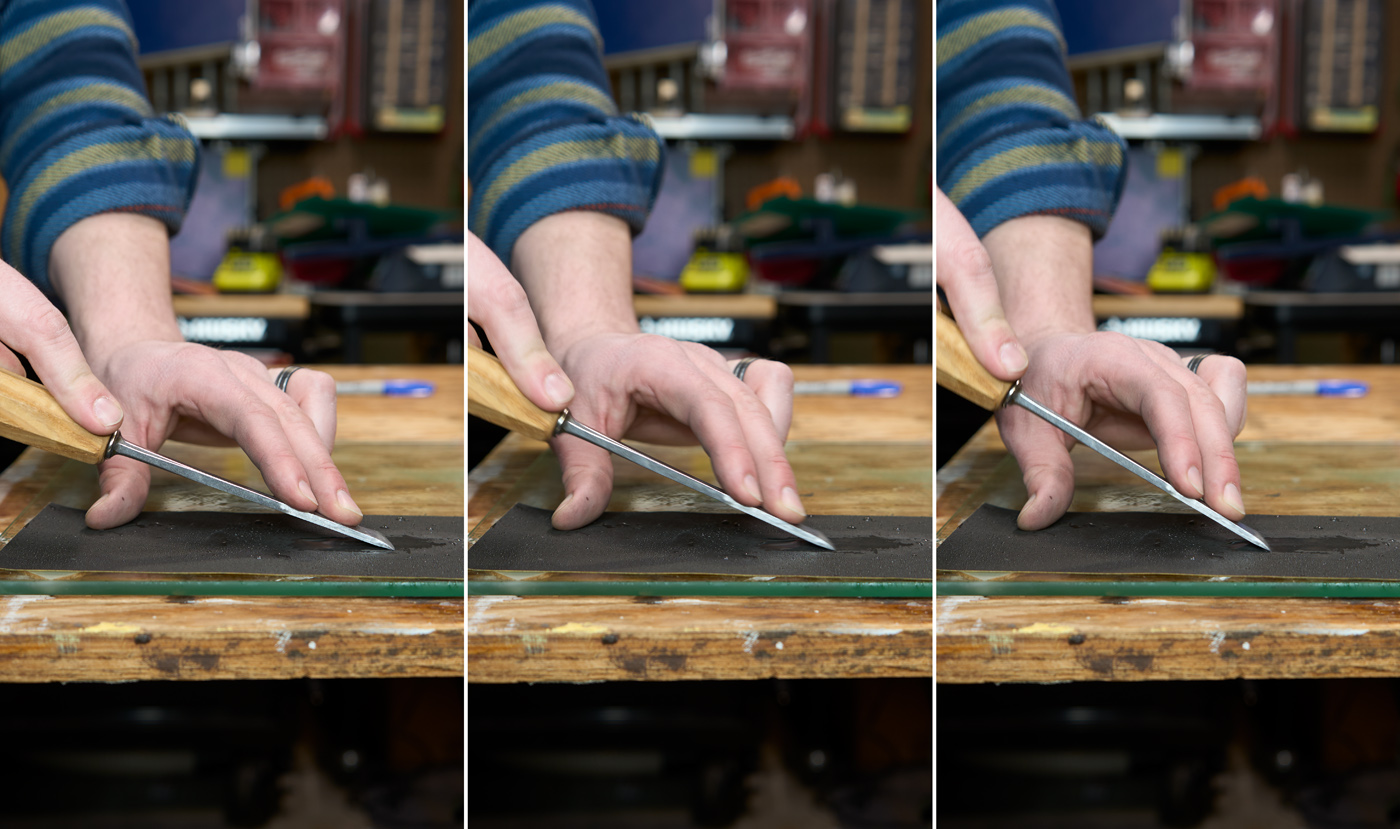
7 A few different motions were used to sharpen the chisel. The first was a rocking motion, where my wrist went up as I was pulling back, to make the axe head profile.
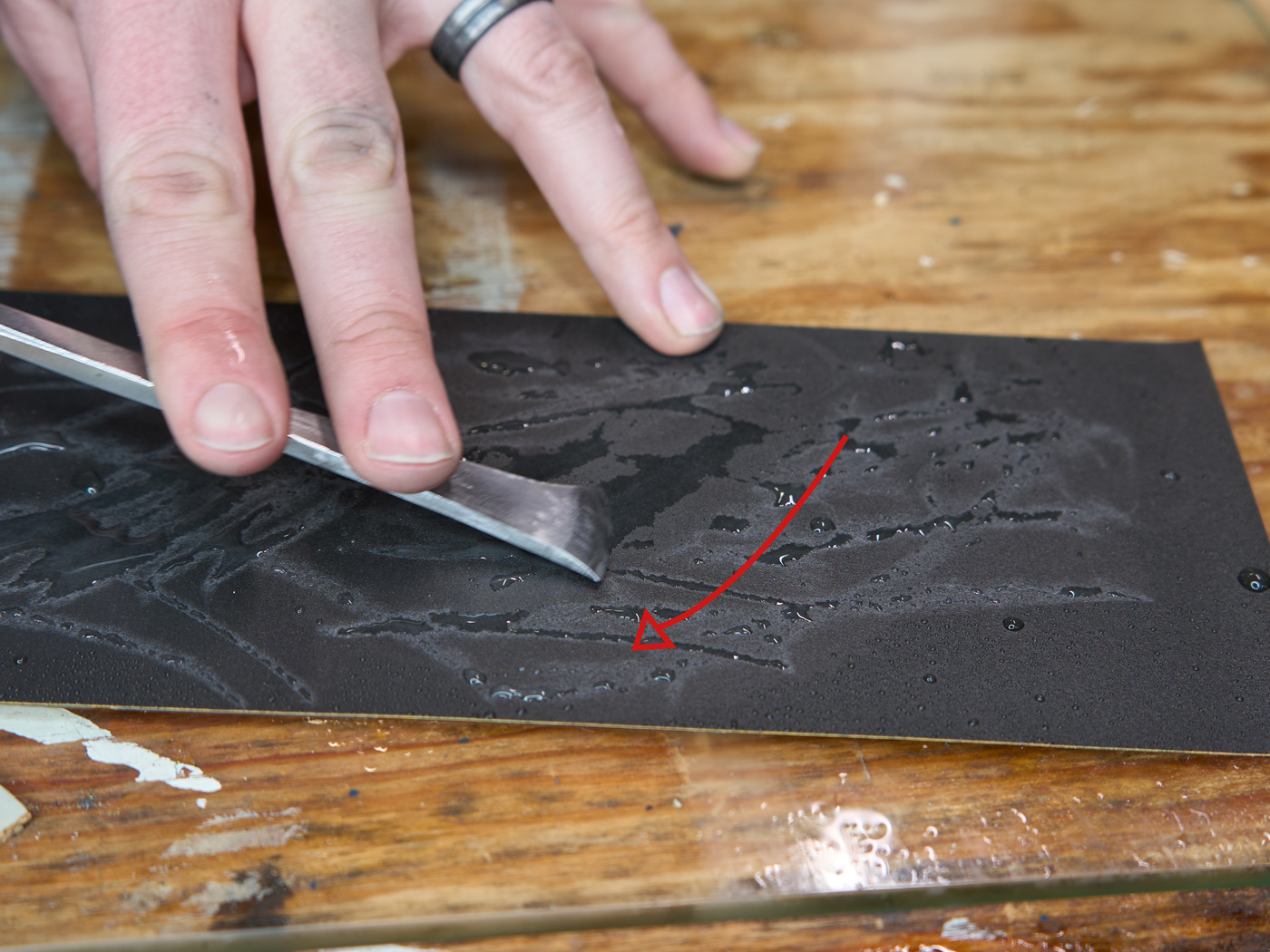
8 The unique profile means that the entire cutting surface cannot be sharpened at the same time (without making a custom rig). To sharpen the longer point, I used an arching motion, moving side to side.
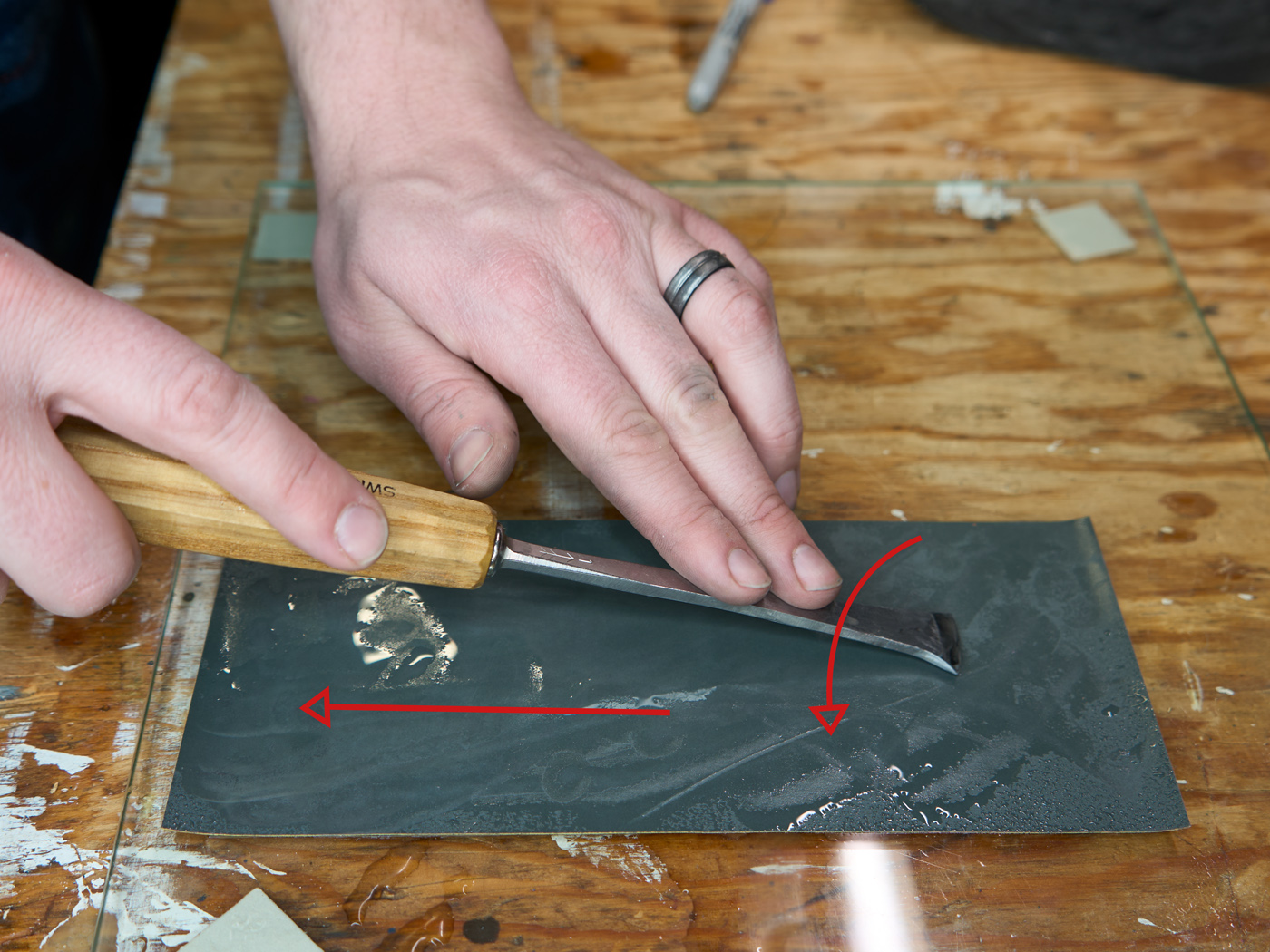
9 Lastly, I rotated the blade left to right while pulling back. This helped create a continuous, sharpened edge without any flat spots.
Drill Press Cabinet Online Extras
Drill Press Cabinet SketchUp Model
View the model on the SketchUp website.
Textured Wall Cabinet Online Extras
Textured Wall Cabinet Finish
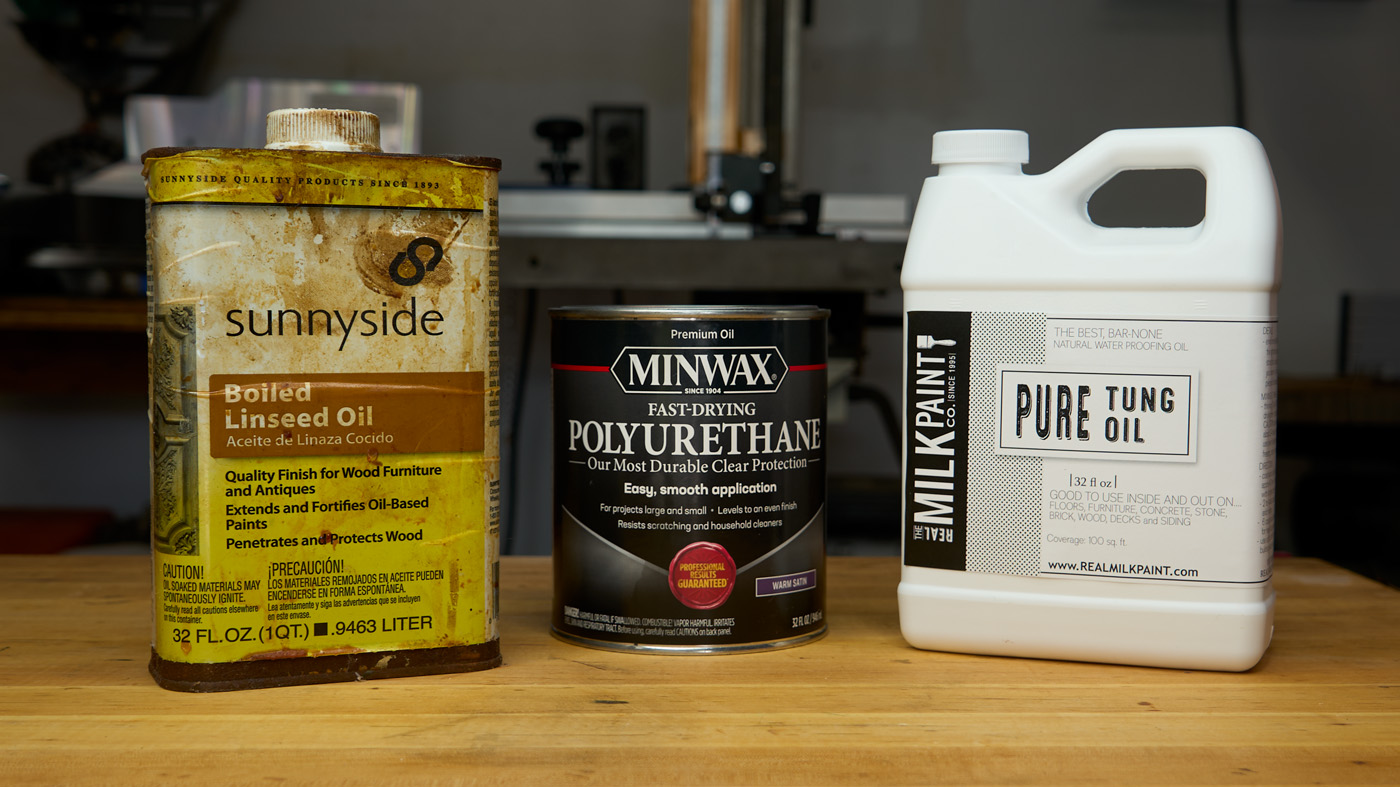
The three ingredients for the base finish.
For the textured wall cabinet, I followed Sam Maloof’s finish guideline from his autobiography. While it was certinaly a good amount of work, I’m very pleased with the final result.
The first part of the finish is a base coat of equal parts boiled linseed oil, pure tung oil, and polyurethane (semigloss).
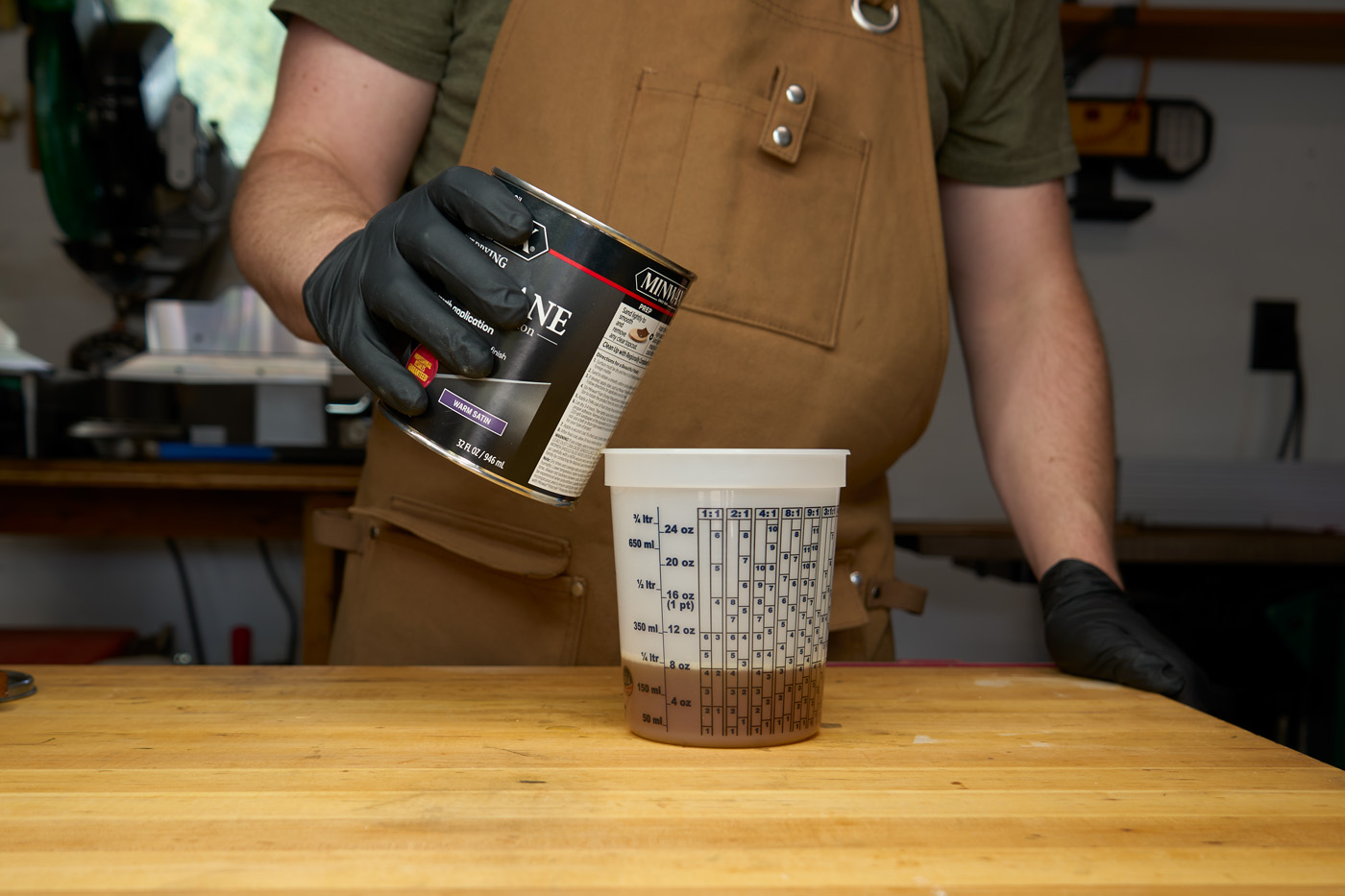
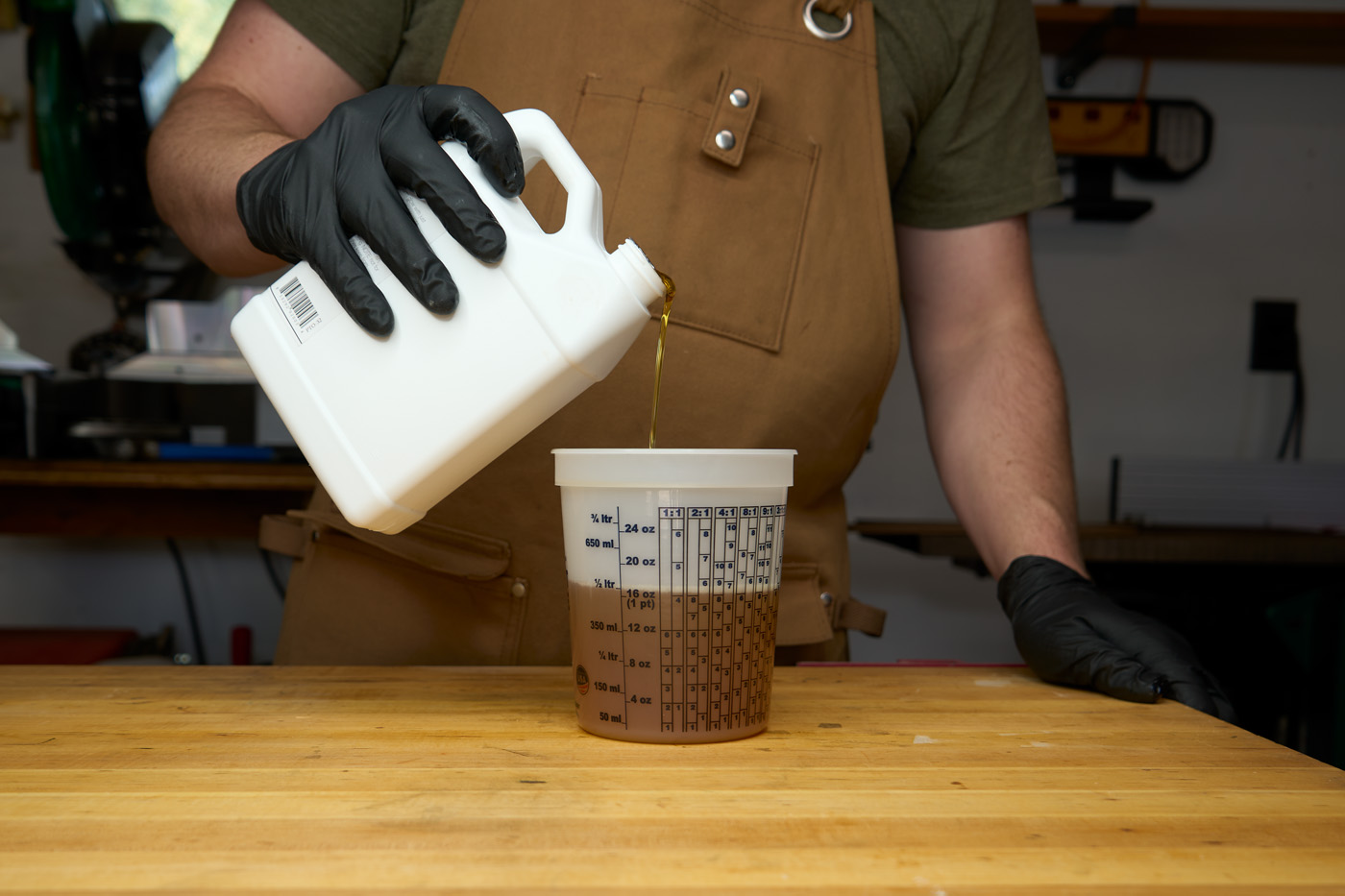
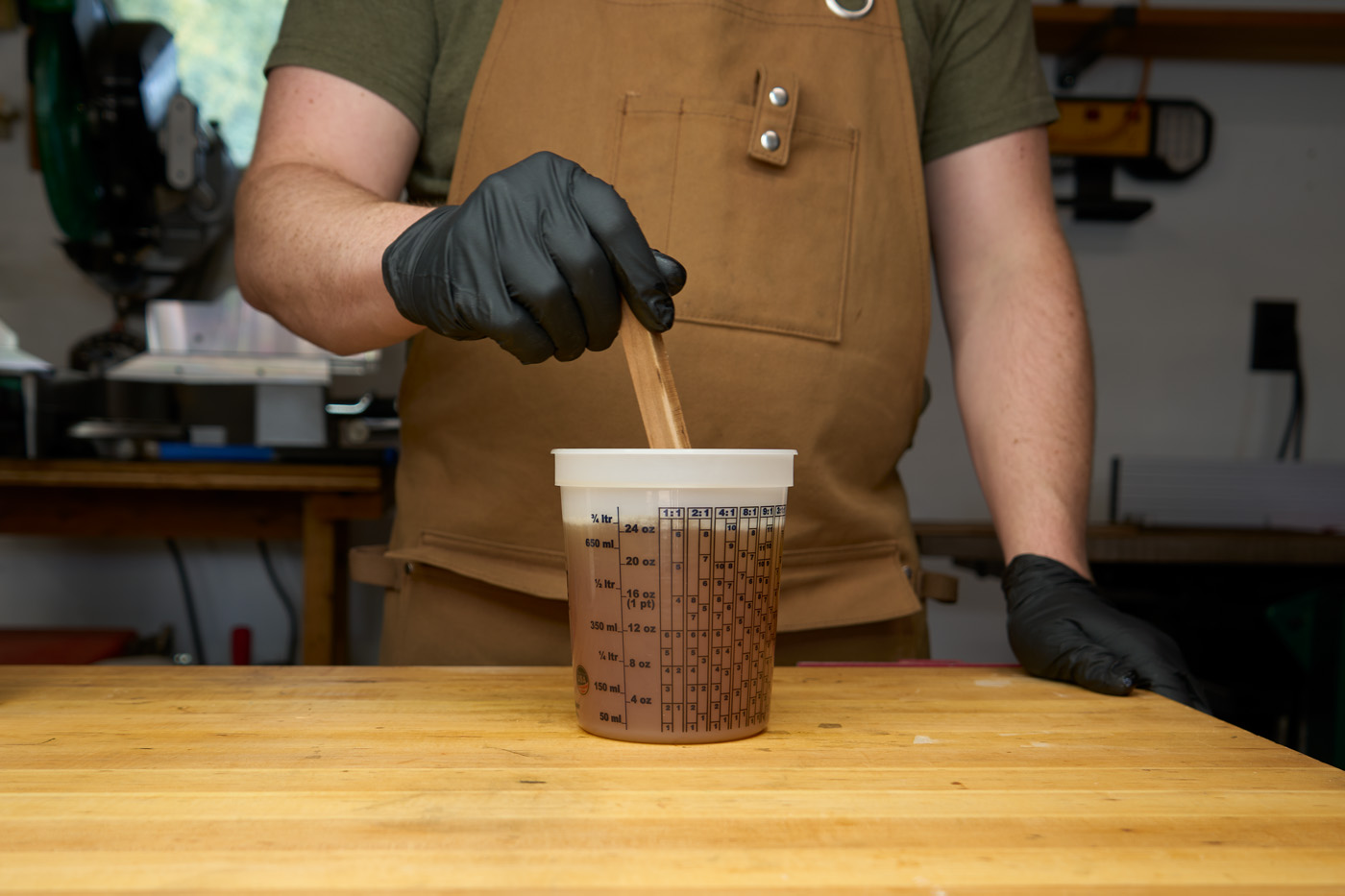
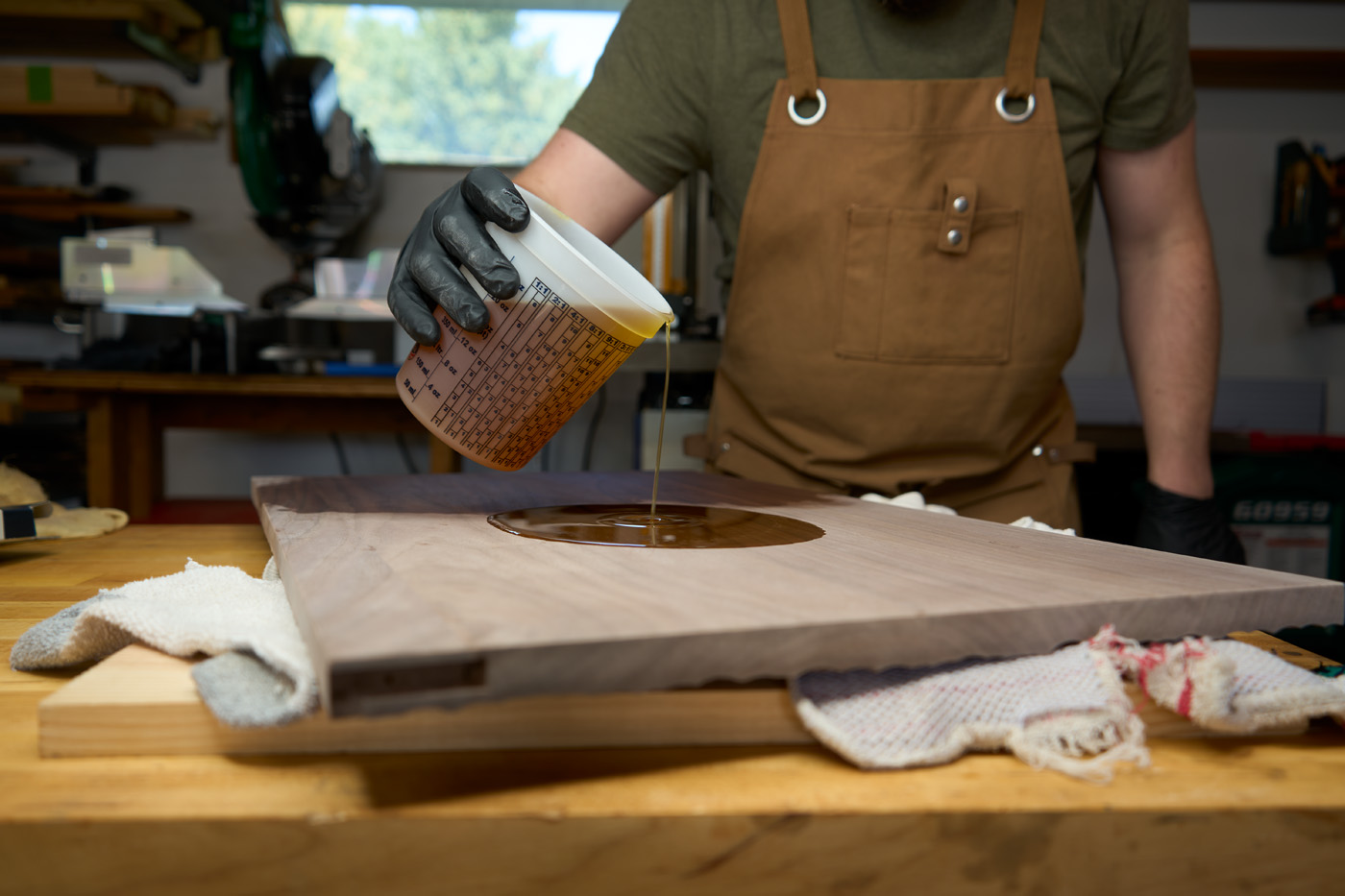
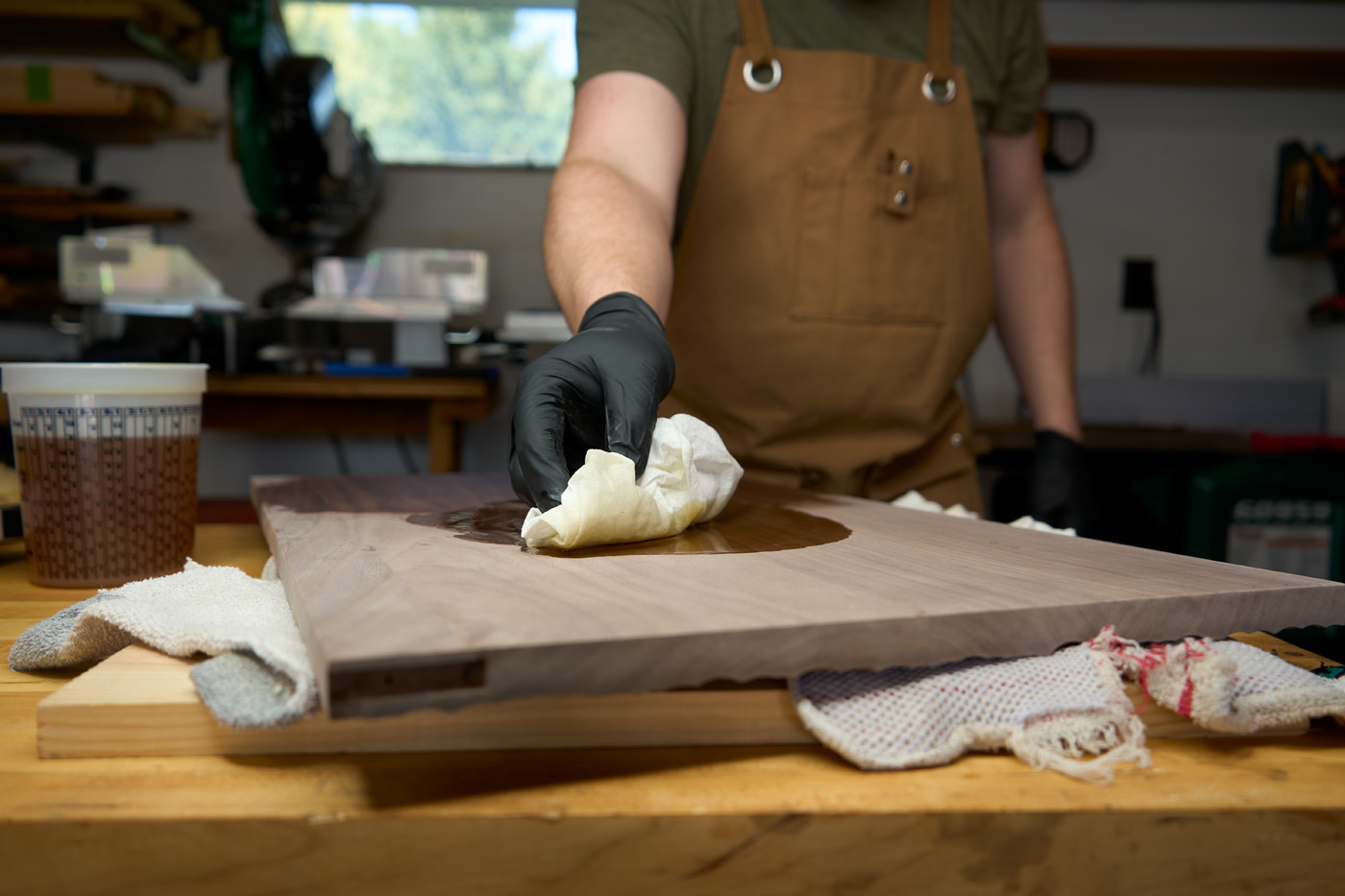
As Maloof’s explains, the driers in the BLO activate the tung oil and prevent it from staying tacky. To apply the finish, flood the surface and allow it to penetrate for a while — I waited about 15 minutes before wiping mine. Buff it well, if you leave too much on the surface it can become tacky. It took approximately three coats to get a build-up I was happy with.
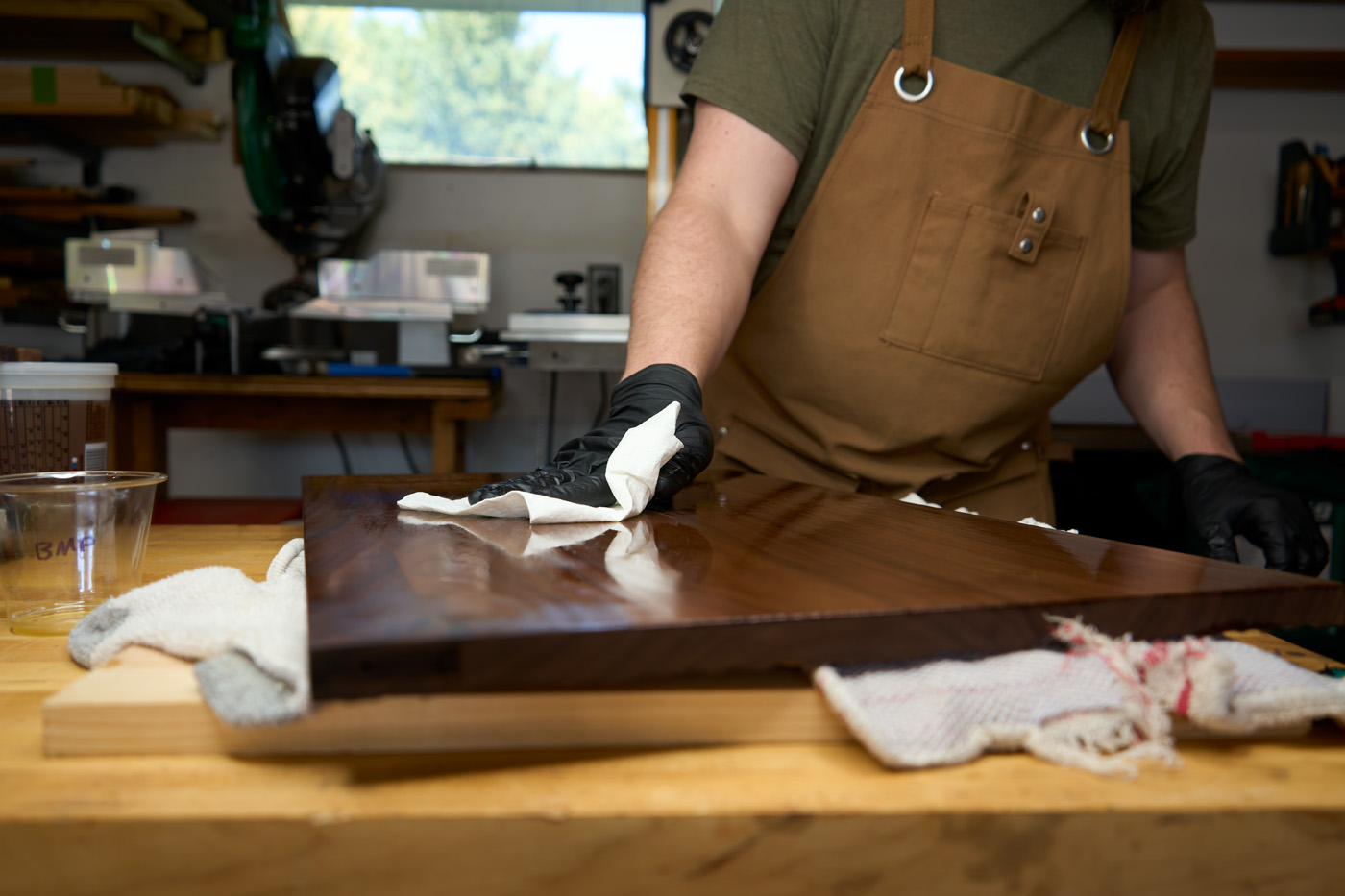
The topcoat is more art than science, though I’m hoping to dial it more specifically in the future. The formula is one part boiled linseed oil, one part raw tung oil, and “two handfuls” of shredded beeswax, all melted together. Given that the quantities of oils were undefined, this left a lot of room for interpretation. The instructions in the book specified a heavy creame consistency, but that felt difficult to judge. Thankfully the internet came to my rescue, and I was informed the final finish should have a jam or jelly-like consistency once cooled. I used a crock pot (dedicated for shop use only) to heat up and blend the finish. I added wax bit by bit (after starting with a generous handful), allowing it to cool each time, until I found it satisfactory.
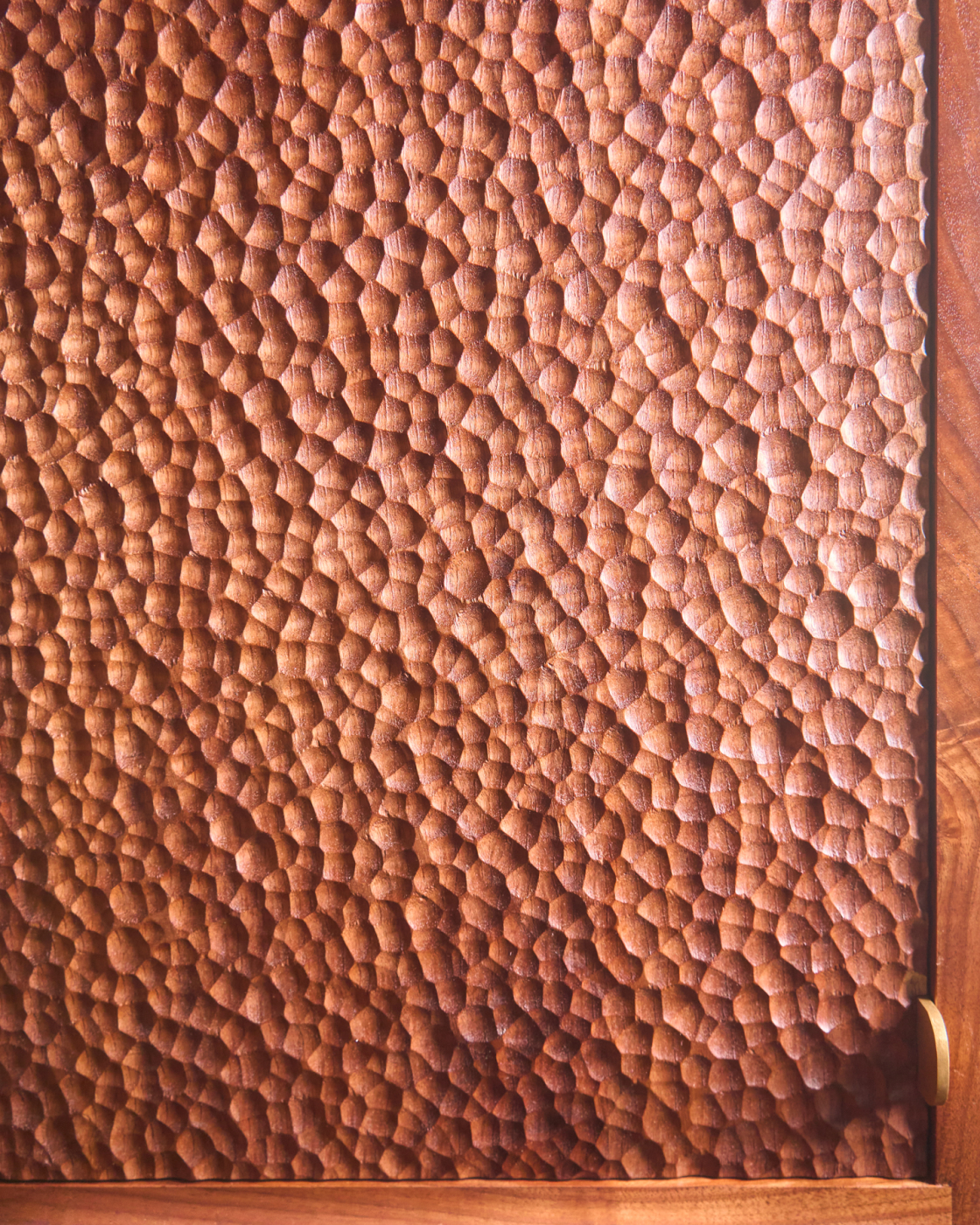
Application was simple — wet a rag with the jelly-like finish, and buff it into the wood — hard. Per Maloof’s instructions, your hands should warm from the friction. In my 50-degree shop I was unable to generate noticeable heat, but the finish seemed to take well regardless. I had concerns with how well the finishes would work on the textured door, but I had no problems at all with application.
Please note, tung oil and linseed oil are both flammable. Be especially careful with any rags you use for finishing, and dispose of them properly.
Textured Wall Cabinet SketchUp Model