We may receive a commission when you use our affiliate links. However, this does not impact our recommendations.
 Because we have just about put to bed the current issue and due to the upcoming holiday weekend, I had a little free time to be out in the shop. Look out workbench, here I come – again. Today I worked on the shop drawers that slip into boxes that will eventually fit inside the base of my bench.
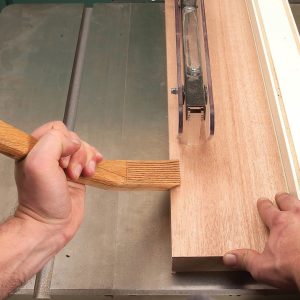
 In the left-hand photo you can see how my parts come together. I made the drawers with simple-to-assemble joinery; I don’t need dovetails in this scenario. These drawers are small and shallow, so I decided to use a dado & rabbet joint (some woodworkers call this a lock joint). Download a copy of “Joinery Tips & Techniques” to learn more about simple joints and how to make them. I keep a copy close by.
The dado is cut into the drawer sides, leaving the rabbet in the front and back. I used the two blades of a dado stack (no chippers required) to cut the dado. Because my material is 1/2″ thick and my dado is 1/4″ wide, I positioned the cut 1/4″ in from the ends of the drawer sides. With the depth of cut set at 1/4″ – one pass at each end, then it was on to the rabbets.
 Cutting the rabbets required that I slide the fence tight to my blade (without changing the cutting height). Again, one pass at each end and I was ready to assemble the boxes. Piece of cake.
Assembly is easy, too. I added a small amount of glue to the dado then slipped the rabbeted pieces into place. Next, to act as clamps while the glue dried, I shot a couple of 23-gauge pins into each connection. (I have to add here that I growing fond of the Titebond No-Run No-Drip wood glue. The thicker consistency and the quicker drying times of this glue is making me a fan.)
 With the boxes assembled, I needed to add a drawer bottom. Of course, plywood is my answer. I cut each piece of plywood to size and made sure that these would easily slide into the cases. With the drawer box on a bench, I positioned the bottom flush with the box front and centered from side to side. I used no glue here in case I need to reposition or move the boxes for some reason – I may even need to replace the bottoms sometime and glue would make that a pain. For the same reasons, I chose to use screws instead of nails or brads. When I finished assembling the last box to bottom, I slipped all the drawers into place.
You have to admit that shop drawers of this design are great for shop furniture. They are so easy to build and assemble. And best of all, you can make them out of offcuts and scraps. Checkout the fit of the two lower drawers in the right-hand case. Notice the wider gap at the edges? The pieces I had to work with were a bit shorter than the other parts. But because these boxes attach to plywood (the pieces that need to be sized correctly), I can use almost any size box. After I mount the drawer fronts, you’ll never know which boxes are smaller. Until, that is, you slide out the drawers.
If you’re looking for other drawer construction options, download a copy of Bill Hylton’s “The Drawer Book: A Comprehensive Guide for Woodworkers.”