We may receive a commission when you use our affiliate links. However, this does not impact our recommendations.
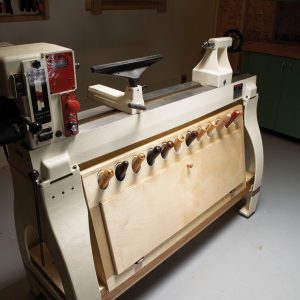
 Now that I’m officially on board I figure I’ll get the obligatory plane post out of the way early. Sure, I did my touchy-feely First Day post last week. And while I was in the PopWood offices (I’m back home in Penn. now until we make the final move) I got a chance to play around with Jet’s new 719200 lathe (read a little about it here) in order to review it for the October issue of the magazine. Now some would say those are “official” blog posts but I understand you are not “really” an editor until you’ve posted about planes.

For quite some time I’ve heard about lapping the sole of a plane in order to get it absolutely perfectly flat. Hogwash. Sure, flattening a plane can make life easier but it just isn’t a “necessity.” Those who think a plane is useless without being perfectly flat just don’t understand what a plane is or how it works, and they certainly don’t understand the tolerances of the medium in which we work. With all that said, I’ve never flattened a plane.
I’m a pretty meticulous woodworker but I only work to the nearest 1/32″. If my plane measures within that tolerance of being flat, I’m OK with it. I’ve always thought flattening planes is a waste of good woodworking time. If a plane is that far out of flat, throw it away and get another. If it’s an old plane, it just means someone abused it. If it’s new, it’s a defect.
 The biggest problem I have with flattening planes is, my plane of choice is just too big to flatten. From what I’ve read, people spend days flattening a simple smooth plane. How long is it going to take for me to lap this to perfection?
Whether your plane is hand or power, you really only need to know a few things. For a handplane, three points need to be in the same plane: the toe, the area right behind the mouth and somewhere toward the back of the plane. Honestly, you really can get away with two of those. The only one that has to remain is the spot right behind the mouth. It means you may have to learn how to apply pressure differently as you use the plane but it will still work. Sharp is far more important than flat. I don’t care what method you use to sharpen. Just pick the one that makes the most sense to you. Whether it’s a really old method of sharpening, mine or someone else’s, just sharpen.
For my plane of choice, I merely need to make sure my knives are parallel to my outfeed table and that my outfeed table is in line with the apex of the arc of the cutterhead. Once I achieve that, everything else is fairly inconsequential. Again, sharp is far more important than flat.
I may have oversimplified things a bit but it is my first “official” editorial post. One of the biggest problems I’ve seen with woodworkers over the years is, they worry the minutiae to death and don’t get to do what’s important: woodworking. Get into your shop, sharpen (because that’s far more important than flat) and set up your tools as quickly as possible and build something. If you do it often enough you’ll get better or you could spend all your time worrying about your plane being “a couple of thou” out of flat.
p.s. If you just can’t bear to replace an old handplane and would prefer to give it new life, check out Christopher Schwarz’s DVD “Super-Tune a Handplane: How to Turn a Flea-market Find into a Fast, Accurate and Smooth-cutting Tool.“