We may receive a commission when you use our affiliate links. However, this does not impact our recommendations.
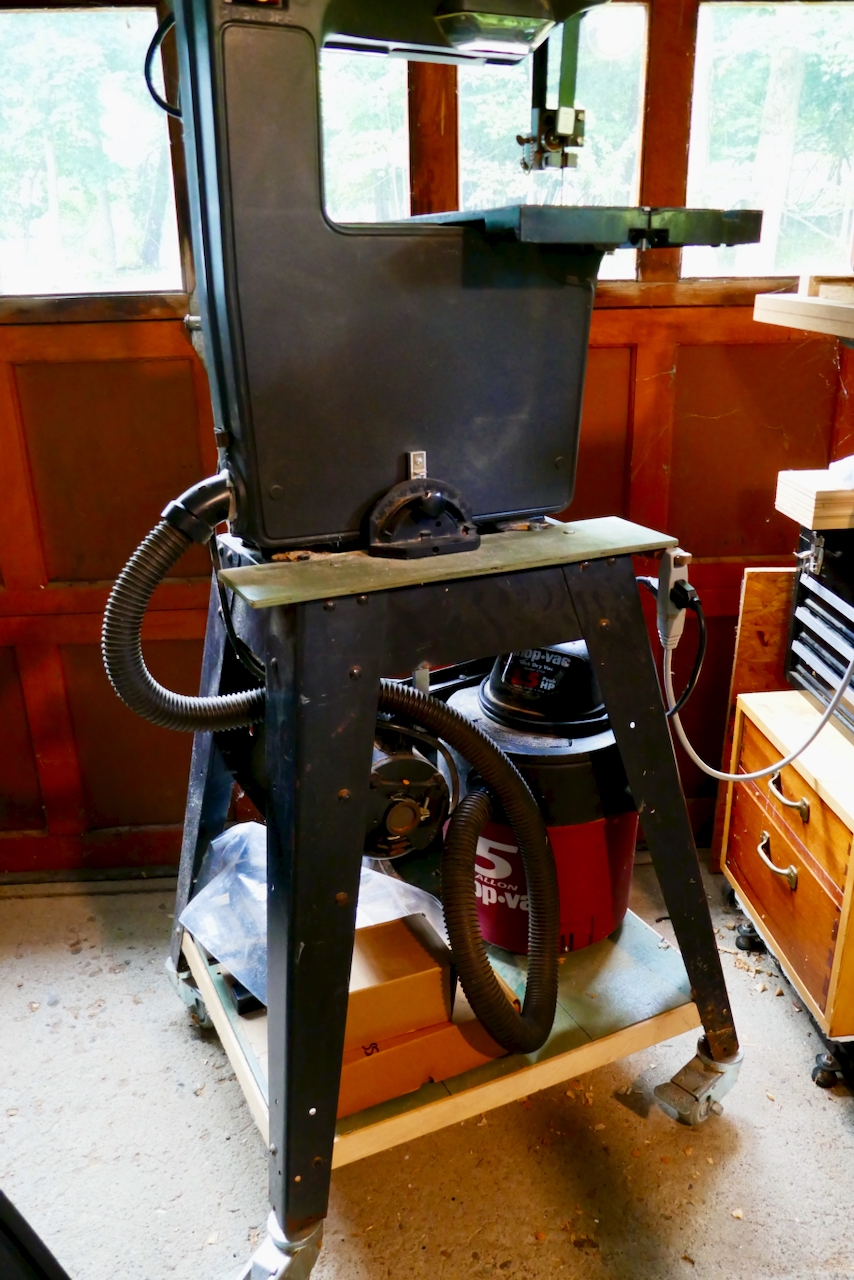
Three weeks ago, I decided to check the small shop vac I had hooked up to my Delta bandsaw. To my surprise, it was packed full of sawdust—years’ worth of fine shavings quietly captured since I first set up the system (see Part 1 and Part 2 of that story). That moment was a wake-up call: even the most basic dust collection setup can make a big difference in reducing ambient dust in the shop.
The saw itself was a gift from a neighbor, and when I installed it in my shop I built a shelf beneath it to house a compact shop vac. I connected the vac to the saw’s dust port using an ABS bracket from Home Depot. Now, whenever I fire up the bandsaw, I switch on the vac, and the difference is clear: less dust on the floor, less dust in the air, and a cleaner workspace overall.
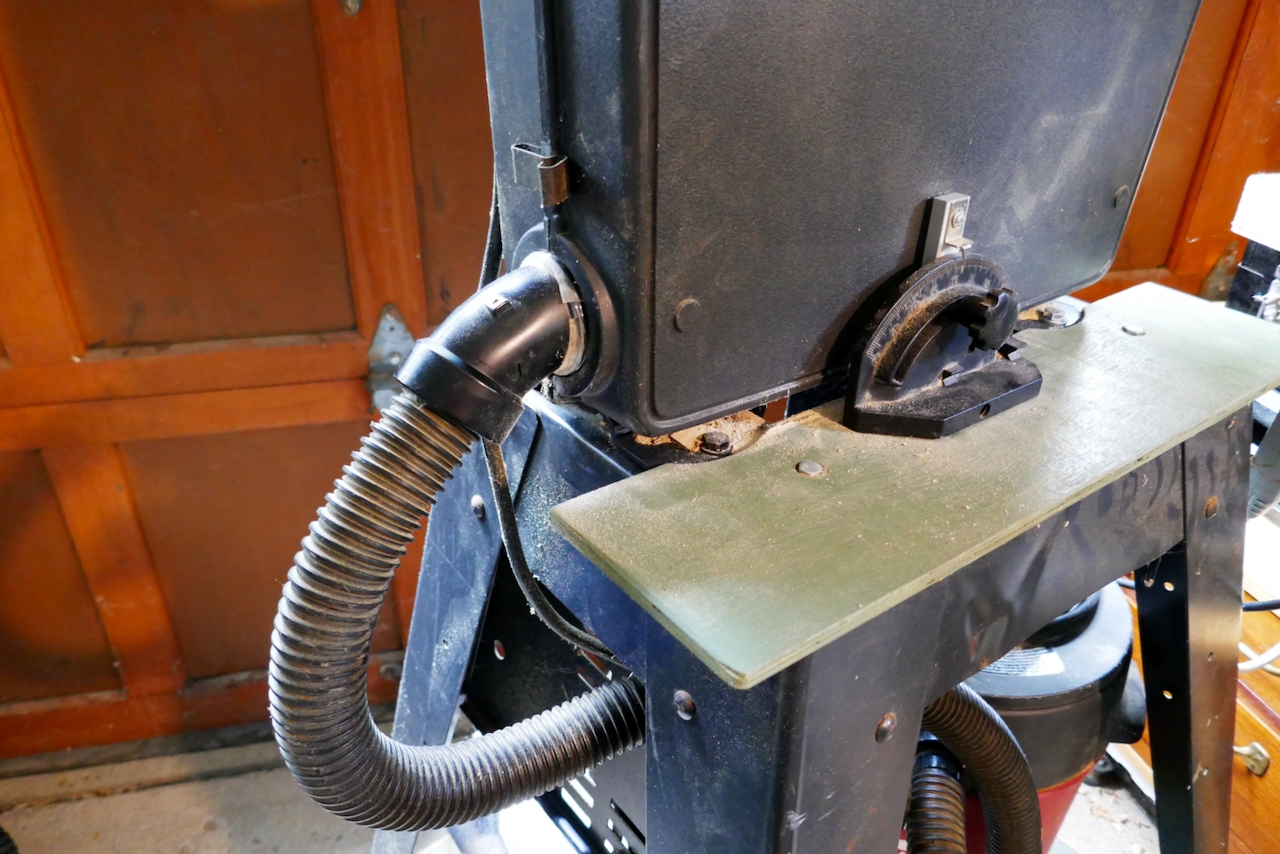
Of course, this is a rudimentary system. Ideally, every shop should be equipped with a dedicated dust collector designed to protect both our lungs and our work environment. But the reality is that many of us overlook dust collection when it comes to smaller tools—a 10-inch bandsaw, a miter saw, even a scroll saw. This experience convinced me otherwise.
That shop vac, modest as it is, had intercepted an incredible amount of dust that otherwise would have ended up floating in the air or settling everywhere in my shop—or worse, in my lungs. The lesson is simple: don’t underestimate the value of hooking up a small, inexpensive shop vac to your tools. Better yet, connect them to a full dust collection system if you have one.
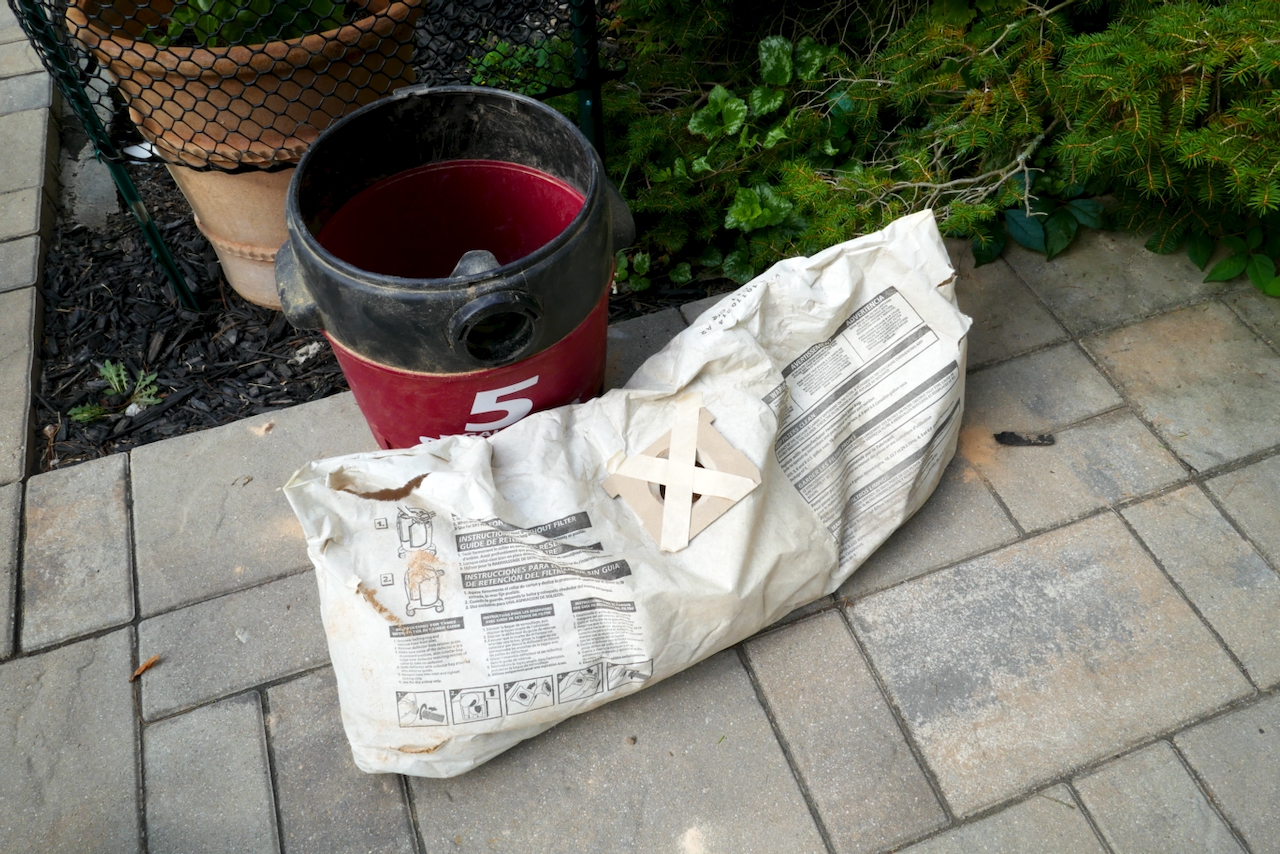

And here’s one more tip: if you’re using a shop vac, don’t just rely on the bucket and a basic filter. Instead, set up a two-tier system with a high-quality HEPA filter (availible for most models) and disposable paper dust bags. This combination captures fine particles far more effectively, keeps your air cleaner, and makes emptying the vac much easier. Just pull out the full bag, toss it, and replace it with a new one—no clouds of dust rising back into the shop.
Your health, your shop, and even the quality of your woodworking will benefit.
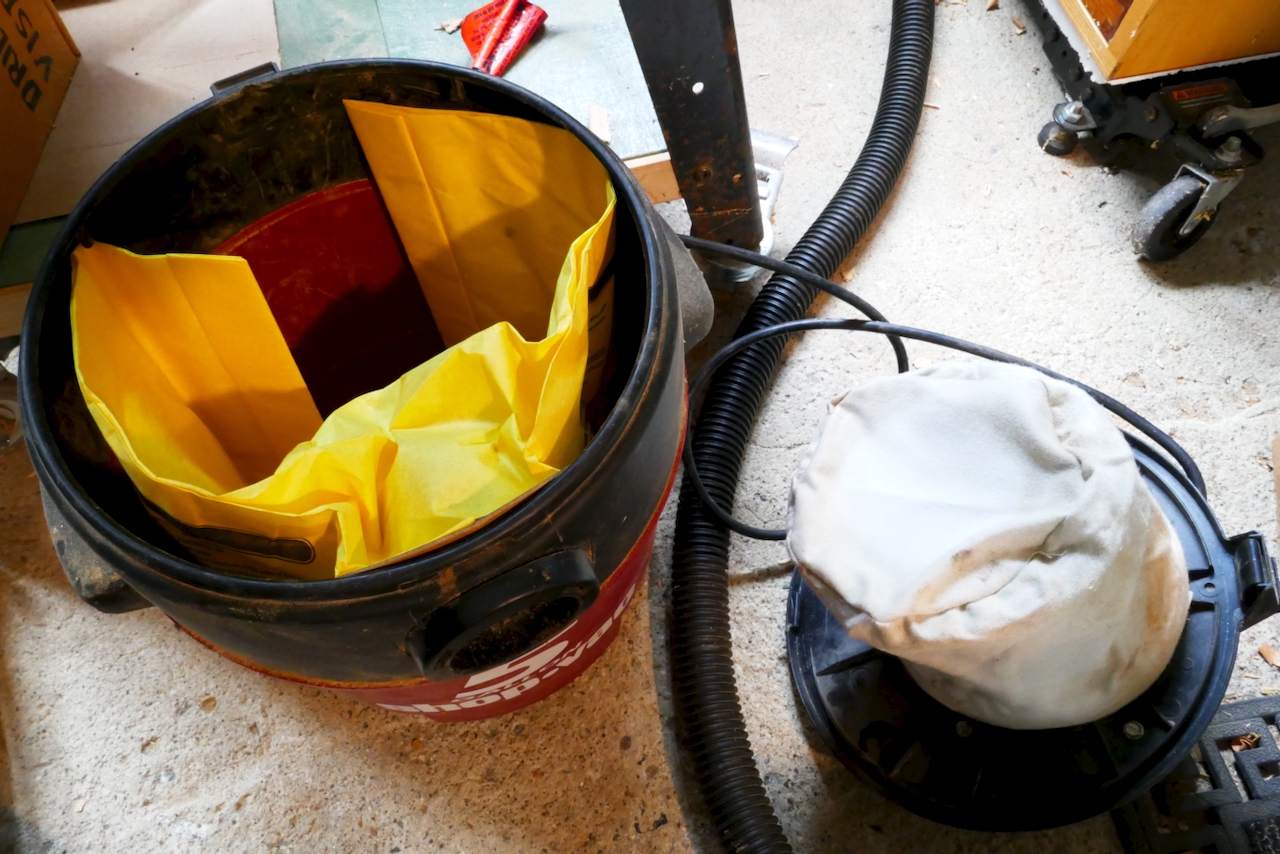
The new bag is inside the Shop-Vac bucket.