We may receive a commission when you use our affiliate links. However, this does not impact our recommendations.

Plastic mallets can be highly durable, but they always look like plastic. Wooden mallets look great, but they sure get beat up after a few years of use.
Now Dave Jeske at Blue Spruce Toolworks has produced a mallet where every cell of the wood is infused with acrylic. This results in a mallet that looks and feels like wood, but it takes a bad-dog beating like plastic.
Jeske had one of these mallets at the Woodworking in America conference, and I ordered one shortly after returning home. (Despite the fact that I got free admission, that conference turned out to be a very expensive weekend for me.)
The mallet arrived yesterday, and the entire staff went nuts over it. Senior Editor Glen D. Huey, who has a thing about both round mallets and figured maple, held onto it for such a long time that I was a little worried that I wasn’t getting it back.
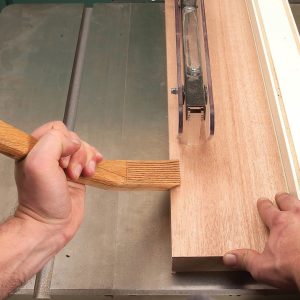
Then, when I mentioned the mallet’s head was infused with acrylic, we all immediately went to the shop to beat some things with it. After some serious pounding, we could barely even make a smudge on the surface. This morning I took it into the shop and beat a chisel about 120 times as hard as I could on one spot on the mallet’s head.
Right now I’m looking at the mallet and cannot find the spot that took the beating.
The mallet weighs 16 ounces, the head is quilted maple and the handle is African blackwood. The two parts are joined with a stainless steel tenon and a small brass bead. If you’ve ever seen any of Jeske’s work, then you know that it is over-the-top beautiful. The mallet costs $80. Photos do not do it justice. Check it out here on the Blue Spruce site.
And yes, I know that you can build your own highly effective mallet using shop scraps or (if that’s still too expensive), may I recommend laminating together several hundred free stirring sticks from Starbucks.
Just sayin’.
If you want to read more about the acrylic infusing process (it’s fascinating), check out this links to WoodSure, which performs the process using vacuums. (Think kitchen countertops, bathroom floors.) Also take note that they can add dye during the process, which creates some pretty amazing results. The process is covered in more detail here.
Jeske also uses the same acrylic-infusing process with his bench chisels with great results.
It’s making me think what other tools could benefit from an acrylic injection.
– Christopher Schwarz