We may receive a commission when you use our affiliate links. However, this does not impact our recommendations.

One of the occupational hazards of my job isn’t working with tools, it’s writing about them. Here’s an example: I’ve been working on an article for our June 2011 issue about a relatively pricey tool. In the article I suggest that because the tool is common and durable that you can pick up an old tool for less than half the price of a new one. Being a responsible journalist, I decided to see if that was true or if I was just making it up. I checked a few sources of old hand tools and eventually made my way to eBay, realizing I was entering a danger zone. There was a decent example of a brand I wasn’t familiar with, and another example of a brand I really like, but in an odd size. To make a long story short, my curiosity led to some successful bidding and I now have six of something I only had four of when I started. That’s not necessarily bad, but one of my new old tools looked grimy and neglected.
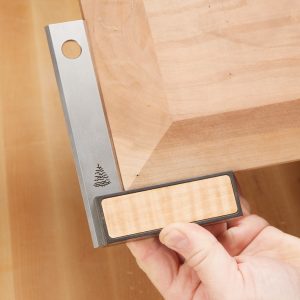
On my way to lunch, I stopped at the local auto parts store to see if they had any new magical stuff for the cleaning task. The rule wasn’t really rusty, but it was dirty and corroded. I wanted to get the gunk off, but didn’t want to damage the markings or scratch up the surface. For really rusty stuff, I generally soak a tool in 3-in-1 Oil (my grandfather’s technique) or Liquid Wrench (my father’s method) then scrub with a Scotch-Brite pad. Either of those work for removing the actual rust, but they don’t do much to clean. I was hoping for something a bit less oily, messy and abrasive.
In the alchemy aisle, I came across a product new to me with a catchy name. I’m as big a sucker for catchy names as I am for bargains in old tools so I paid $6 for a can of “Never Dull Wadding Polish.” Inside the can is some cotton wadding saturated with some sort of oily stuff (a trade secret according to the MSDS). The instructions say to rip out a hunk of the wadding and rub until the pad comes clean, then wipe dry with a dry rag. It works pretty well, but it takes some time and elbow grease. I ran out of patience before I got a pristine surface, but in a few minutes I could easily read the numbers, and that’s the result I was after. I did however, apply a trick of my own to improve the surface.
It’s another product with a clever name, Bar Keepers Friend. It’s a mild abrasive that contains oxalic acid. One of the problems with rust and corrosion is that it eats into the metal surface. If a piece of metal gets really rusty it can form a crust above the surface (that can be scraped off with a utility knife blade). The ugly part that you want to remove is lower than the good part you want to keep. If you attack the ugliness with something aggressive you do more harm to the good parts on your way to cleaning up the dirty parts. If you sand, you risk removing too much of the original surface, or inflicting new damage by scratching it up. If you launch chemical warfare, the things that remove the rust can discolor the good metal you have.
I put a few shakes of Bar Keepers Friend on a damp rag, rub it all over the surface and walk away for 10 or 15 minutes. That forms a paste that gets down into the low spots, and while I’m gone the chemicals work on the rusty spots, lightening the ugly brown color. I wipe off the paste with a clean rag, then follow that with a second round of rubbing with fresh Never Dull wadding, then one more wipe with a clean, dry rag to remove the oily residue. I suspect that if I kept working at it I could achieve a nicer surface, but that’s not what I’m after. I made a big improvement in a short time, and numbers and marks that were hard to see and read are now visible. It turned out so well that I should probably get online and bid on a few more.