We may receive a commission when you use our affiliate links. However, this does not impact our recommendations.

Some Japanese saws don’t play nice with Western hardwoods.
More than a decade ago, my wife bought me a nice Japanese dozuki that cost about $100, a fortune for us at the time. I took it to the shop and started cutting some dovetails for a Stickley mantle clock I was building. The wood was white oak.
After a stroke or two I heard a pinging sound. Each stroke snapped off several teeth. So I called the catalog company to give them grief. At first, they blamed me and said it was my inexperience with the tool that caused it to commit ritual suicide. I argued that I had been using dozukis for many years. I knew the tool needed a light touch.
Then the guy asked: “What wood were you cutting?” I told him.
“Send it back. And don’t ever use it on white oak or any other ring-porous wood.”
In the years since, I’ve talked to a lot of experts on Japanese saws and they have told me that the handmade Japanese saws have teeth that are more delicate. Many factory-made Japanese saws have teeth that are induction-hardened (which shows up as a dark discoloration at the toothline). These saws haven’t ever given me problems.
I’ve also been told that , in general , Japanese woods are softer than their Western equivalents.
So the lesson for me was: Be careful when using nice Japanese saws.
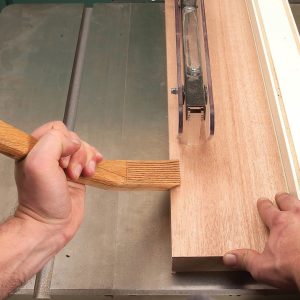
Today I forgot that rule. I was using a Japanese nail saw to trim some white oak pegs when I lost 18 teeth. This was a saw we had tested in Woodworking Magazine (don’t worry, it wasn’t the winner) and its teeth were not induction hardened.
Ugh. Time to call Lee Valley and buy the winning saw.
– Christopher Schwarz