We may receive a commission when you use our affiliate links. However, this does not impact our recommendations.
Miter joints can be a real source of frustration. The pieces need to be the exact length and the cut surfaces need to be as close to perfect as you can get them. If they don’t look great right off the saw, use a shooting board and a plane, or rub the surfaces on a piece of sandpaper glued to a flat piece of scrap. It doesn’t matter which you use, but your friends won’t be as impressed with your sanding block as they will be with your shooting board. Shavings trump dust every time.
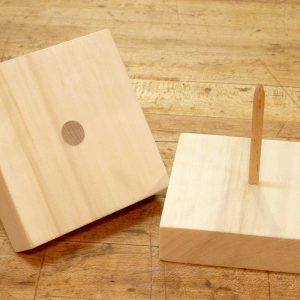
One way to get better joints is to use a glue that is “grabby”. Hot hide glue is grabby, but liquid hide glue isn’t. Good old yellow glue is kind of grabby, but white glue is really grabby. The first step is to put a spot of glue on one side of the joint. You don’t need a special brush and you don’t need to spread it around. Rub the two parts of the joint together.

Open up the joint and you’ll see an even coat of glue on both parts of the joint. But don’t put the joint together yet.

Leave the joint open for a couple of minutes. You might be surprised at what you see as time elapses. The photo below shows what happens to the glue. It wicks up into the pores of the wood, away from the actual joint surface. That’s bad news if you want the joint to hold, but good news if you apply another dab of glue.

The glue from the first round partially dries, and forms a barrier that sticks to the wood and sticks to the second dab of glue.
 Put another dab of glue on one side of the joint, put the two pieces together and rub them back and forth. You will feel resistance as the glue grabs. Make sure the two parts are lined up, and set the assembly aside for the glue to dry.

The joint will hold together as long as you don’t mess with it. Glue dries in stages, and just because you can pick up a piece and have it stay together doesn’t mean you can stress the joint. Chemical reactions are taking place, and the moisture in the glue needs to evaporate, and that takes about 24 hours or so.
Looking for great information and a great deal? Visit our store where “Hand Tool Essentials” is on sale at a crazy price.