We may receive a commission when you use our affiliate links. However, this does not impact our recommendations.
In hand-tool woodworking, brains almost always trump brawn. For example, when I need to remove a lot of material from a localized area, I need to think like a tree assassin and exploit its weaknesses.
Think about it for a minute: Trees are much stronger in the vertical axis than they are in the horizontal. In the vertical axis, the individual cells are long, skinny and have a tremendous amount of beam strength so that a thin tree trunk can hold up an enormous number of branches.
When we want to kill a tree, the easiest way is to girdle it – that’s where you remove a layer of bark and sapwood from the circumference of the trunk. This cuts off the water supply from the roots to the leaves.
Then we crosscut the tree to take it down. I’ve never seen anyone cleave a standing tree in the vertical axis, though that would be fairly cool to see.
So trees are most vulnerable in their horizontal axis. Remember this and use it through every aspect of a project.
When you need to flatten a warped board, remove the high spots by traversing across the grain of the board. You can take an enormous bite of wood when planing across the grain with less effort. Don’t work parallel to the grain until you absolutely have to.
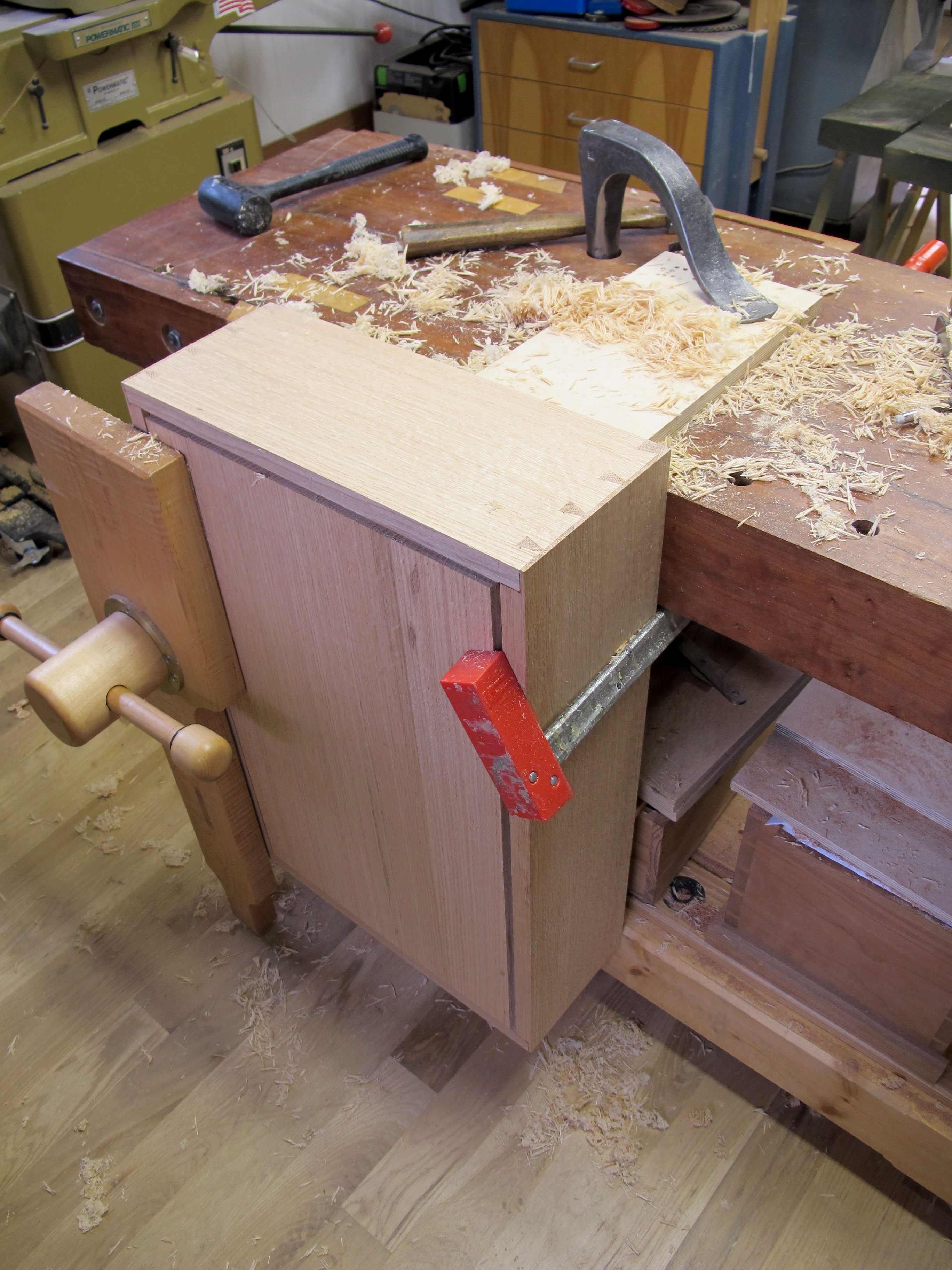
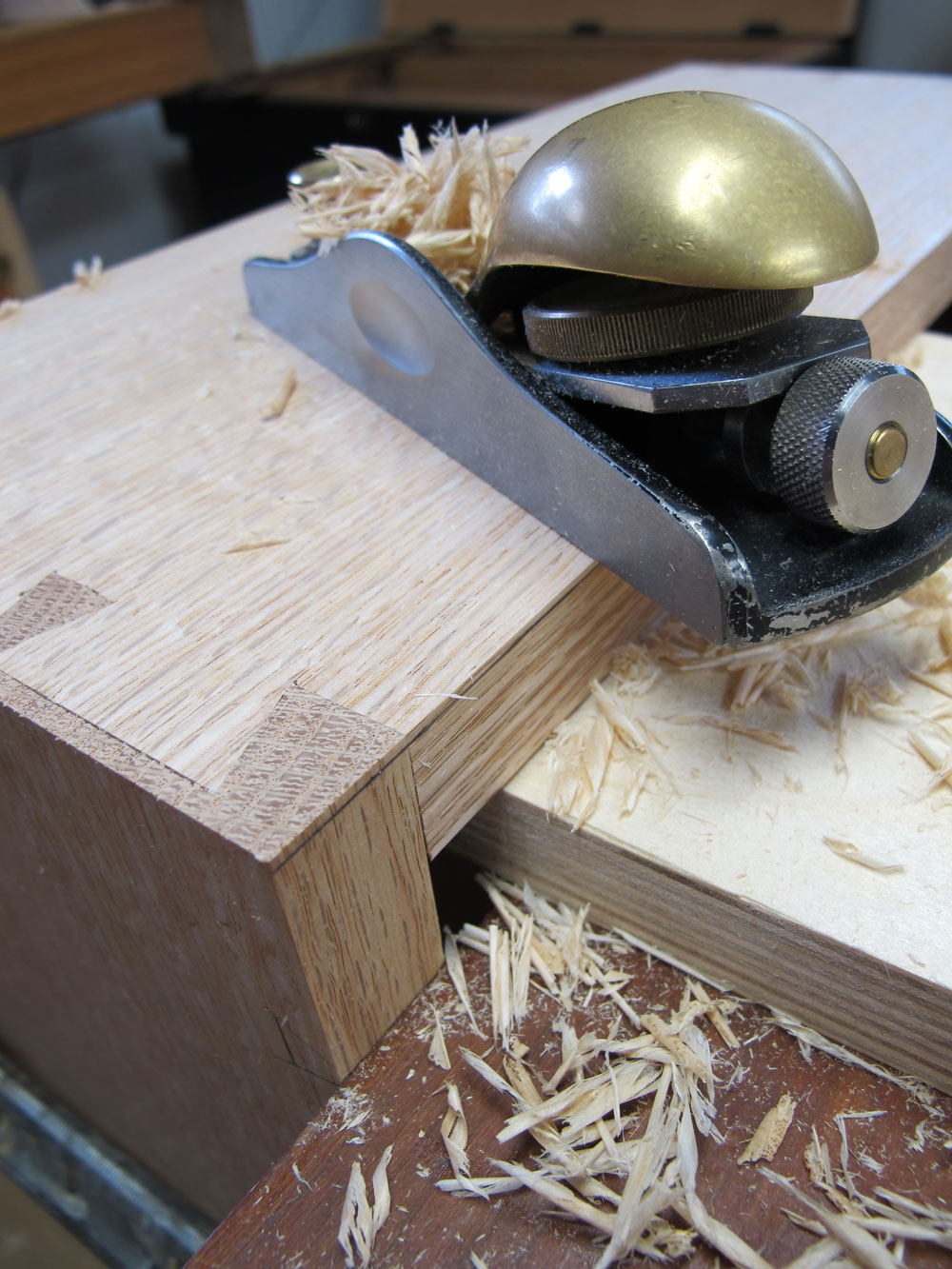
This same idea works even after assembly and with the finer tools. For example, today I’m truing up two halves of a folding bookcase that opens like a clamshell. One of the halves is a little out of square, so I need to remove some tapered slivers of wood on six of the eight edges of the two assemblies.
After marking out all the areas I needed to remove (layout is everything), I took a block plane and worked across the grain on each of these edges to quickly rip out the excess wood. I’m happy to traverse the grain with any plane – jack, jointer, smoother or block plane – to get the job done.
A plane that is traversing the grain doesn’t leave a gorgeous finished surface, but you can improve it by skewing the tool up to about 30°. It’s best if the skew is sympathetic to the grain direction of the board it is cutting. If that sentence doesn’t make sense to you it will the first time you skew the wrong direction and things start to look horrible.
Once I got close to my line, I switched to a smoothing plane and made a few passes parallel to the grain of the board to tidy up the surface of the assembly.
— Christopher Schwarz
P.S. I write a LOT about handplanes. So much that F+W digested some of it into a book called “Handplane Essentials.” Want the unedited fire-hose stuff? Click here.