We may receive a commission when you use our affiliate links. However, this does not impact our recommendations.

It’s lunchtime, but as I gaze into the fridge the only thing that looks good to me is a beer. I reach for the yogurt, but I almost change direction and grab the bottle of Fat Tire on the shelf above my milky bacterial fermentation.
Now before you start to worry that I’m in need of an intervention, hear me out. This craving for beer is what happens every time I spray lacquer. The first time I felt this urge more than 10 years ago I dismissed it as my brain telling me to take a victory lap because I’d finished a big project.
Now I think it’s something else. Perhaps my body is trying to replace one toxin with another. Perhaps something in lacquer or the thinner unlocks some alcoholic alter-ego. Believe me, I’m careful around finishing materials and their solvents. I wear a cartridge respirator the entire time I’m working. I wear gloves as I mix the lacquer and thinner. I spray outside on a breezy day.
But no matter what precautions I take, the result is always the same: Beer, beer, beer.
This morning I sprayed the finish coats of lacquer on the Gustav Stickley 802 sideboard that has been languishing in my shop as I’ve gallivanted through Maine and Las Vegas these last few weeks. My original plan to finish the sideboard was to use the suntan finish we developed for cherry in Woodworking Magazine Issue No. 5.
But I didn’t use that finish on the cherry dining table I built in 2005, so that gave me a bit of pause. In 10 years, I’d like these two pieces to look the same color in the same room. So I simply shot the sideboard with clear lacquer, which is the finish on the dining table. Three coats in two hours. God I love spray finishing.
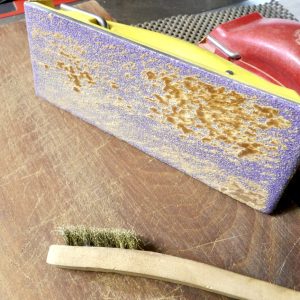
Here’s a little tip for you the next time you’re at the hardware store: Pick up one of the 3M #180-grit sanding sponges. For the last couple years I’ve been using that between coats of lacquer and have decided that it is the bee’s knees. It levels lacquer quickly and brings up the white powdery look you want before shooting the next coat. Plus, the sponges last much longer than the lubricated sandpaper we use at work. When the sponges get a little clogged after a few months, just rinse them out with water and you’ll get some more life out of them.
So far, the sideboard looks pretty good. I like to let the lacquer level and cure for a day and then I rub it out with a plain brown paper bag to remove any dust nibs and give the finish a silky feel. So now I’m going to go down and see if we have any plain paper bags in the pantry.
If we don’t, I’m going to go to the liquor store and kill two needs with one purchase.