We may receive a commission when you use our affiliate links. However, this does not impact our recommendations.
 I’m not easily riled. But if you want to get me worked up, then make a casual comment on a piece of woodworking that you’ve never built or dealt with.
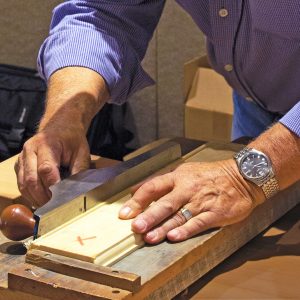
Case-in-point: I’ve been using a metal planing stop (as shown above) for more than 12 years. It is the foundation of everything I do at the bench. Yet, if I ever show its teeth in an article or on the internet, I know I’m going to get a comment such as this:
“You gonna cut yourself on that.”
I have never cut myself on my planing stop, just as I have never ever cut myself with a handsaw, chisel or handplane. My soft parts know to avoid the bitey bits. Your soft parts know the same thing, too (except for the soft part between your ears, apparently).
When I first started exploring traditional woodwork many years ago (I think I was 12 and tried to raise a panel with a block plane) I vowed not to bring my modern biases into play until I had built the vintage thing, used the vintage thing a lot and had the vintage thing figured out.
I know it’s tempting to try to “improve” something before you build it or have used it – it’s a natural response of the woodworker. But how do you know that the old thing needs to be improved if you’ve never used it? For me, the place to start is to build the vintage thing “to the print,” use it and then decide if it needs to be “improved.”
Usually, it doesn’t.
Take the metal planing stop for an example again. Many people told me I needed to cut a shallow mortise in the benchtop to conceal the teeth of the planing stop, even though I’ve never seen an historical example of this. Sure, it seemed like a reasonable idea. But before I went down that logical path, I simply built the planing stop as it is shown in hundreds of old texts.
The mortise to hide the teeth is unnecessary.
Why? Well I’m going to leave that to you to discover for yourself. You might think I’m full of crap. But until you make a metal planing stop for yourself and use it like millions of woodworkers who were born before you, you’ll never know.
— Christopher Schwarz