We may receive a commission when you use our affiliate links. However, this does not impact our recommendations.
 It always stirs up an uproar when we post a question online about the usefulness of the project cut lists we provide in the magazine. Readers voted resoundingly to keep them, and I’m not surprised. Most people don’t like to give up something they’ve become accustomed to – whether they found a use for it or not.
What I found intriguing were the comments people left about their reasons for either keeping or eliminating the cut lists. Most comments fell into a few camps. One major reason cited for keeping them had to do with making it easier to determine the amount of lumber needed for the project. Another group said cut lists were mostly used by novice woodworkers (I recall the word “crutch” was used). Then there were those who dismissed cut lists as useless because too many things change during the building process.
Oddly, I found myself disagreeing with just about everyone – regardless of whether they said cut lists should stay or be cast out from the magazine’s pages. It made me wonder about what you, our readers, do to plan your projects before cutting wood. My “take away” is that not enough planning is going on out there.
I don’t honestly know what I enjoy more about woodworking: planning a project or building it. Planning is about problem solving. Building is the execution and confirmation of your plan.
Planning is the process of moving through a number of steps to take a project from a concept to the point at which you start to build. Maybe you make some sketches. You consider the special challenges the project presents, such as tricky joinery or finding special material. Perhaps the project needs to support a lot of weight – or be light as a feather.
Planning was drilled into me at the trade school I attended. We spent weeks of classroom time learning the planning process. We were not permitted to start building a project before presenting our drawings and cut lists to our instructor and getting approval. We’d be questioned on our plans and would have to defend them. If we took shortcuts or made errors, we were sent back to the drawing board. Literally.
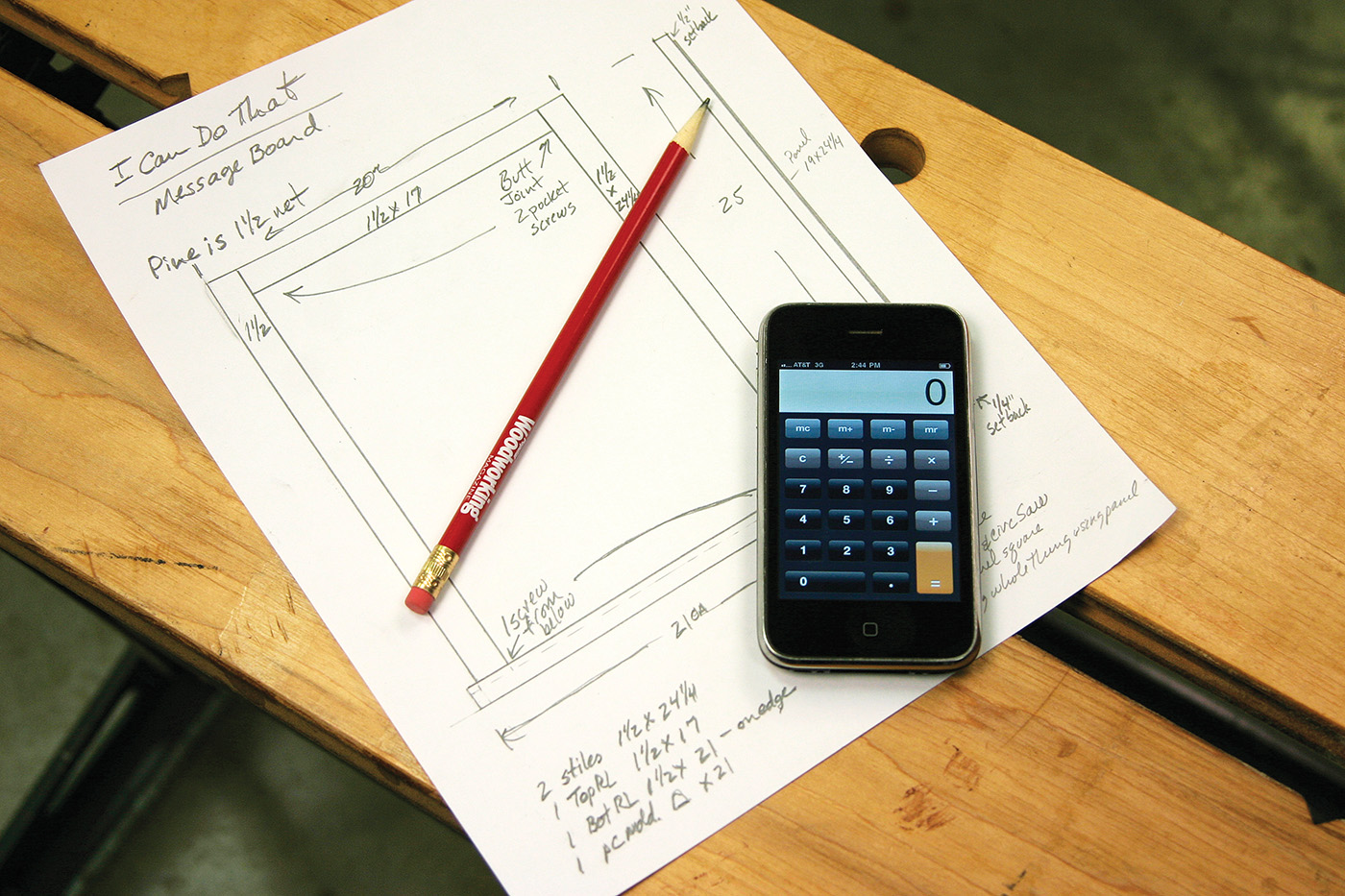
To this day I draw a project plan and write out a cut list before I start any project, no matter how simple. It may be a crude sketch, but it has dimension lines and calls out part sizes. The cut list is taken from the sketch. If need be, I’ll make a separate sketch of the joinery to determine allowances for the additional length required, say, for a tenon. Over the past 30 years there have been a few times when I quickly, and wrongly, concluded that such a simple box didn’t need a plan or list. I usually paid a price for this bit of hubris.
So what’s the point of all the planning? Ultimately, a successful project build. And I start every build with the confidence to cut most, if not all, my project parts before I assemble anything. Why not? I’ve already built it in my head at least once and the planning verified my cut list was correct. My task at this stage is to follow the list and cut parts to accurate dimensions.