We may receive a commission when you use our affiliate links. However, this does not impact our recommendations.

In the debate of round bench dogs vs. square bench dogs, I have tried to remain neutral.
But after years of working on both, I have decided to cast my lot in with the round dog camp. Here are a few reasons why:
1. Round dogs are easier to retrofit to a workbench than square ones. If you have a brace and bit, you can Swiss cheese up your bench at anytime. Adding a square dog hole after your bench is assembled is a pain. A proper square dog hole is a stepped and angled mortise.
2. Round dog holes play nicer with holdfasts. I’ve seen people use their holdfasts in square dog holes, but it’s not always successful and it’s not always pretty. Holdfasts work best in round holes, and I like using my holdfasts in the row of dog holes that runs along the front edge of my bench.
3. Round dog holes have more accessories. The manufacturers who make workbench accessories , especially Veritas/Lee Valley , make a crazy array of workholding accessories that work in a 3/4″-diameter round hole. And if you buy holdfasts that work with a 3/4″ hole, your life (in the shop, at least) will be simpler.
4. You can quickly make your own round dogs. All metal dogs (round or square, brass or steel) are overkill in my book. And they have a tendency to nip at your tools. No matter what shape of dog you use, I recommend you try some shop-made wooden dogs with leather gripping faces.
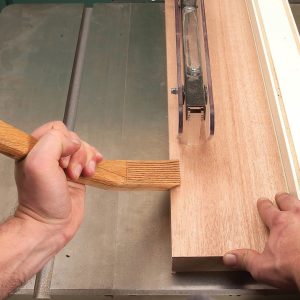
My round wooden dogs are made from 3/4″-diameter hickory dowels (you can order these from several places. I get mine from Midwest Dowel). Saw off the length you need , I recommend it be 1″ longer than your bench is thick. Make a dog for each hole if you like. That is some luxury.
Then saw a flat gripping surface on the top of the dog. My gripping surface is about 1-1/2″ long and 5/8″-wide. Then glue some suede (or whatever) to the gripping surface using some yellow glue, hide glue or whatever else you have.

The final touch is to add a spring-loaded bullet catch to the shaft of the dog. The bullet catch allows the dog to be positioned at any height and keeps it from falling out of its hole.
If you break one, you are using too much clamping pressure with your tail vise. But if that happens, the fix is simple , make a new dog.
I will admit that square dogs have some advantages when clamping tall boards on edge and some assemblies , that’s because their clamping surface can be raised high above the workbench and it is proud of its square shaft. I have a quick modification in mind for my round dogs that will grant them this superpower. I’ll share that idea once I test it out a little more.
– Christopher Schwarz