We may receive a commission when you use our affiliate links. However, this does not impact our recommendations.

While I think a tool chest is the best place to store your tools, the chest can also become a rusty tomb if you aren’t careful.
Woodworking shops can be nasty places. I’ve worked in unheated garages, damp basements, former warehouses and sheds with dirt floors. And when I inspect old tool chests, it’s common to find rot in places. Once the bottom gets soaked, it acts like an ever-moist sponge in a greenhouse. Your tools are pretty much doomed.
Well-made chests are usually elevated on narrow strips of wood, which I call “rot strips.” These act as an early warning system and confine the moisture to a small area. When these strips get punky, you replace them with new ones.

How you make the rot strips depends on where your chest will go. My current chest is elevated 3” off the floor on casters. I still have rot strips on the bottom, but they are made of pine, nailed in and are surrounded by the skirt of the chest. Unless, my shop is flooded, it’s unlikely they will ever get wet.
But this week I’m building a tool chest for a customer and its new home is uncertain. It won’t be on casters, and it could occasionally be in a wet place. So my rot strips are different.

For these 1/2”-thick rot strips I used white oak, which is a tough, rot-resistant wood. I chose it for its toughness more than its rot-resistance. I’d actually prefer the strips to fall off if they got wet.
But this chest will probably get moved a lot. So white oak it is.
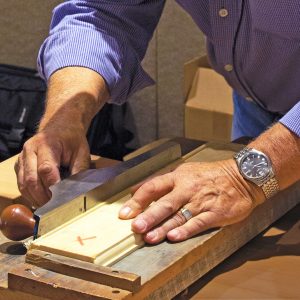
I beveled the two long edges and the ends to make the chest easier to move. On old chests I’ve found that the ones that are easier to move have rot strips that are rounded or beveled – this prevents the rot strips from snagging on a nail or even a threshold of a door. Chests like this are almost as easy to move as those on casters.
I’m also going to screw these strips onto the chest with unplated steel screws. The screws are less likely to bend, so the rot strips won’t get yanked off the bottom of the chest when it’s moved. Also, the screws will be prone to rust. So if they rust out because of exposure to moisture, you’ll know that your rot strips are getting wet and it’s time to replace the rot strips and find a drier shop.
Little details like this can prevent your tools from becoming iron oxide – though nothing protects them as much as using them regularly and wiping them down with an oily rag before you put them back in the chest.
— Christopher Schwarz
I’ve written a lot about tool chests here on the blog. You can read my other entries here. I’ve also written a book called “The Anarchist’s Tool Chest” that discusses tool chest design and how to pick the right set of tools that go in it.