We may receive a commission when you use our affiliate links. However, this does not impact our recommendations.
 Riding to work on my motorcycle this morning got me thinking about comfort in the shop. My commute is only a half-hour long, but that is plenty of time to really get a feel for my bike and what I would need to change to make my body position more comfortable. I was thinking about this because, for the majority of my commute, the foot pegs on my bike are just a little too high – I’d say an inch or so. That may not seem like a lot, but after a long ride, my knees will let me know when I have been riding too long.
The pegs were designed to fit well for the majority of riders and riding styles. If I lowered the pegs, then they would be too low for having fun on the roads where I can’t see around the next corner. On those, you want the pegs to be high so that you can switch your weight quickly from side to side and not have the pegs scrape the road. But the majority of the roads that I travel are straight-ish and leg comfort comes into play. After a quick search on an online forum for my bike, a number of guys have come up with some clever solutions, so I know that other riders have the same concern.
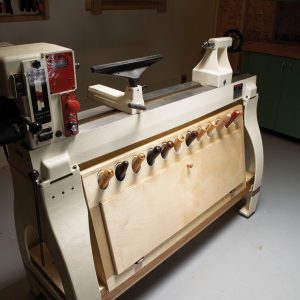
The same goes for tools in the shop. The best alteration I’ve made to my large tools was adding 6″ wood blocks under my lathe. I cut an recess in the bottom to form two feet on each side and bolted the legs to the wood. Consequently, instead of bending my neck while I turned work, which could be for hours, I now had the work at a much more comfortable position. Of course, having the work closer also makes it a lot easier to see.
But higher doesn’t necessarily mean better. Earlier, I was sanding another prototype for a foot for my bench. It was a variation of a cabriole leg. Our portable oscillating sander was on top of a router table and I only needed it for a couple of minutes. While it was great to have the work really close, if I had to do a lot of sanding, the height would not have worked. My forearms hit the table and I would have been lifting my arms unnecessarily high, eventually producing shoulder and neck strain.
If you are interested in making cabriole legs, click here for the great DVD “Cabriole Legs Simplified with Charles Bender” at ShopWoodworking.com.