We may receive a commission when you use our affiliate links. However, this does not impact our recommendations.
 Greener Lumber LLC, the company that is reclaiming the old-growth Honduran mahogany that we wrote about in the past two issues – the “Sunken Treasure” piece (issue 182) by Kari Hultman and my article in the current issue (issue 183),”Queen Anne Dressing Table” , is offering Popular Woodworking Magazine readers a discount on purchases. Go to their website (greenerlumber.com), check out the lumber that’s available (look at each board individually if you wish), select the pieces you want for your next project then take your discount. The discount is 20% off the subtotal but doesn’t include anything on taxes or shipping costs.
The sale begins May 15th and runs for 30 days. At checkout, you’ll see a box where you enter the following code, PWM183. That’s all you have to due to get your hands on some of the best old-growth hardwood available. Take a look at the tabletop shown in the opening photo. That’s a one-piece top used on the dressing table in the article. I think you’ll agree it looks great. And the drawer fronts shown in the article speak for themselves.
I’ve taken a couple calls and received a few messages asking about the working properties of the mahogany including how the wood finishes. Kari’s story touched on this area, but being in an earlier article, there was a disconnect when the dressing table came to print. To take a shotgun approach and keep things totally scattered about, here’s a synopsis about working and finishing the 200-year-old mahogany.
The biggest news I can tell you is that this lumber stinks. No, it’s great wood, but on the odor scale with ten being the stinkiest, this stuff could rate an 11. As I was building the lowboy, we kept the shop door close. That week there wasn’t an open-door policy at the magazine offices. However, nothing came down from HR, so I guess the smell was well contained, or not so strong to annoy others.
Power-tool work on the lumber is just as it would be with most lumbers. I didn’t notice any additional wear on the blades or on my carving chisels, there was little carving to do on the feet. Router work was on par, as was sanding – nothing out of the ordinary to report. Work with hand tools was a bit different. Chris Schwarz reported this: “The problem came when I was trying to get a good finished surface on the curly stuff. You can really see why 18th-century craftsmen developed high-angle planes. One really wild board I worked just laughed at my efforts to plane it with a 45Ã?°-pitch tool. Only when I got above a 60Ã?° effective pitch did I start to get a surface that I like. And even then, there was still some tearing.”

The finishing process I used on the lowboy was and is my favorite method and the process fully explained in the DVD “Finishes That Pop.” The piece is sanded to #180 with a random orbit sander. Grab a cloth and wet the entire piece to raise the grain. After the wood has dried, sand again with the same grit. The dye used on the piece is Moser’s Dark Wine Cherry, mixed one ounce to four cups of water. Spray the dye to totally drench the piece, let that sit for five minutes then wipe off the excess , if you don’t have anything to wipe off, you didn’t use enough dye. (By flooding the surface, you achieve a more even color to your project.)
Let the dye dry completely , overnight usually does the trick , then add a couple layers of clear shellac. If you’re going Zinser use shellac, not sealcoat. Sand the shellac with #320- or #400-grit wet/dry sandpaper, dust off the piece and float on another layer. Repeat these steps until you have five or six layers laid down. At this time you need to remove the sheen from the shellac. I spray a coat of dull-rubbed effect lacquer, but you can also rub the piece with #0000 steel wool or an equivalent. Another method is to wipe on a coat of satin varnish. Regardless of which method you use, sand the last layer of shellac thoroughly before moving on.
Dye and oil seemed to sit on the surface more with this old-growth wood, but the liquids did what they had to and the results were great. This reclaimed wood is denser than what’s normally available today. That could be from the tighter growth rings, or it could be due to the fact that the wood pores are filled with minute particles that floated in the water surronding the submerged logs. Those particles could be the reason for the foul odor, too.
Why the title? The lumber is choice, but it’s also the romance of the story. When your friends ask you about your project and you explain that the lumber came from logs cut 200 years ago , the same time lumber was cut for many of the pieces found in museums across the country , and that it sat on the bottom of a river in Belize all those years before being uncovered, you’ll grab their attention and your work will be held in the highest esteem. Try a single piece or a pallet full then report back. I’m interested to hear what you think.

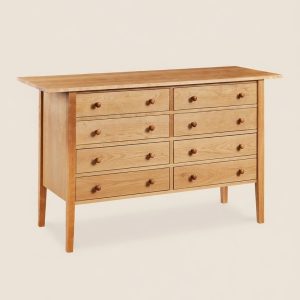
If you have any questions, contact the guys at Greener Lumber LLC. or drop me a note. And in case you forgot what the drawers look like on the dressing table, here’s another look. you’ll immediately know why I plan more old-growth mahogany projects.