We may receive a commission when you use our affiliate links. However, this does not impact our recommendations.
 Over the weekend, I repaired a drawer from an antique valet that’s been on my dresser for 15 years. It’s a beautiful piece with a tilting mirror, curved front, bracket feet and three pretty drawers that are veneered with crotch mahogany then banded with what I suspect is holly. The drawers have thin sides and backs, just more than 3/16″ thick, and are joined with delicate dovetails.
A few weeks back I was on an organizing jag and sorted through all the stuff that gets dumped in such places: extra pocket knives, shirt buttons, coins from foreign countries, old eyeglasses etc. That’s when I discovered the center drawer had a problem. Well, it had two problems, really.
The first problem I noticed was the long split in the drawer side where the groove for the drawer bottom was located. Then I noticed the same problem on the other drawer side, only the piece was gone altogether. At some point in this antique’s history, a previous owner had decided the “fix” was simply to glue the bottom to the lower edge of the drawer side, the back and in the groove on the front. Yuck!
I did catch a bit of luck in that the glue used looked to be hide glue. And, in fact, it was. I was able to free the drawer bottom without too much trouble. I had recently tested a steam generator made by Earlex for use with a steam box for bending wood. I fired up the steamer, then used the hose end to carefully spray steam at the glue, being very careful to keep any steam away from the veneered and finished front. Even working gingerly, it took only a couple minutes before the glue softened and the bottom was free. Thank goodness the person doing the previous repair did a lousy job in gluing the front bottom edge into the drawer front groove. It came out easily.
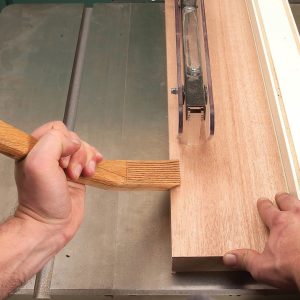
The rest of the job was pretty easy. I simply glued the split back together. On the other side, the one with the missing bottom edge, I planed the edge square and made a new piece to glue on in its place. It was a delicate little piece, just 8″ long, 3/16″+ thick and a bit more than 3/8″ wide. On one long edge, I made a rabbet that, when glued to the original side, would form a new groove for the drawer bottom. After the glue set, I slipped the drawer bottom in place and nailed two tiny brads through the bottom and into the drawer back. Done.
While I don’t know the age or origin of the valet, I couldn’t help but think of the maker as I was doing my repair. Given the quality of the piece and workmanship, I knew he had to be skilled. I’d like to think that he’d approve of my repair, making the drawer once again as it was the day it was new. It was a good day in the shop.