We may receive a commission when you use our affiliate links. However, this does not impact our recommendations.

Retrofitting anything to a bench is generally one of those things that looks great on a bar napkin, but when it’s all said and done, you’re ready for a drink. These retrofits rarely go as well as planned.
So when I got it in my head to add a wagon vise to my Roubo-style workbench, I should have first listened to the little voice in my head, but I didn’t hear it. Perhaps I stuffed its mouth full of bar napkins. What’s a wagon vise? It’s basically a simplified tail vise that is used to pinch your work between bench dogs. The vise is a screw that is fixed to a bench dog and the whole mechanism is integrated into the benchtop. There’s no dovetailed assembly to build around a tail vise frame. You just need a mortise in your benchtop. A really big mortise , something big enough to bury a small animal in. (If I understand the root word correctly , that’s a joke.)

A page from La Forge Royale’s catalog that made me ponder a wagon vise. The handle that turns the screw is shown disconnected. It made me wonder if perhaps it was removable because it’s shown disconnected in every plate. And the sculptor’s vise, which is similar, shows the handle integrated into the mechanism.
So I bought a small screw from Rockler for $23 and drew up the plan. Within the hour I was whaling away at the benchtop with a Ray Iles mortise chisel. The top is 4″ thick and the mortise is 2-1/8″ wide and about 9″ long. I defined the mortise all around with the chisel, which game me nice sharp corners, and then I bored out the rest of the waste with an auger bit. First the auger bit was in my Pexto 12″ brace. Then, after the headiness wore off, I chucked it in the corded drill.
The way I mounted the screw on the first go around worked OK, but I was afraid it would pull itself apart eventually. So I reworked the way the screw mounted to the bench and was pleased. That is, until I mounted the block of wood that held the movable bench dog.
The metal screw was a sloppy fit in its threads. It would wobble freely. When the vise was disengaged the end with the bench dog would droop down significantly. So I screwed a shelf standard below the block to support it. That worked, but when the screw was engaged the block of wood would rise up above the benchtop.
Gads, I hate sloppy mechanisms.
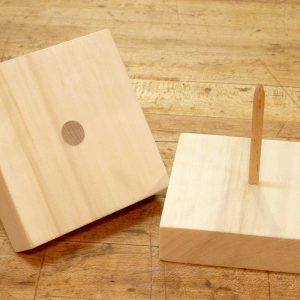
So I took the whole thing apart and reworked the underside radically. The block of wood with the bench dog now runs in a track beneath the benchtop. The track keeps the dog from drooping or rising up. It works great now.

By constraining the block of wood that contains the bench dog I stopped the dog from rising up when engaged against the work.
Except I’m a bit worried about the longevity of the thing. I wish there were more meat left where the bench screw enters the benchtop. If someone really wanted to, I imaginge they could bust out the end of the bench. I sized the vise’s components as shown based on the old French illustrations that showed the wagon bench, plus I sized it so I didn’t reduce the travel of the bench screw.

In hindsight, I wish I’d left more of the benchtop at right, by the bushing. It feels solid now, but if anyone ever borrows my bench, I’ll worry about this part.
So the little two-hour diversion turned into an 8-hour obsession. My coworkers were giving me odd looks by the end of the day. But the sucker works.
Now about that sliding leg vise…¦. I seem to have one more napkin left.