We may receive a commission when you use our affiliate links. However, this does not impact our recommendations.
Just a test to see if I’ve figured out my new blog page. But maybe this is a good opportunity to thank PW for giving me this space to jot down my thoughts.
Megan asked for a list of books I recommended. Like many of you (Dave), I have a huge ww library. But I didn’t want to bore you with a listing of every title I own or have read. Still, I can’t help thinking about all the books that have inspired me that I didn’t mention.

I’m rereading some of the books I read when I first started woodworking. David Pye’s book “The Nature and Art of Workmanship” is well worth a second reading. A quick skim in a public library isn’t sufficient for this text.
I don’t know if it’s my attitude, or the fact that I’ve given up on FWW’s KNOTS, but I get the distinct sense that folks are no longer arguing for or against hand tool legitimacy. Hand tools are becoming mainstream.
Pye’s view on hand tools and workmanship is much more sophisticated than the arguments I engaged in or read. According to Pye, a beam boring machine, clearly a hand tool, falls into the workmanship of certainty category. His beloved electric lathe, clearly a power tool, is part of the workmanship of risk.
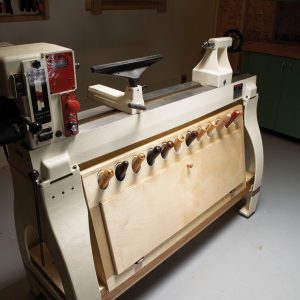
I’ve had to defend my Jet 1236 many times in the past. Without remembering what Pye had to say, I argued that my electric wood lathe wasn’t entirely different from a hand tool in that all the motor did was turn the work. It was my hands that shaped the wood. Those feeling frisky would counter that their tables saws were little different. The motor only turned the saw blade.
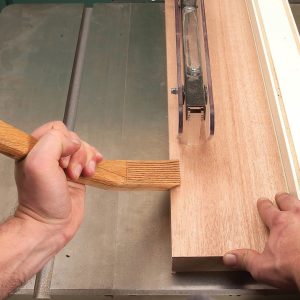
I’ve also struggled with jigs of different sorts. Honing jigs don’t sit well with me. Certainly, things that guide hand saws (what about miter boxes?) and parts that attach to planes to ensure 90 degree edges are things I tend to avoid. Pye would put all of these in the workmanship of certainty column.
I’m not saying Pye is right or that I am right for agreeing with him. Rather, what I was left with was the sense of how completely I was influenced by Pye. My guess is, my friends at PW are nodding their heads and saying “Duh, Adam, are you just now getting this?” What we read changes us.
If you have a spare moment this week, dust off a dog eared copy of an Underhill book and read it again. As you read the familiar passages and wonder (as many of us do) how Roy can look exactly the same after 20 years, you may be surprised to find yourself there, mingling there like a bookmark.
Adam