We may receive a commission when you use our affiliate links. However, this does not impact our recommendations.

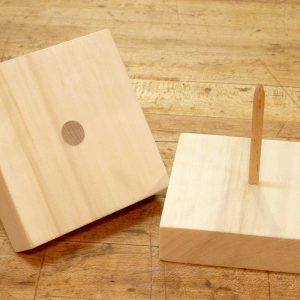
The handplaning jigs are packed and ready to load on the truck Thursday morning.
Only one more restless night in bed, and I’ll be headed down to our Woodworking in America conference in Berea, Ky. The entire staff of the magazine is looking forward to the show, but we also know that we’re in for a wild ride.
We’ve never put on a conference before, and we know expectations are high. And despite all the preparation we’ve done since March, we know we’ve made a few mistakes along the way. Thank you for all your patience.
For me, the most exciting thing about the conference is getting to meet all of the speakers and the attendees and to openly discuss a lot of thorny questions about hand work. I’m the moderator for several sessions with toolmakers, and so I’ve been busy scribbling questions for them. Here are just a few of them. I hope you are bringing some questions of your own.
1. Many bevel-up planes have a sliding mouth shoe to close the mouth. Why is this feature not typical on bevel-down tools?
2. Does the lack of a chipbreaker on a bevel-up plane ever hurt its performance?
3. We hear from Lee Valley customers that they want Veritas to make Bed Rock-style planes or infill planes or chisels. Are these products in the works, or what are the reasons that the Veritas line has focused more on original and new tool designs?
4. Some toolmakers use cryogenically treated irons, some don’t. Does it really offer advantages or is it more marketing?
5. What you think about Stanley re-entering the marketplace for premium planes. Do you think this will bring new customers into the market? Or will it drive out some existing makers?
6. If you were designing a handplane for function alone, do you see advantages to the hollowed-out sole of a Japanese plane? Why hasn’t this Japanese feature caught on with Western woodworkers (unlike Japanese chisels).
7. How flat should the frog of a handplane be? How can this be measured?
8. Does the iron have to contact the entire frog or only at the mouth?
9. How critical is it that the frog is square in the mouth of the tool? How can this be measured?
10. With bevel-up planes, how can bedding errors be detected at home?
11. Planes have gotten heavier overall in modern times. What does added weight do to a plane? What are the advantages and disadvantages of mass?
12. What is the best Rockwell hardness for a plane iron? Marketing copy seems to play up very hard irons. Aren’t they more brittle?
13. Exotic steels: Have they become widespread because they are better for the user or have they become widespread because there is less manufacturing waste?
14. What do you think about diamond stones? Are they appropriate for woodworking tools? What lubricants do you recommend? Are they durable enough? Do they produce a different kind of edge , it sure looks different to my eye. Are perforated or smooth stones better? Is there much of a difference between monocrystalline and polycrystalline stones?
15. What is a “good saw?” That is, how do you define a perfect saw for an operation? Is it speed? Quality of cut? Ease of starting? Durability of teeth? How easy the saw is to use?
We hope to post a couple blog entries during the conference, but I can’t make any promises. Be sure to check back next week when we’ll have photos, perhaps some video and some information about our plans for next year.
– Christopher Schwarz

I swore I’d never move the Roubo workbench again. Oh well. I gotta stop swearing so much.