We may receive a commission when you use our affiliate links. However, this does not impact our recommendations.
Courtesy of Milwaukee
The growing number of women working in construction and the skilled trades is prompting a meaningful shift in how jobsite apparel is designed and evaluated. As their presence increases across roles, long‑standing assumptions around fit, mobility, and durability are being re-examined. For decades, workwear was engineered almost exclusively around men’s proportions and movement patterns. As a result, many tradeswomen have relied on clothing that fails to support the physical realities of their work: garments that restrict movement, wear down quickly, or fail to stay in place during demanding tasks. The expansion of women across the trades is making these issues more visible and accelerating industry‑wide change.
Where Traditional Workwear Misses the Mark
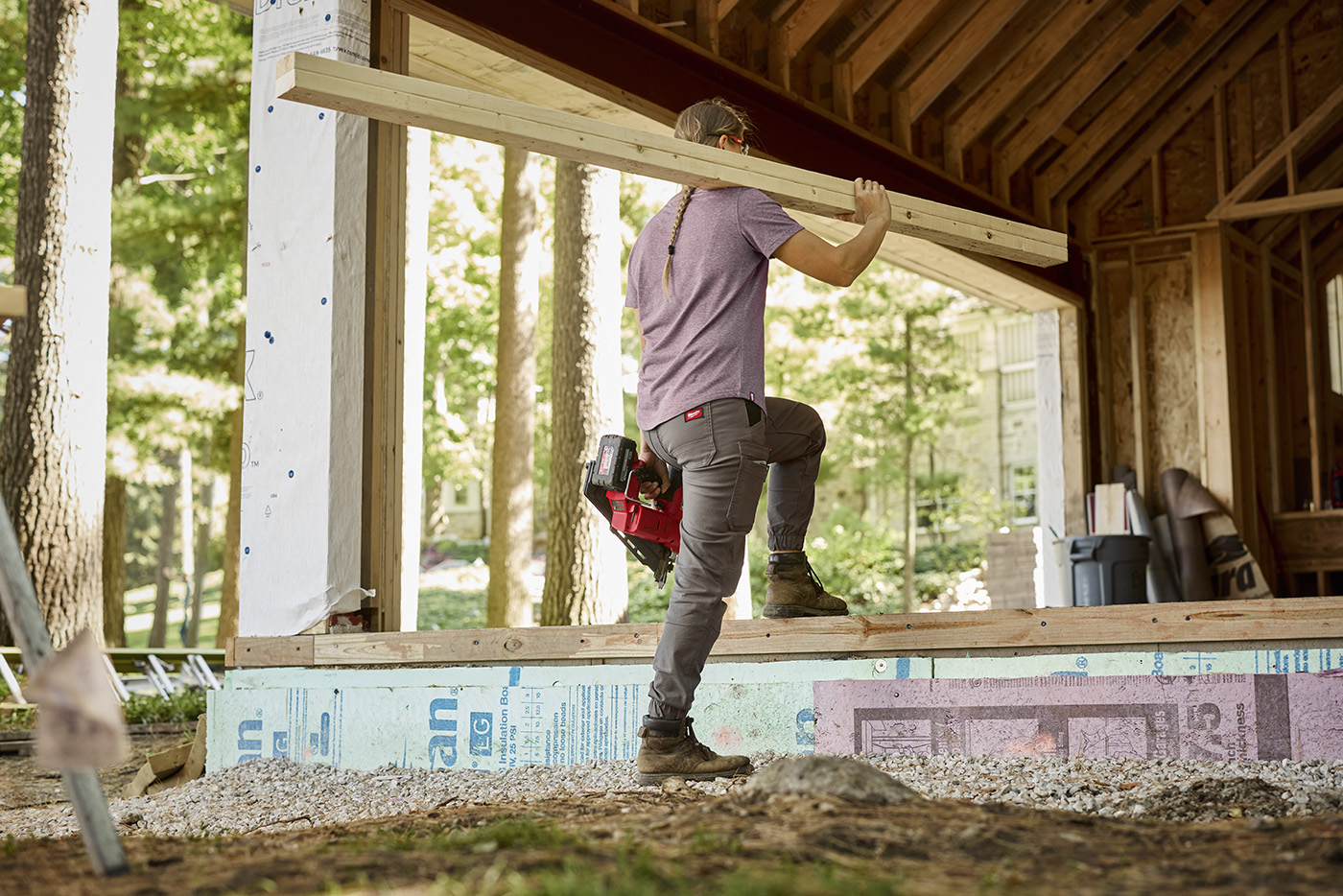
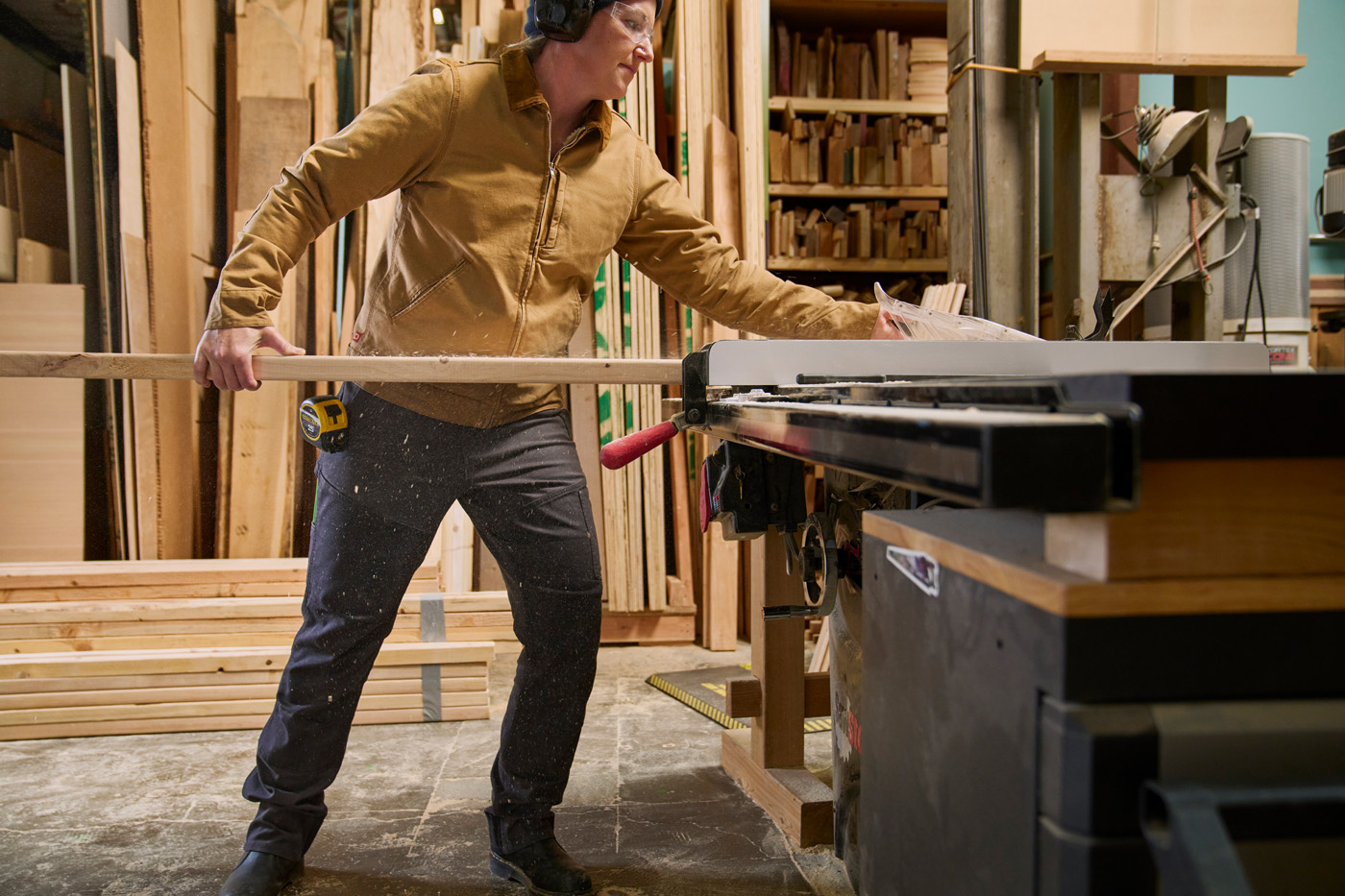
Garments originally designed around broader shoulders and straighter hips rarely match the range of body shapes found among women in the trades. In a shop or on a jobsite, clothing that pulls when reaching across a workbench, stabilizing a board, or guiding a sheet through a table saw can interfere with control and precision. Waistbands that won’t stay secure under a tool belt and tops that shift during overhead sanding or installation disrupt both comfort and focus. Over time, these issues can lead to unnecessary fatigue and, in some cases, create safety concerns. A pant leg that catches on a saw stand or while navigating piles of lumber can introduce hazards in environments where balance and steady footing matter. Fabric that tears during kneeling can also compromise mobility at moments when consistent control is essential.
Efforts to simply scale down men’s garments have not solved these problems. Reducing overall dimensions does not account for differences in center of gravity, hip shape, or the way tradeswomen move during tasks. This approach often results in apparel that technically fits but fails to perform under working conditions.
Courtesy of Milwaukee
How Field Research Is Reshaping Design
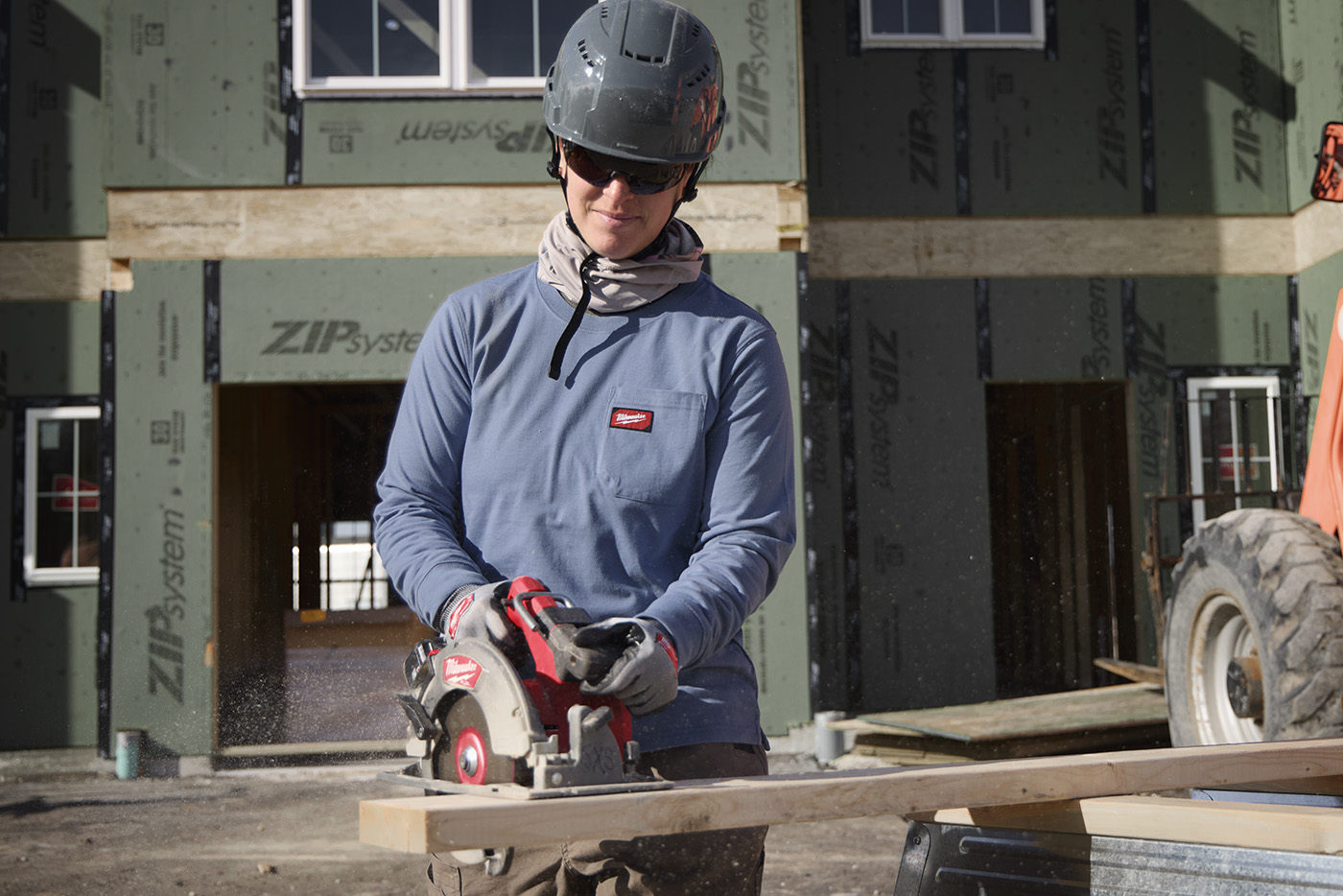
To address these shortcomings, certain manufacturers are increasingly relying on direct field research. Observing tradeswomen as they climb, crawl, navigate equipment, install materials, or shift between repetitive and overhead tasks provides a clearer picture of how garments behave throughout a workday. This form of research highlights not only where clothing fails but the mechanics behind those failures; whether a fabric lacks stretch, a seam placement interferes with movement, or a pocket tears from essential tools.
Consistent themes emerge across real‑world observation. Mobility is essential, requiring fabrics that move with the body and patterns that accommodate natural motion rather than restrict it. Durability must reinforce the areas where wear actually occurs, which often differ from the highest‑stress zones seen in men’s garments. Coverage must remain reliable during climbing, lifting, or working overhead. Features must match the tasks performed on site – not assumptions about them.
This research‑driven approach shifts the design process toward performance. A garment is no longer evaluated on appearance or traditional patterning, but on how it behaves on day one, after repeated laundering, and throughout long hours on the job.
Courtesy of Dovetail Workwear
Engineering Apparel Around Real Movement
One of the most significant changes in women’s workwear development is the emphasis on movement‑centric design. Woodworking is dynamic, and the apparel must adapt to multi‑directional motion without forcing the wearer to adjust constantly. Modern designs focus on articulation points, stretch zones, and fabric placement that reduce resistance during kneeling, climbing, or squatting.
This shift goes beyond adjusting inseams or altering waistlines. Pattern structures are being rethought to create garments that support the ways women move throughout each phase of a task. When movement is supported, rather than inhibited, workers experience less physical strain, contributing to greater consistency over demanding shifts.
Durability Built for Jobsite Realities
Durability remains a core expectation for any workwear category, but field insights show that women often experience wear in different zones based on their movement patterns and common tasks. High‑stress areas frequently include the knees from kneeling, inner thighs from climbing, and seat and hip areas from bending and material handling. Reinforcement in these zones, combined with abrasion‑resistant fabrics, helps extend garment life without adding unnecessary rigidity.
Balancing toughness with mobility is critical. Overly stiff overlays may protect fabric but can compromise movement, ultimately recreating the same limitations that tradeswomen have long experienced. Some manufacturers’ designs blend durable base fabrics with stretch fibers and targeted reinforcements to maintain both longevity and comfort, even after heavy use and repeated washing.
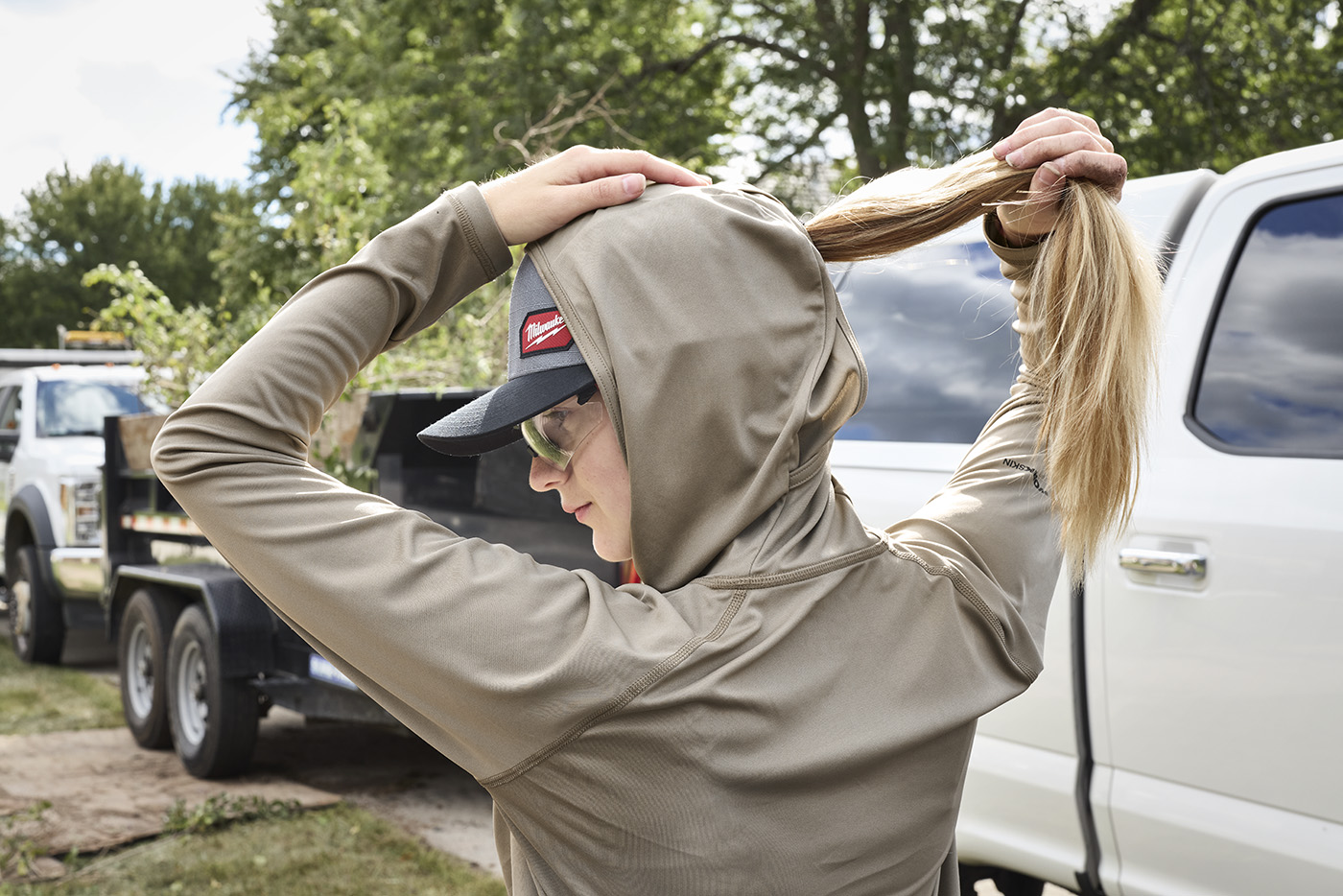
Courtesy of Milwaukee
Functional Details That Matter on the Job
Field feedback has also transformed smaller but essential design details. The placement, depth, and strength of pockets influence how effectively workers carry and access tools while using belts or harnesses. Belt loops, hems, and sleeve lengths must complement the postures and equipment common on jobsite tasks. These details are not decorative; they directly affect workplace efficiency. When clothing remains stable, supportive, and adaptable, concentration stays on the work rather than the adjustments required by ill‑fitting gear.
Safety and Productivity Outcomes
Well‑designed workwear can contribute to both safety and productivity. Clothing that stays in place reduces distraction and helps prevent snags or slips. Materials that resist tearing under stress help maintain control in tight or hazardous spaces. When garments support natural movement and require fewer adjustments, physical fatigue accumulates more slowly, allowing workers to stay focused and efficient.
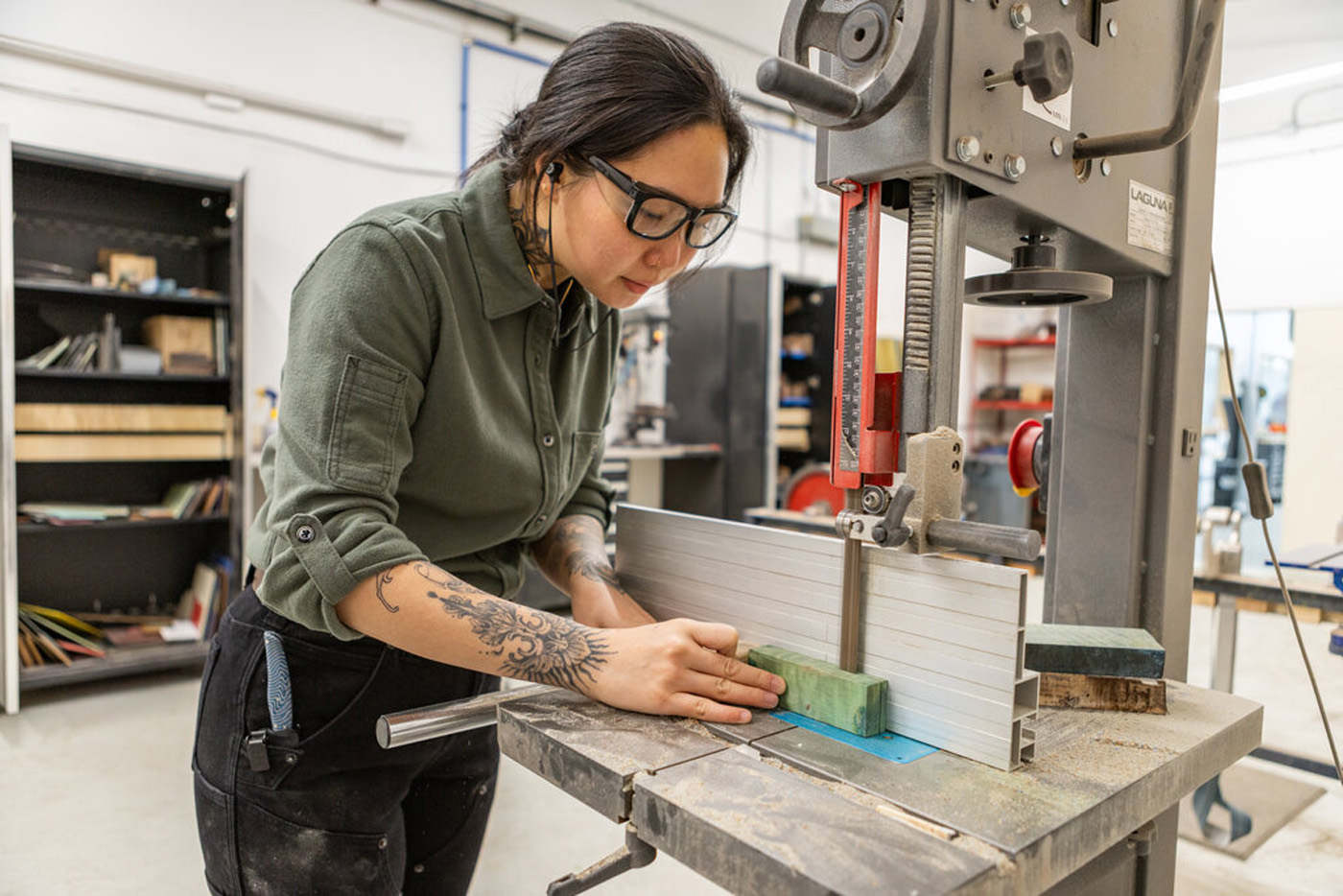
Courtesy of Dovetail Workwear
Why Tradeswomen’s Input Drives Better Outcomes
A consistent theme behind successful product development is the involvement of tradeswomen throughout each phase of the process. Fit testing, observational studies, and extended‑wear trials ensure that design decisions reflect real experiences. This collaboration helps identify pressure points, balance concerns, and coverage issues that traditional testing may overlook. Through iterative refinement, manufacturers can continue improving workwear rather than treating women’s gear as a static or secondary product line.
The Road Ahead
As more women enter the trades, like woodworking, their insights will continue to guide the evolution of workwear. Future progress will likely focus on advanced materials that balance durability and stretch, expanded sizing systems, and ongoing field‑based validation across varying job types. The goal is not to create niche products but to redefine expectations for what jobsite apparel should provide. When workwear is engineered around the demands of the job and the needs of the workforce performing it, the result can be safer, more capable, and more confident workers, benefits that extend across the entire industry.
Nadia Sinner is a Product Manager at Milwaukee Tool over the Women’s Workwear category.