We may receive a commission when you use our affiliate links. However, this does not impact our recommendations.

It is my opinion that a cut list is one of the most useless additions to woodworking project articles. Yes, these charts, or pages in some cases, do contain beneficial information, but many woodworkers rely solely on the lengths, widths and thicknesses of the cut list when they mill project parts. And they shouldn’t.
There are sizes given that are correct, but a small adjustment at the start of a project changes the figures as you move further into the build. And sometimes these figures are completely wrong (take a look at the published cut list below and see if it’s possible to build the project. We continue to get calls asking if this list is correct.) My favorite cut list question deals with the secretary in “The Illustrated Guide to Building Period Furniture” (Popular Woodworking books). The case bottom is listed at 3-5/8″ thick (oops). I get a few messages per year asking me to confirm or deny! (Just so you know, the thickness should read 5/8″.)

This past week I taught a class at the Marc Adams School of Woodworking just outside Indianapolis. As I began the class, I handed out a simple line drawing of the front and side elevations. I suggested to those in the class that the cut list (sent out as they registered for the class) and the plan differ and everyone would need to work through the project as they proceeded. (Real life is a great teaching method!)
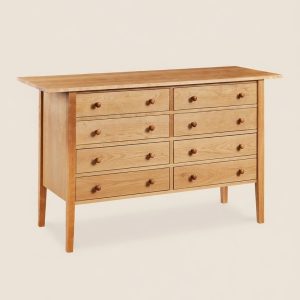
The variation between the drawing figures and the cut list numbers was the major difference. If you followed the plan, you cut the case side rails at one length, but the cut sheet had a different set of figures. Almost everyone in the class used the cut sheet to begin the chest of drawers, which was fine. However, most class attendees also used the cut sheet to move two or three steps ahead while waiting to get to one of five mortise machines set up for the class (there are many, many mortise-and-tenon joints in this chest).
Herein is the problem. The cut sheet dimension for the raised panel of the bottom unit was incorrect if you chose to use the cut sheet for the rails on the sides. But it was correct if you followed the plan. All but a few class participants came to me when their bottom units did not fit the case sides after the backboard rabbet was in place. When asked if they worked through the plan or simply relied on the cut sheet, most confessed to using the cut sheet. At that point, they had to work through the plan to come up with a solution.
So how do you use a cut sheet effectively? The best use of a cut list is to find the board footage of the project and to line up the parts as you select lumber. Also, use the cut list to determine the size of the case. Once that assembly is finalized, all the measurements are taken from that case. Use the cut sheet only where you know you can gain accurate information because the size is not dependent on earlier work. There’s no problem if you use the cut sheet to get the width of your drawer dividers, but if you vary that width from the cut list, make sure you check the lengths of the drawer runners before blindly cutting to the cut list length.
So how do you use the cut list on projects? I’ve known woodworkers who cut every part to the cut list before they begin to assemble the project. (I cannot see how they complete a piece.) Do you follow the list religiously? Use part of the information? Or do you find cut list totally void of useful information? Leave a comment to let us know.
Looking for More Free Woodworking Information?
– Sign up for our newsletters to get free plans, techniques and reviews HERE.
– Like tools? We do! Read our latest tool coverage HERE.
– Looking for free project plans? We have hundreds. Click HERE.
– Learn a new woodworking technique today. Click HERE.
– Want more videos? See all our free videos HERE.
– Check out our selection of half-price woodworking books HERE.
– Get 8 years of Popular Woodworking on one CD. Click HERE.