We may receive a commission when you use our affiliate links. However, this does not impact our recommendations.
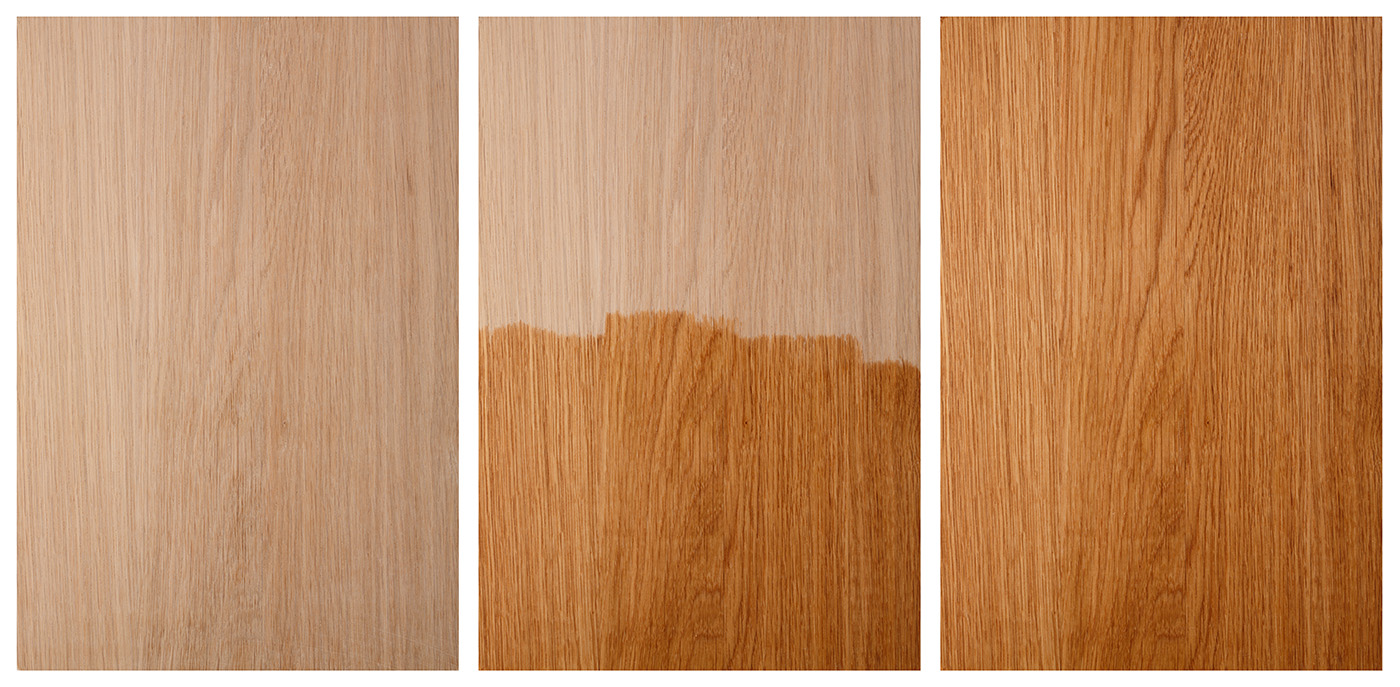
Here are four things you need to know.
Finishing is not hard to understand. As I’ve pointed out in previous articles, it’s made confusing by manufacturers who don’t understand their own products, so they make up names and claims they think will help sell their wares.
The manufacturers who are most guilty of this are the ones who target do-it-yourselfers and small shops – you. Finishing will never make sense until you get past this mislabeling.
Here are the four basic topics you need to understand to make sense of finishing.
Additional Reading: Check out our many free finishing articles.
In Our Store: Shop our full range of articles and ebooks on finishing.
Oil Finishes
Oil finishes are very popular because they are easy to apply. The two common straight-oil finishes are boiled linseed oil and tung oil. Tung oil takes longer to dry than boiled linseed oil, but dries faster than raw linseed oil (which dries too slowly to be useful as a finish).
Tung oil wrinkles when it dries, even when all the excess is removed. To get a smooth result, you need to apply five or more coats, sanding smooth between each and allowing each to dry for two or three days in a warm room. Coats of boiled linseed oil can be applied every day and the results are always smooth when the excess is wiped off.
Both these oils can be combined with alkyd or polyurethane varnish in any proportion to make an oil/varnish blend. This blend might dry a little harder and be a little more water-resistant than straight oil, but only a very little because the application is so thin.
All these oils are applied the same way: Apply a wet coat, wait a few minutes, then wipe off the excess. Because these finishes dry soft, all the excess has to be wiped off after each application to get functional results. Therefore, you can’t get a build that would be better at protecting against liquids.
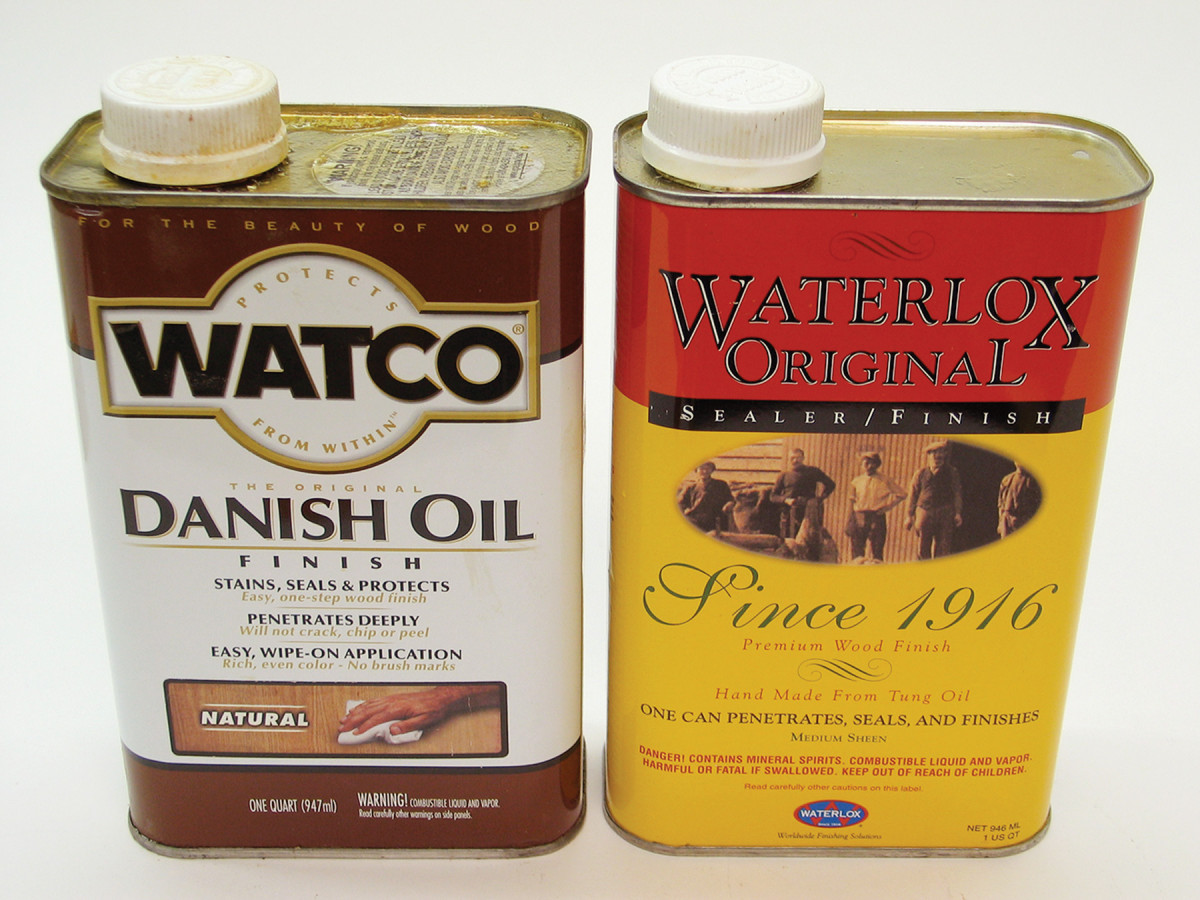
Oil & varnish. Thinned varnish (“wiping varnish”) is often sold as “oil.” The way to tell which one you have is to let a puddle dry on glass or on the top of the can. If it’s soft and wrinkled (left), it’s oil. If it’s hard and smooth (right), it’s varnish.
Film-building Finishes
Varnish, water-based finish, shellac, lacquer and catalyzed finishes all dry hard so they can be built up to a very liquid-resistant film. Just as with oil finishes, these finishes can be thinned as much as you want, but then they will require more coats to reach an equivalent build.
Varnish is often thinned about half with mineral spirits and sold as oil! But it’s still varnish, so it can be built up. This mislabeling causes immense confusion in woodworking circles.
Film-building finishes can be grouped into three categories by the way they dry: reactive finishes (picture them as Tinkertoys at a molecular level); evaporative finishes (picture them as spaghetti in a pot); and coalescing finishes (picture them as soccer balls with solid crosslinked cores).
Varnish and catalyzed finishes are reactive. Shellac and lacquer are evaporative. Water-based finish is coalescing.
Reactive finishes dry by crosslinking – the sticks of the Tinkertoys connecting the solid resin molecules. This happens in varnish by contact with oxygen and in catalyzed finishes with the aid of the catalyst.
Evaporative finishes dry by the evaporation of the solvent. The long stringy molecules become tangled and hard like dried spaghetti in a pot.
Coalescing finishes, meaning water-based finishes, dry by the evaporation of water, followed by the evaporation of the solvent. As the evaporation progresses, the microscopic soccer-ball-like droplets coalesce and stick together, forming the film.
Reactive finishes form hard, heat- and solvent-resistant films because the crosslinking is so strong. Varnish dries slowly. Catalyzed finishes dry fast like lacquer.
Evaporative finishes dry fast, but are much more vulnerable to wear, heat and solvent damage because there’s no strong connection between the spaghetti-like molecules. These finishes are, however, easier to repair invisibly with the aid of heat or solvent, and they’re easier to rub to an even sheen because the molecules can be separated so easily with abrasives.
Water-based finishes are in between. They dry slower than evaporative finishes, but faster than varnish. They are scratch-resistant (more like reactive finishes) because of the solid, crosslinked cores, but vulnerable to heat and solvent damage, more like evaporative finishes. Unlike the other finishes, they raise the grain of the wood, dry totally colorless, and they are less irritating when applying.
All these finishes can be applied with any finish-application tool.
Stains
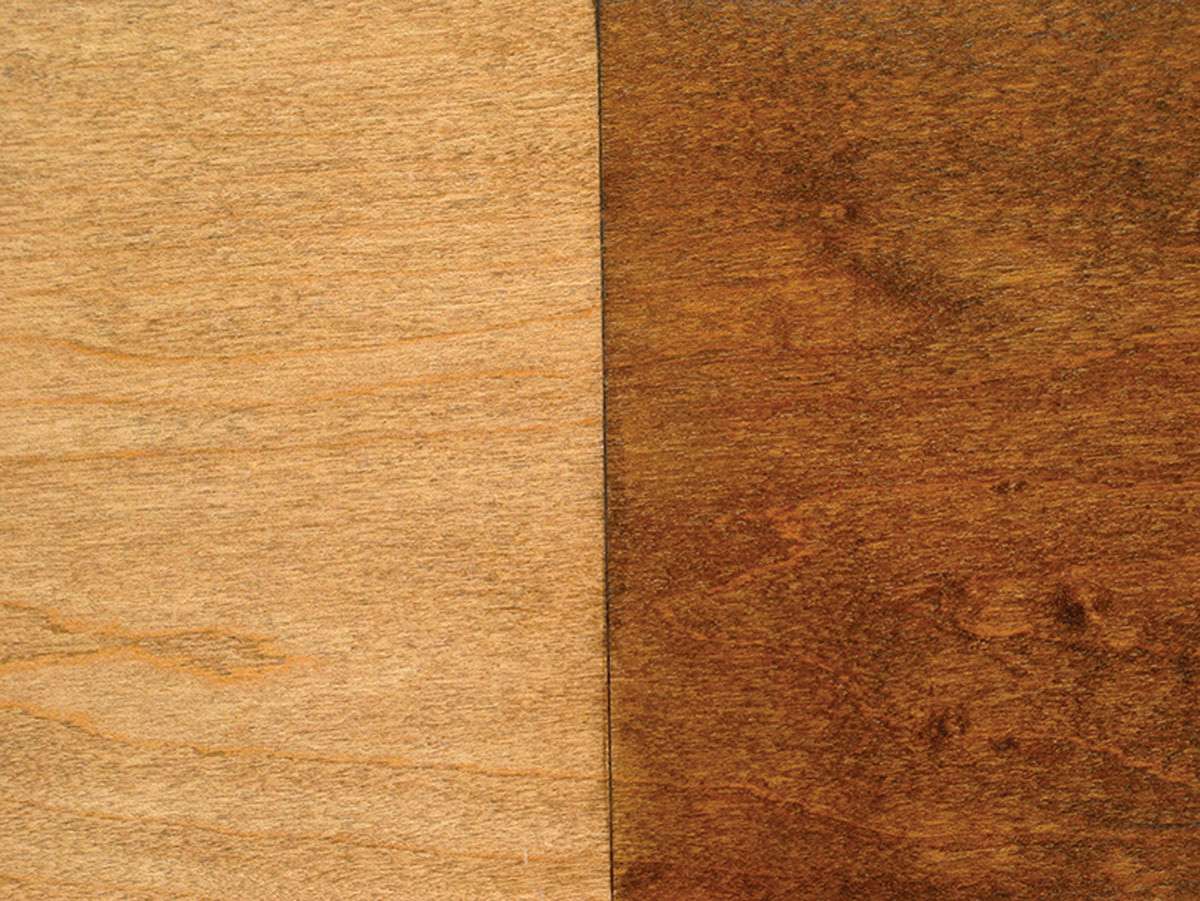
Binder vs. dye stain. The common stains you buy in stores contain a binder (linseed oil, varnish, lacquer or water-based finish). The binder limits your ability to make the color significantly darker, with the excess wiped off (left). This is in contrast to dye stains (right), which can be made darker with additional coats and the excess also wiped off.
Two colorants are used in stains: pigment and dye. Pigment is solid colorant ground very fine. It settles to the bottom of a container and has to be stirred into suspension before use. Dye is a colorant that dissolves in a liquid.
The two large categories of stain are “binder” stains and dye stains. Binder stains are the common ones you find in stores. The binder can be linseed oil, varnish, lacquer or water-based finish. These stains can contain just pigment, just dye or both.
The two large categories of dye stains, which don’t contain binders, are water- or alcohol-soluble powders, which you dissolve yourself in the proper solvent, and metal-complex dyes, usually already dissolved. Some are sold as concentrates for you to thin with water, alcohol, acetone or lacquer thinner. Others are already thinned with acetone, ready for spraying.
Unlike binder stains, dye stains can color wood as dark as you want by applying more coats or by using a higher concentration of dye.
The metal-complex dyes are more UV-light resistant than the powder dyes, but this is not significant on any object you want to last for more than a few years. Both types of dye should be kept out of sunlight or they will fade.
Solvents
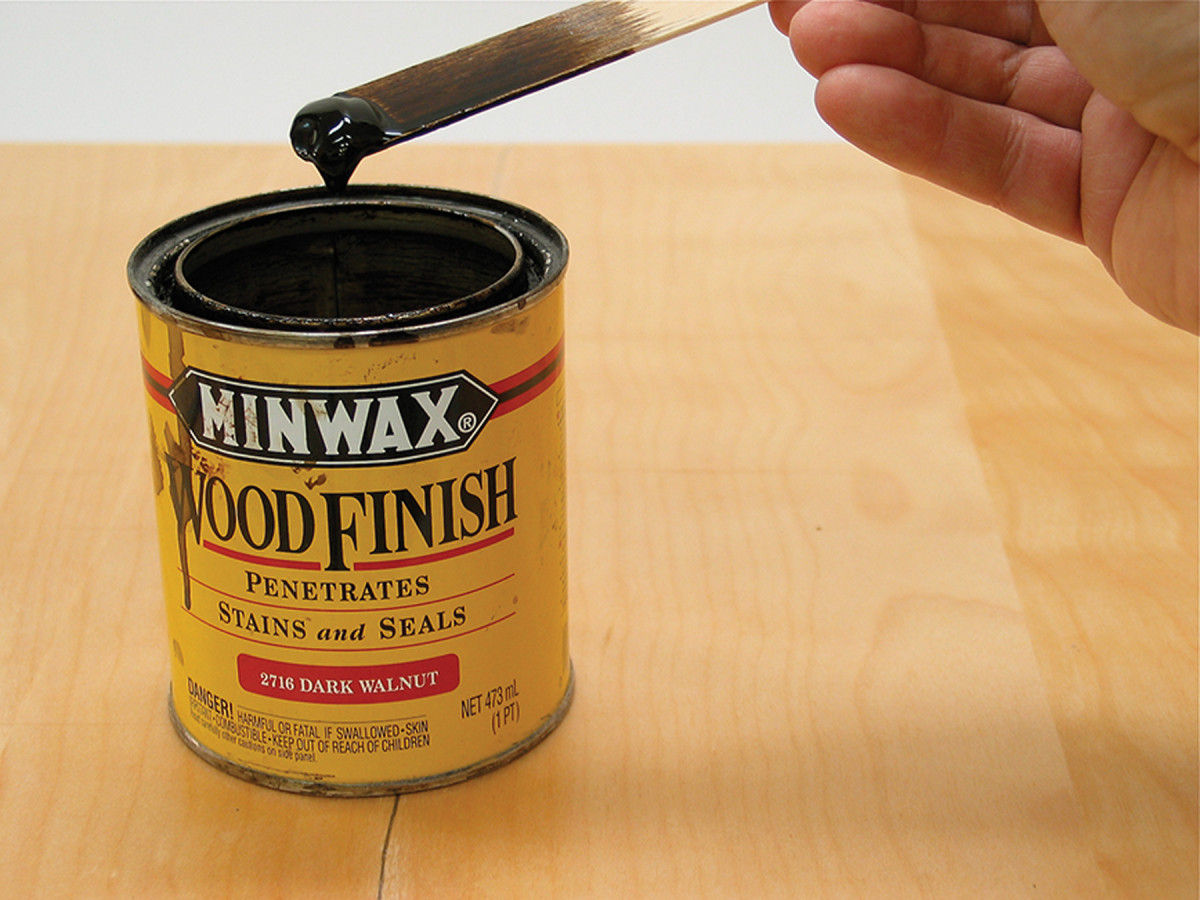
Pigment/dye binder stain. Some binder stains contain both pigment and dye. The binder is most significant for determining the characteristics of the stain. The dye is only significant because it will fade in direct sunlight.
Solvents, including water, are necessary for stains and finishes to work. Each finish and stain has one or more solvents that it can be thinned with. Sticking with commonly available solvents, it breaks down as follows:
■ Oil and varnish – mineral spirits (paint thinner) or naphtha (which evaporates faster).
■ Shellac – denatured alcohol.
■ Lacquer and most catalyzed finishes – lacquer thinner or acetone (which evaporates faster).
■ Water-based finish – water.
Solvents shouldn’t be thought of as stronger or weaker. Each has its own corresponding finish or stain it works with.