We may receive a commission when you use our affiliate links. However, this does not impact our recommendations.
As most of you probably know by now, I’m a woodworker who doesn’t let a bit of rust stand in the way of putting a tool back to work — whether in my own shop or in the woodworking program I teach. Rust is a nuisance, but it shouldn’t deter us. In many cases, it’s not that difficult to rehabilitate a plane, a clamp, or even machine parts that have seized up.
Additional Reading: Check out all of our articles on tool restoration and tool repair.
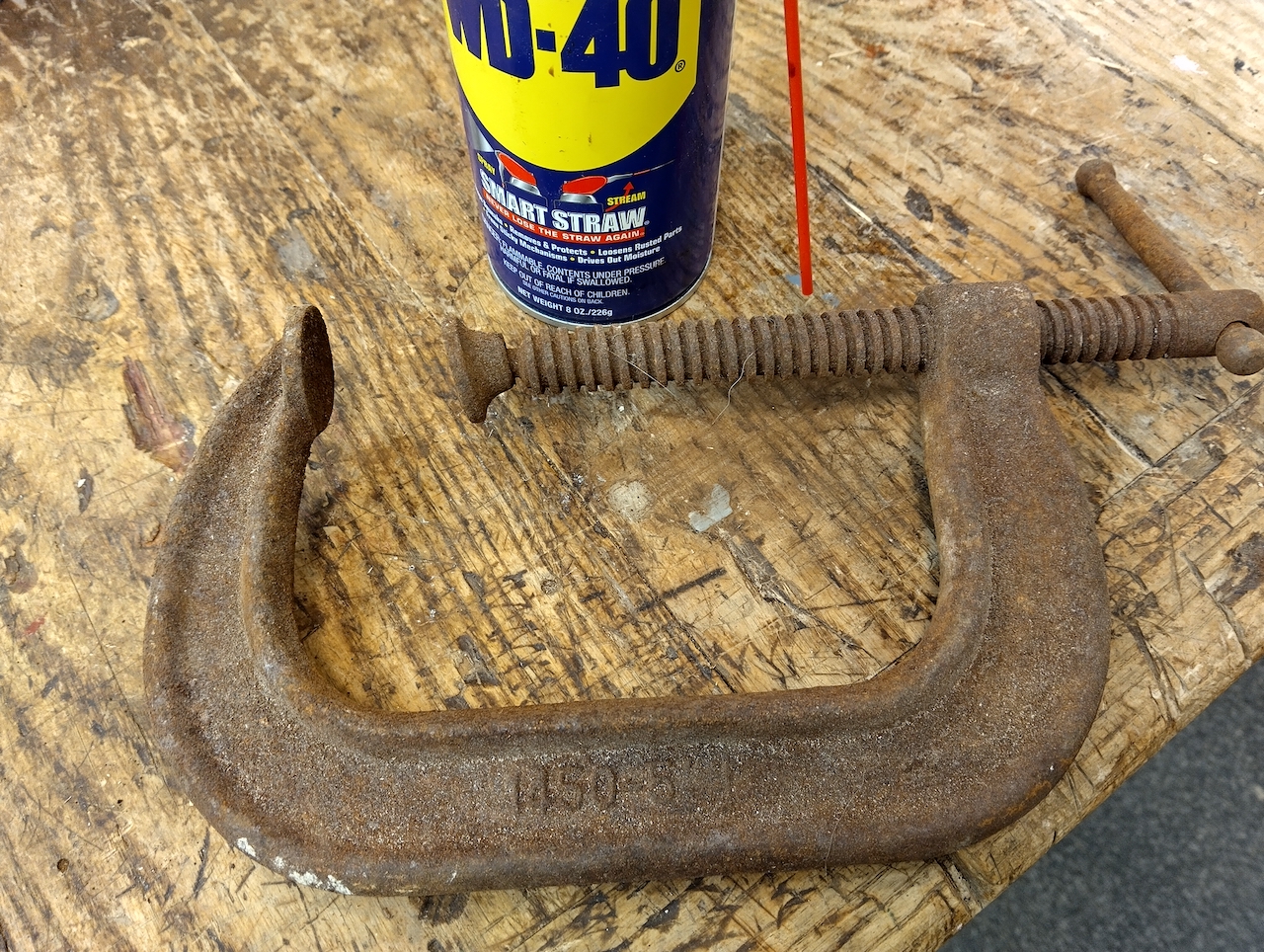
Usually, when I come across a screw frozen inside the jaws of an old clamp, all I need is a spray of WD-40 and a little patience. The oil works its way into the threads, freeing the rust and allowing the parts to move again. Sometimes, for more stubborn cases, I’ll dunk the piece in a rust-dissolving solution such as Evapo-Rust, Metal Rescue, or WD-40 Rust Remover Soak. But last week, I had to resort to an even more decisive method — fire, delivered by a small torch.
The story began, as it often does, with something completely ordinary. I went to the maintenance area at school to pick up a roll of paper towels for the dispenser above the sink. Usually, I don’t pay much attention to what’s around me, but this time I noticed something odd beneath a rusted old ladder. The ladder led up to what must have been a coal hatch a century ago, opening to 79th Street in New York. Our school building is more than 120 years old, and some parts still bear traces of the coal-burning era that once kept the city warm.
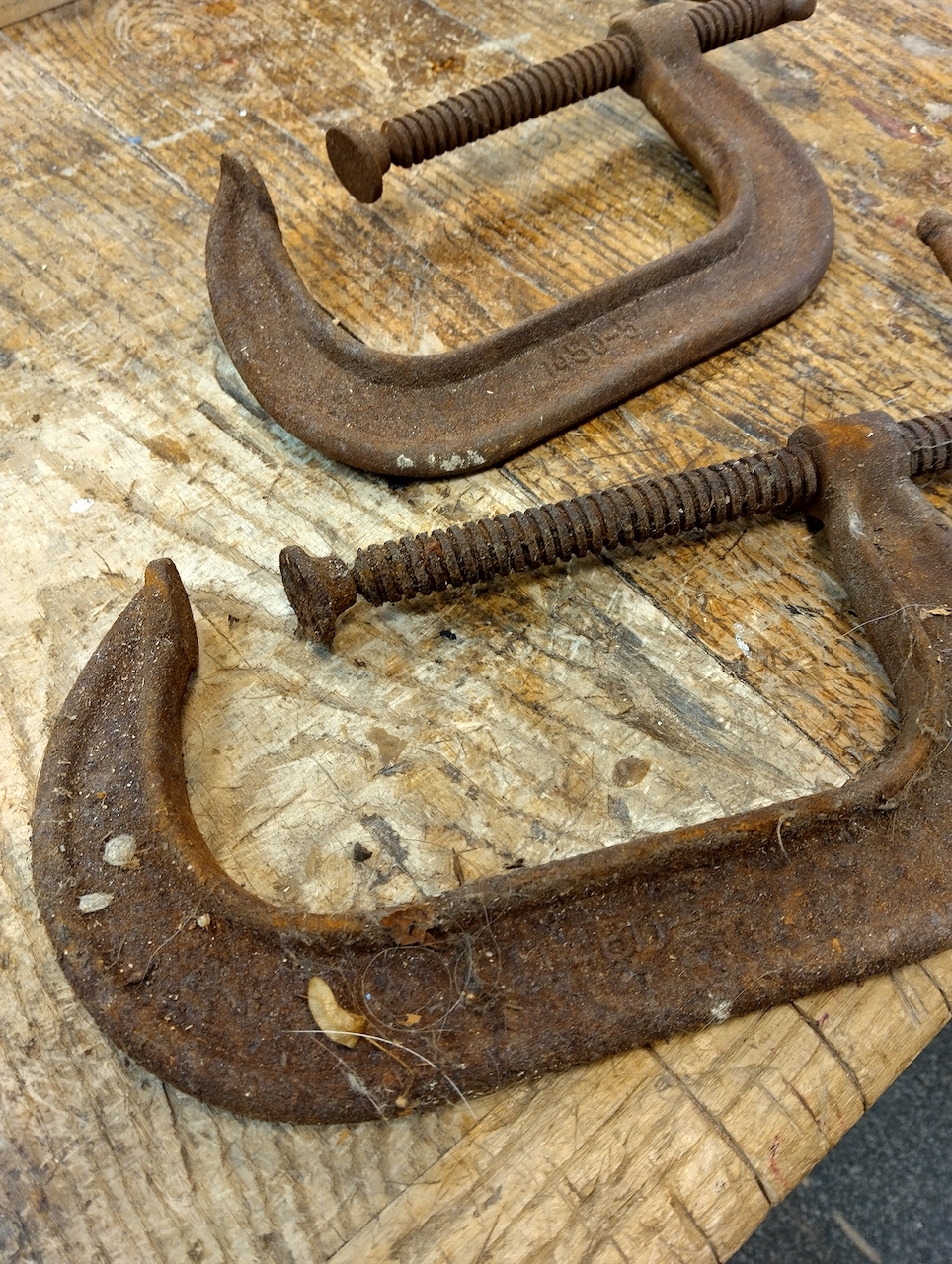
There, under the ladder, sat a bundle of rusted clamps. They were caked in rust and draped with cobwebs — a small graveyard of forgotten tools. Because we’re always short on C-clamps, I suspected what had happened: decades ago, maintenance probably borrowed these from the woodshop for some repair job and never brought them back. So I decided to rescue them.
Back in the shop, I used the opportunity to teach my students an important lesson — that tools deserve a second life, and that restoration is often more rewarding than replacement. We talked about metal, oxidation, and the ways to fight rust. Together, we brushed off the flaky surface rust with sandpaper and steel brushes, then applied WD-40. Two of the clamps loosened right up. But the third one was stubborn.
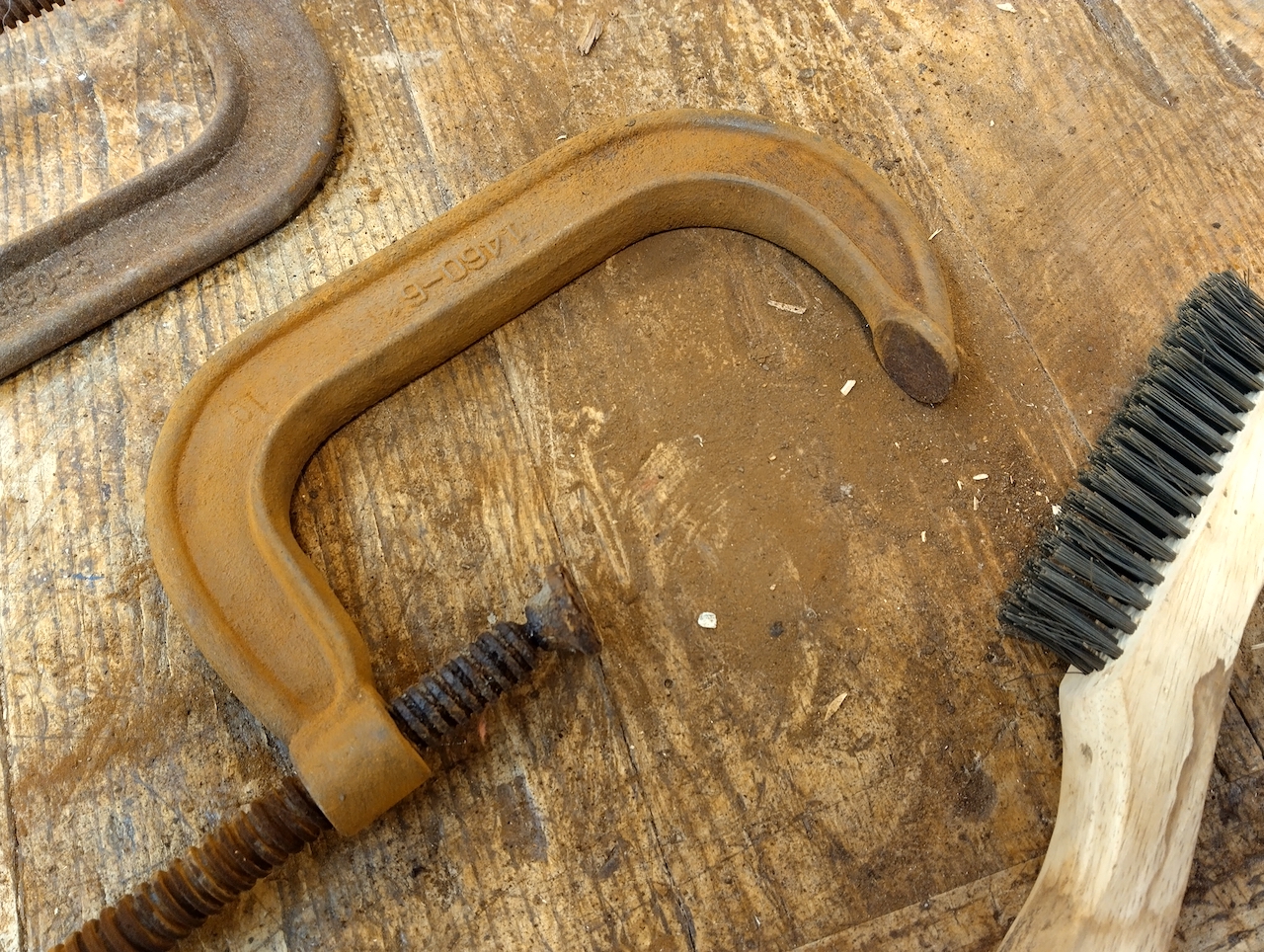
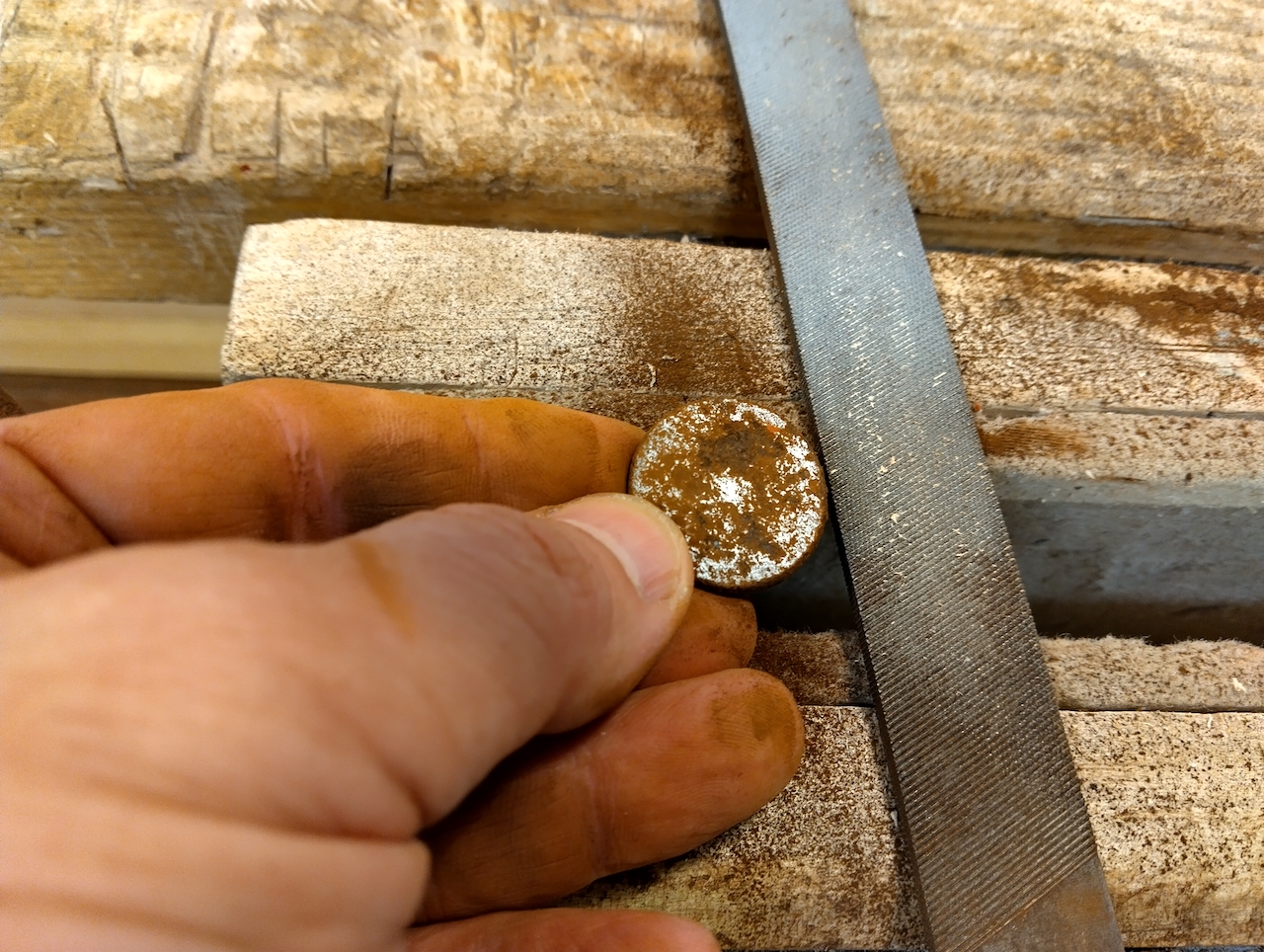
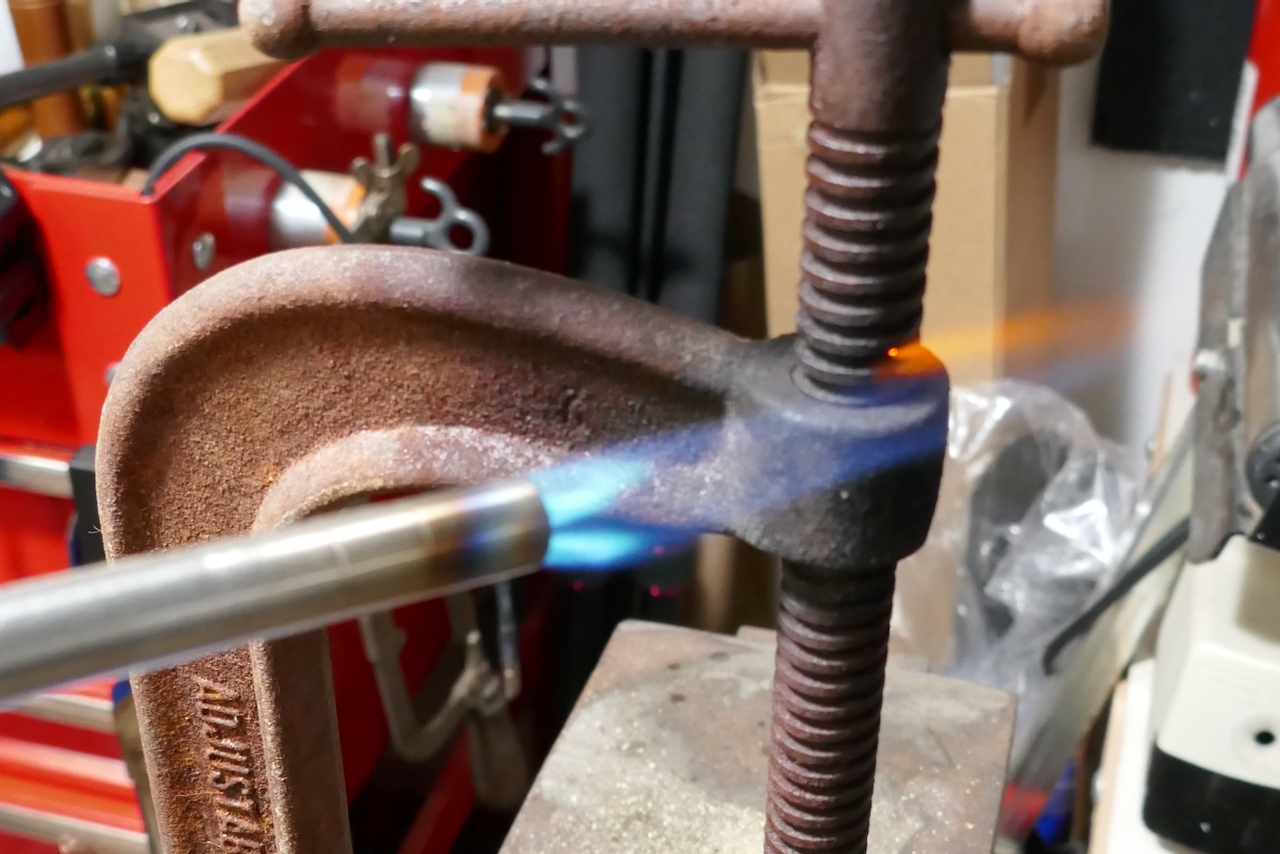
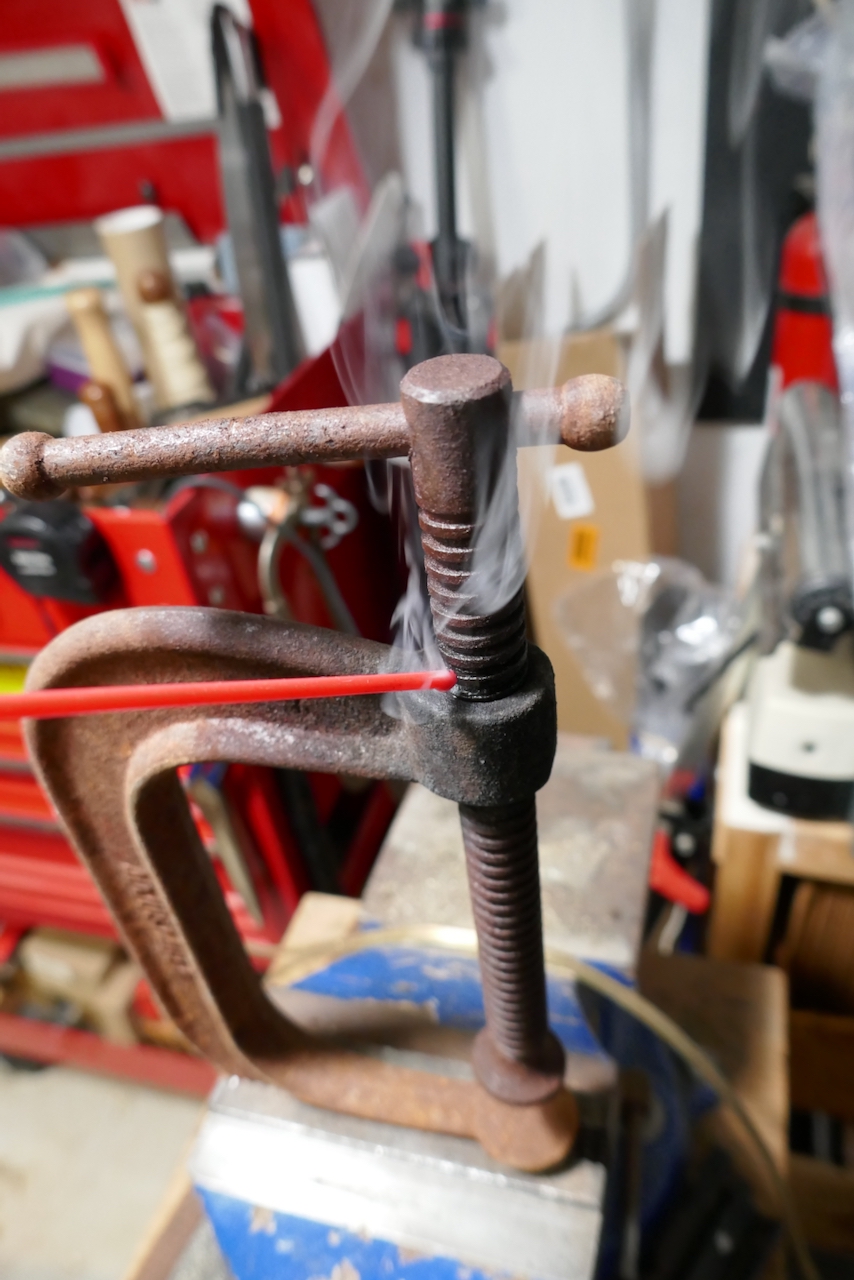
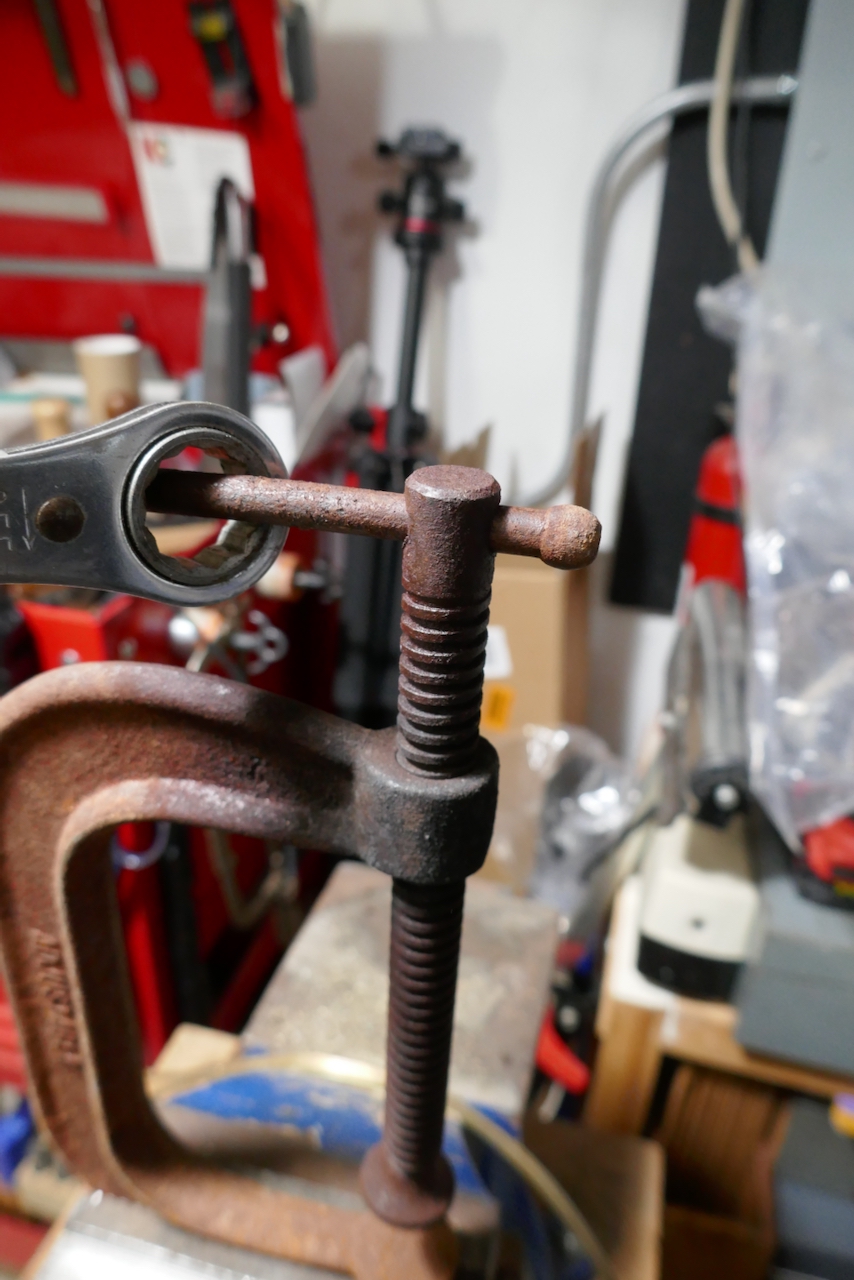
So I told my students I’d take it home and use a different approach. That evening, I secured the clamp in a machinist’s vise — never over a wooden bench — and cleared the area of anything flammable. When using a torch, it’s crucial to work safely; keep the flame away from combustibles and hold your work securely in an all-metal vise. I brought out my small torch and heated the area around the screw — the part of the clamp that had seized — for about a minute or two. Once the metal expanded from the heat, I gripped the screw with a wrench and began to work it back and forth. After a few turns, it started to move. I added another shot of WD-40 and kept working until the screw spun freely again.
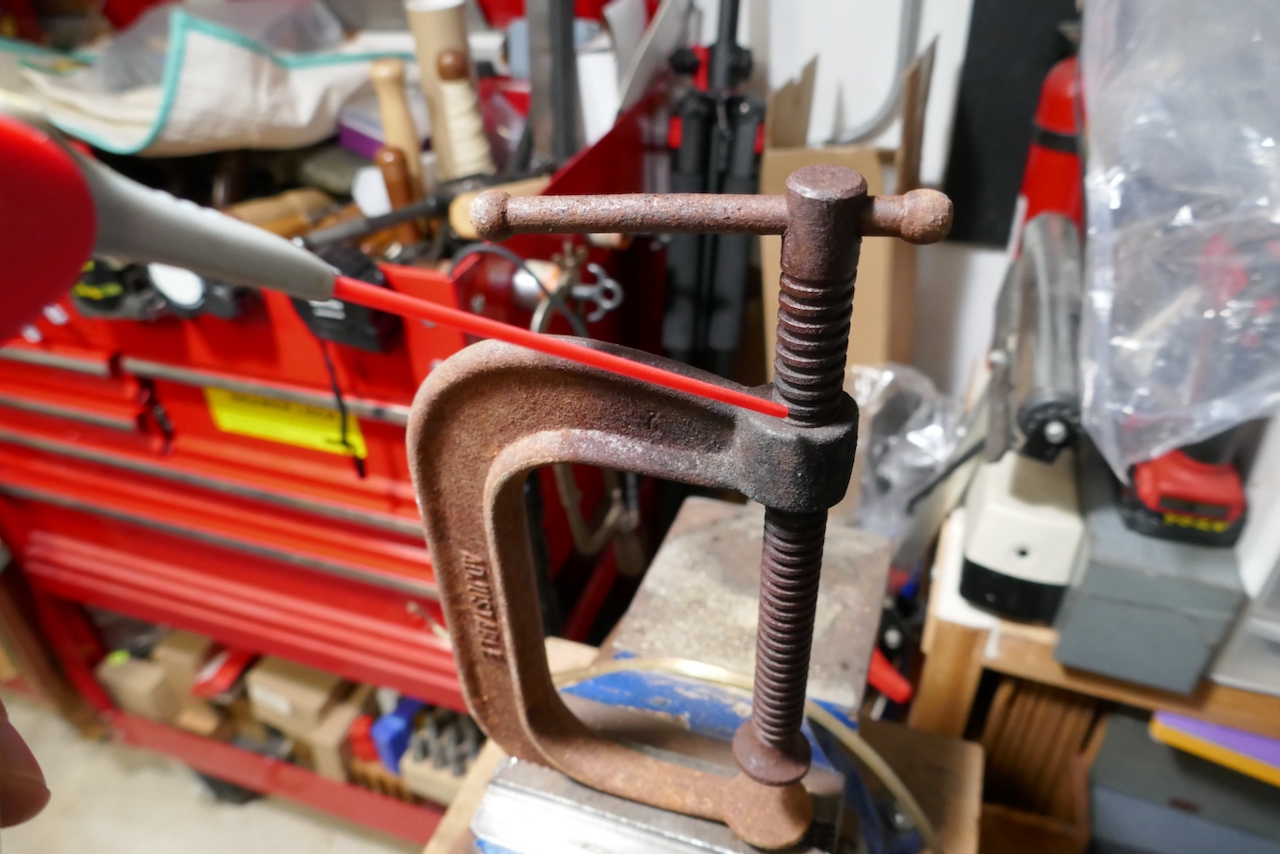
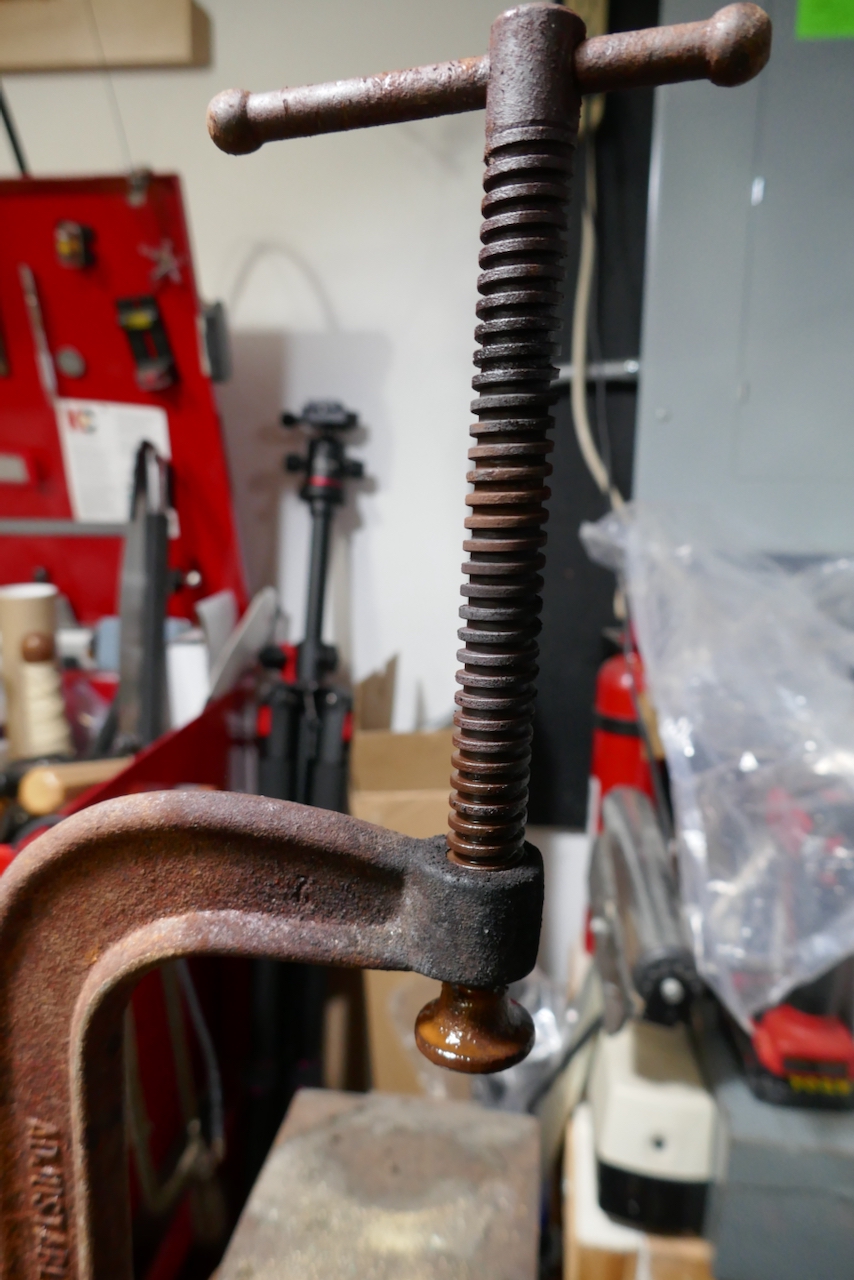
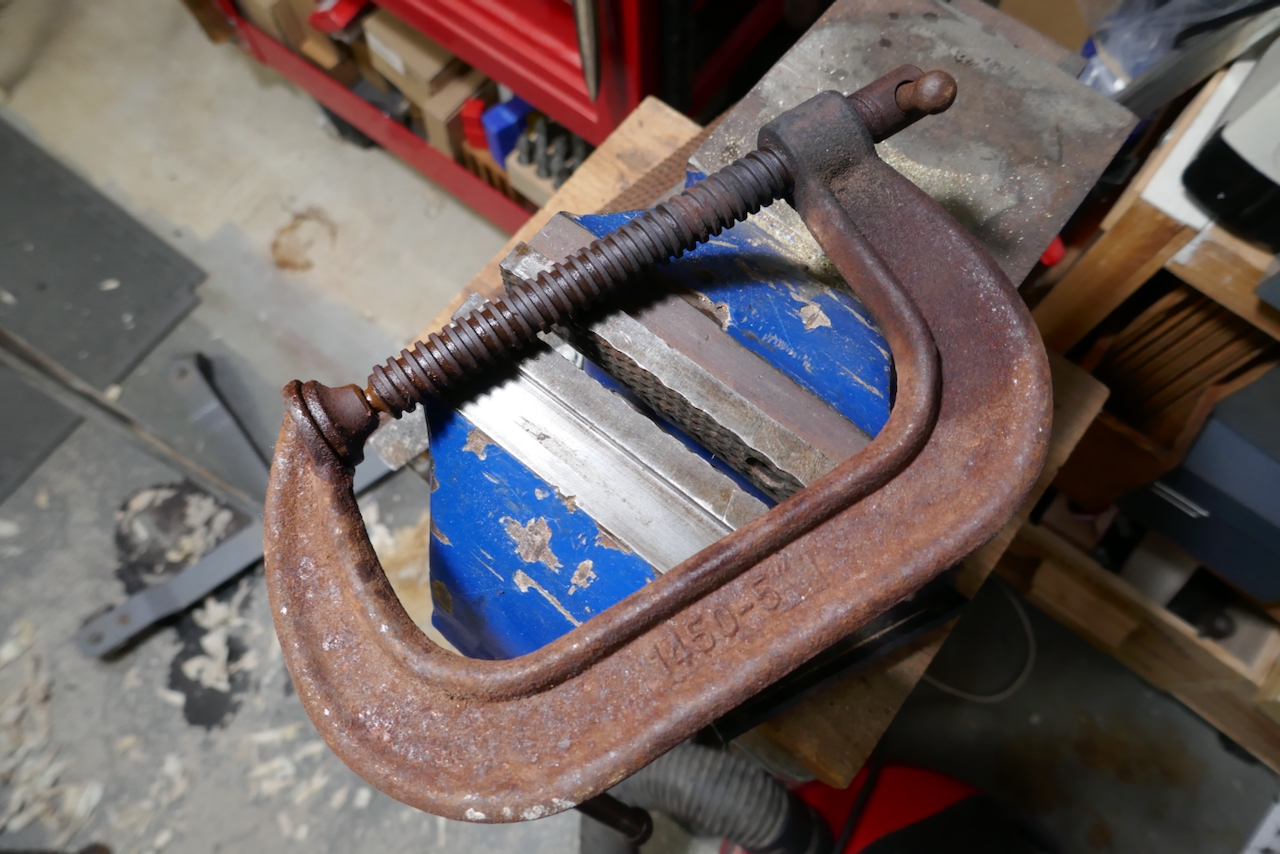
Now, that old clamp has joined our fleet of working tools once more. It’s probably 40 or 50 years old, American-made, and built to last. Saving it felt good — not only because it spared the school the cost of a new one, but because it reminded us all that a little care, patience, and sometimes even fire can bring a fine old tool back to life.