We may receive a commission when you use our affiliate links. However, this does not impact our recommendations.
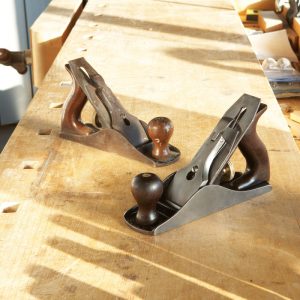
 Q: What advantage does a low-angle bench plane have over a standard bench plane?
A: A Low-angle bench planes allow you to change the blade’s effective cutting angle to suit specific tasks. Because the bevel points up on a low-angle plane, the effective cutting angle varies on the iron’s bevel angle. The bevel-up configuration also means the plane blade is fully supported right up to the cutting edge. With the bevel down, the cutting edge remains unsupported along the bevel, which can lead to blade chatter (Fig. A, below).
To get the most out of your low-angle bench plane, it’s best to have a few blades on hand with various bevel angles already ground on them (Fig. A). A 25-degree bevel ground on the cutting iron makes a low cutting angle of 37 degrees that’s ideal for shaving end grain. A 35-degree bevel approximates the 45-degree cutting angle on a standard bench plane, which is best-suited for general planing tasks. A 50-degree bevel creates a high cutting angle of 62 degrees for more of a scraping cut that reduces tearout on grained wood, such as bird’s-eye maple.

Click image to enlarge.