We may receive a commission when you use our affiliate links. However, this does not impact our recommendations.
Thanks to my daughter’s fourth-grade class, I’ve discovered another good source of small-scale drawbore pins for cabinet work. This morning I had to give a small chat about my job at a woodworking magazine to my daughter’s class and I decided to bring along some unassembled mortise-and-tenon joints and drawbore them during class as a demonstration.
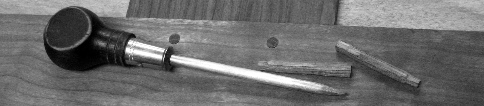
Right before I left for the school, I realized that I’d left my drawbore pins in our shop at the magazine. I went down to my shop at home to see if I had any drift pins down there that I could press into service. No luck. But my eye alighted on an old Buffalo-brand scratch awl that I’d bought after college and was in the junk bin. The shaft was the right dimension for small-scale work , a little fatter than 1/4″. But the pin tapered too sharply at the tip for my taste. (It’s a sorry excuse for an awl, really.)
So I picked up a mill file and lengthened the taper on the shaft. I blunted the sharp tip with the file. Time elapsed: five minutes. Then I had to leave for school that instant without even testing it. In class, I gave my little song-and-dance on drawboring, bored a few holes with my eggbeater drill and then put the new drawbore pin to use.
It worked flawlessly. I put the joints together without glue and then had the fourth-grade boys give them a bit of a beating. The joints survived. Next time you’re at the flea market, you might want to pick up a couple of hopeless and homeless awls and give this a try yourself. Once I refinish the handle, this tool is getting a promotion out of the junk drawer and onto the wall.