We may receive a commission when you use our affiliate links. However, this does not impact our recommendations.

Last weekend I built a dovetailed campaign-style officer’s trunk for the San Diego Fine Woodworkers Association and several of the members were shocked when I drove the carcase dovetails together.
What was shocking to them was how tight my fit was between the tails and pins; it required a few hard whacks with a dead-blow mallet to seat the tails into the pins.
The members asked me a lot of good questions about why I do things this way, and here is my rationale.
I consider the dovetail a self-clamping joint. When well-made, a good joint won’t require clamping in most cases. (When you are learning to cut the joint, clamps are a good thing.) Years ago, I decided to make my dovetails a little on the tight side after reading a lot about early workshop practice.
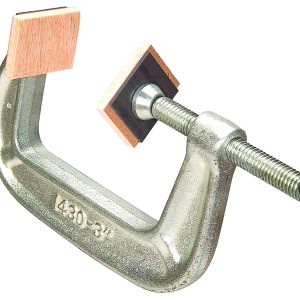
For starters, iron clamps were expensive (still are), and when you read inventories of shops, you don’t encounter racks of clamps on the lists. Joseph Moxon’s “The Art of Joinery” (1768) makes no mention of clamps in his book on the craft. The English word for clamps, “cramps,” was in use in the 17th century, but it usually was a piece of iron that would be applied to a structure to keep it together.
That’s not evidence enough, but it is an important point to consider when thinking about the traditional shop – woodworkers didn’t have as many clamps as we did.
In looking at early accounts of dovetailing, clamping is not mentioned as part of assembling dovetailed carcases. In “The Joiner and Cabinet Maker” (circa 1830), the work is driven together with a mallet – plus a piece of scrap to protect the joint. No clamps are mentioned in the process, though clamps appear in other parts of the book and are used to pull up mortised-and-tenoned frames.
Charles H. Hayward also makes no mention of clamps in his landmark “Woodwork Joints” (1950). He says assembly is done with “light taps” of a hammer and a scrap of wood that protects the joint from the hammer blows.
Ian Kirby in “The Complete Dovetail” (1999), mentions using clamps, though he uses them to pull the joint tight only and then releases them.
So I set out to tune my sawing so that I wouldn’t need clamps to hold my carcases together. I did this by leaving an extra thou or two of waste wood when I cut the second half of the joint. This little extra wood provides the compression that relieves me of using clamps in most cases.
Of course, if the wood splits, the joint is too tight.
This technique is one of the many little tricks (such as rub joints and drawboring) that I’ve employed in my shop to reduce the need to buy acres of clamps. I’m not suggesting that you throw away your clamps or stop clamping your dovetails – that’s your call.
But if you are short on clamps, this is a good technique to learn.
— Christopher Schwarz
P.S. One last note: This technique works best with hide glue. Hide glue (liquid or hot) acts as a lubricant. Yellow or white glue (which is mostly water) swells your components and makes a tight fit even tighter. So beware.