We may receive a commission when you use our affiliate links. However, this does not impact our recommendations.

Right in the thick of
Woodworking in America – somewhere between duck fat fries and falling
asleep in a puddle of what I hope was my drool – Mark Harrell of Bad Axe
Tool Works put a saw down on my workbench and quietly left the
classroom.
It was a 12″ carcase saw, filed crosscut with 14 ppi,
sexy black nuts and a cherry handle. It looked just like the carcase saw
I reviewed in July on this blog. During a break in the action, I and some of the students took it for a test drive to see what was different.
It
was immediately obvious. Harrell had made this saw with a thinner
sawplate – .02″ instead of .025″. And the new saw has a finer pitch – 14
ppi instead of 13 ppi. These changes make a difference, and this saw
cuts smoother and with less effort than the carcase saw with a thicker
plate (which is still available).
At least, I thought it made a difference.
To
see if I was correct, I had Megan and Glen each try both saws without
telling them anything about how they were different. Then I asked them
which they preferred. Megan liked the thicker saw because it cut faster.
Glen liked the thinner saw because it cut more smoothly. Both editors
could tell the difference between the two tools.
So if you are in
the market for a carcase saw, which should you get? Unless you are
tough on your saws, I think the thinner saw is the better choice. A
.02″-thick sawplate isn’t particularly fragile in my experience, so only
the truly ham-handed should be concerned. I like the finer teeth and
the thinner plate – the saw moves easily through the work.
As
with all Bad Axe saws, you can customize them quite a bit when you
order. You can select different materials and finishes for the nuts,
back and handle. Plus, I like the fact that you can get your saw made
with slotted steel nuts, which are more robust than brass split nuts.
Yes, split nuts look fancier, but not after you’ve munged them while
tightening them. Or worse, snapped them clean off.
At $210 you are paying a bit of a premium compared to a Lie-Nielsen saw ($137) or a Wenzloff & Sons ($139), but it is in line with the custom work done by people like Medallion Toolworks ($245).
At this price level, performance isn’t much of an issue – it’s a lot
about aesthetics and your wallet. Me, I like the way the Bad Axe saws
look and work. My only wish? That I could order one with an applewood
handle. That would be a time trip.
Read more about Bad Axe saws or place an order for one at badaxetoolworks.com.
— Christopher Schwarz
Other Sawing Resources
• Please learn to sharpen your saws. Visit VintageSaws.com and get all the information you need to get started.
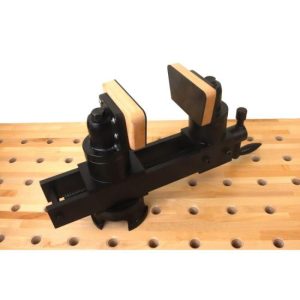
• Need a saw vise? You cannot go wrong with the Gramercy saw vise. It’s the one I bought to replace my ragged-out vintage one.
• Want to learn to saw but don’t have the money to take a class? I have two DVDs on the topic. “Sawing Fundamentals” shows you how to choose the right saw and use it. “Build a Sawbench” shows you how to put this knowledge to use while making an important workshop appliance.