We may receive a commission when you use our affiliate links. However, this does not impact our recommendations.
 For a two-car garage shop, optimizing space is always the top priority. To help wrangle materials and supplies, I recently built a cart based on a brilliant piece of industrial design: the traditional American factory cart.
These old-school carts were simple yet ingenious, typically featuring a wooden frame, a large bed, and a specific caster configuration: two fixed-direction wheels in the center (opposing each other along the long axis), and two swiveled casters, one at the front and one at the back. They often included a bracket or cleat to anchor a handle for steering.
Speaking of classic design, you still see the legendary models around:
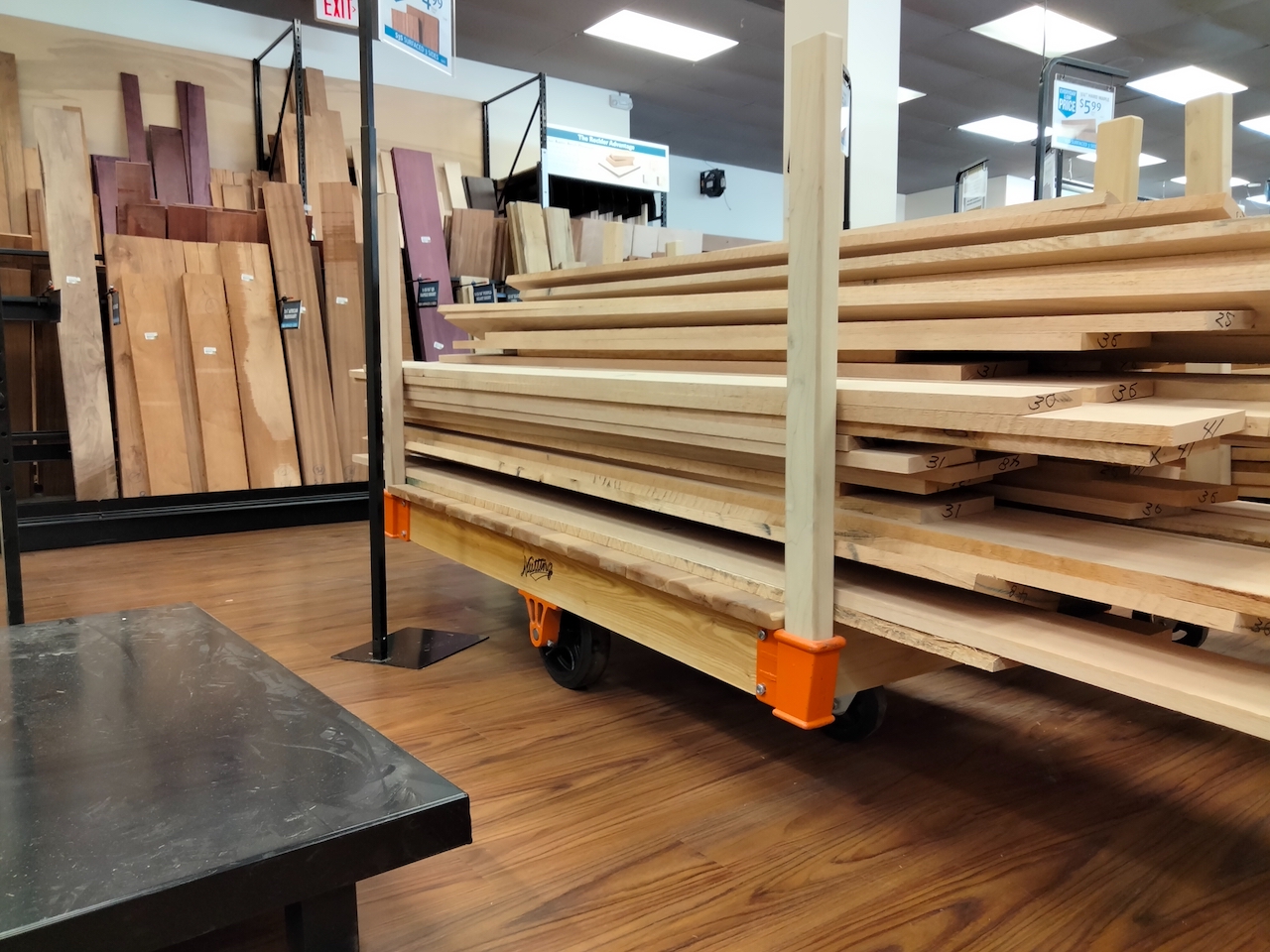
Classic Nutting wooden cart at the Rockler store in Cincinnati.
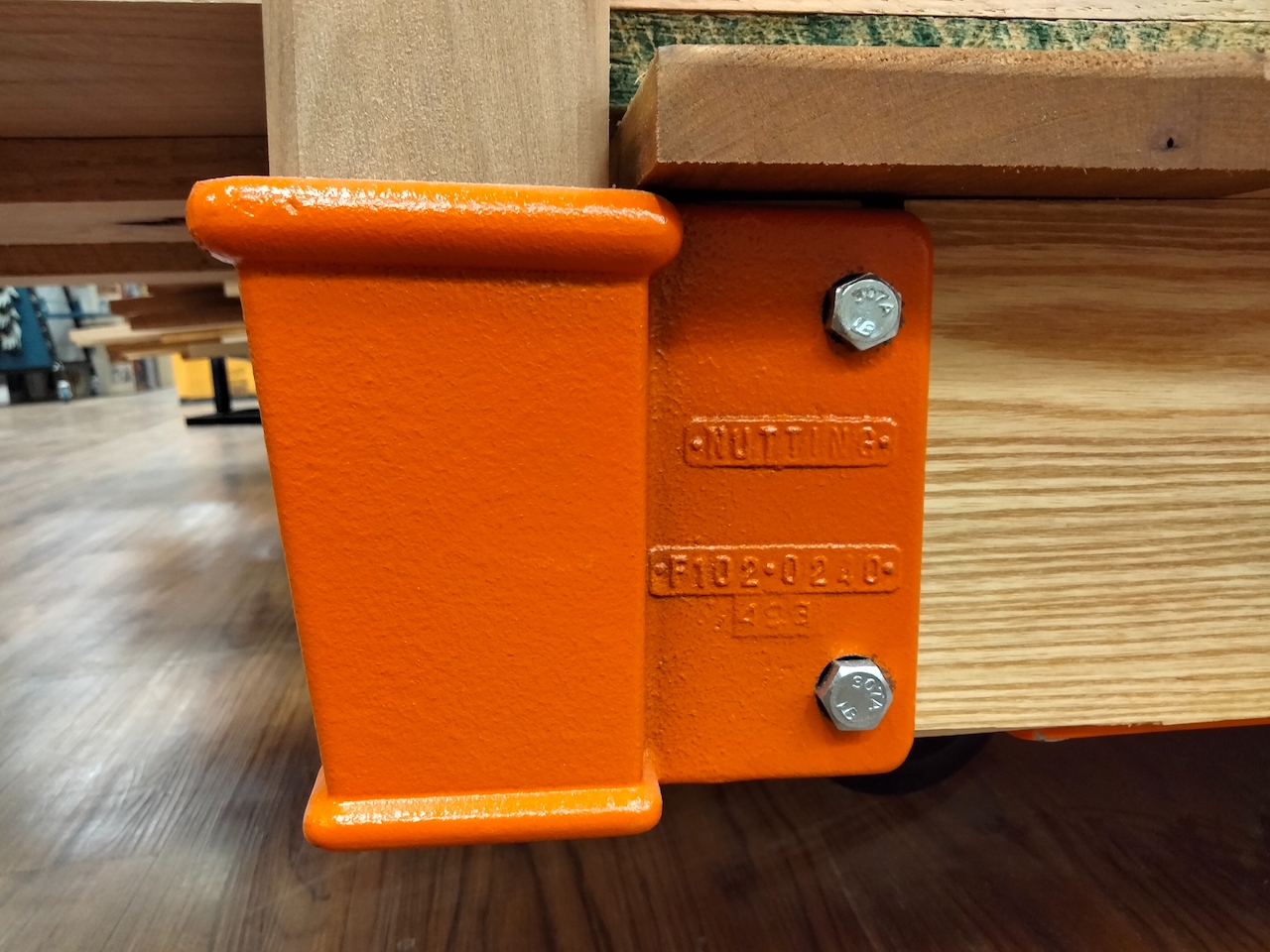
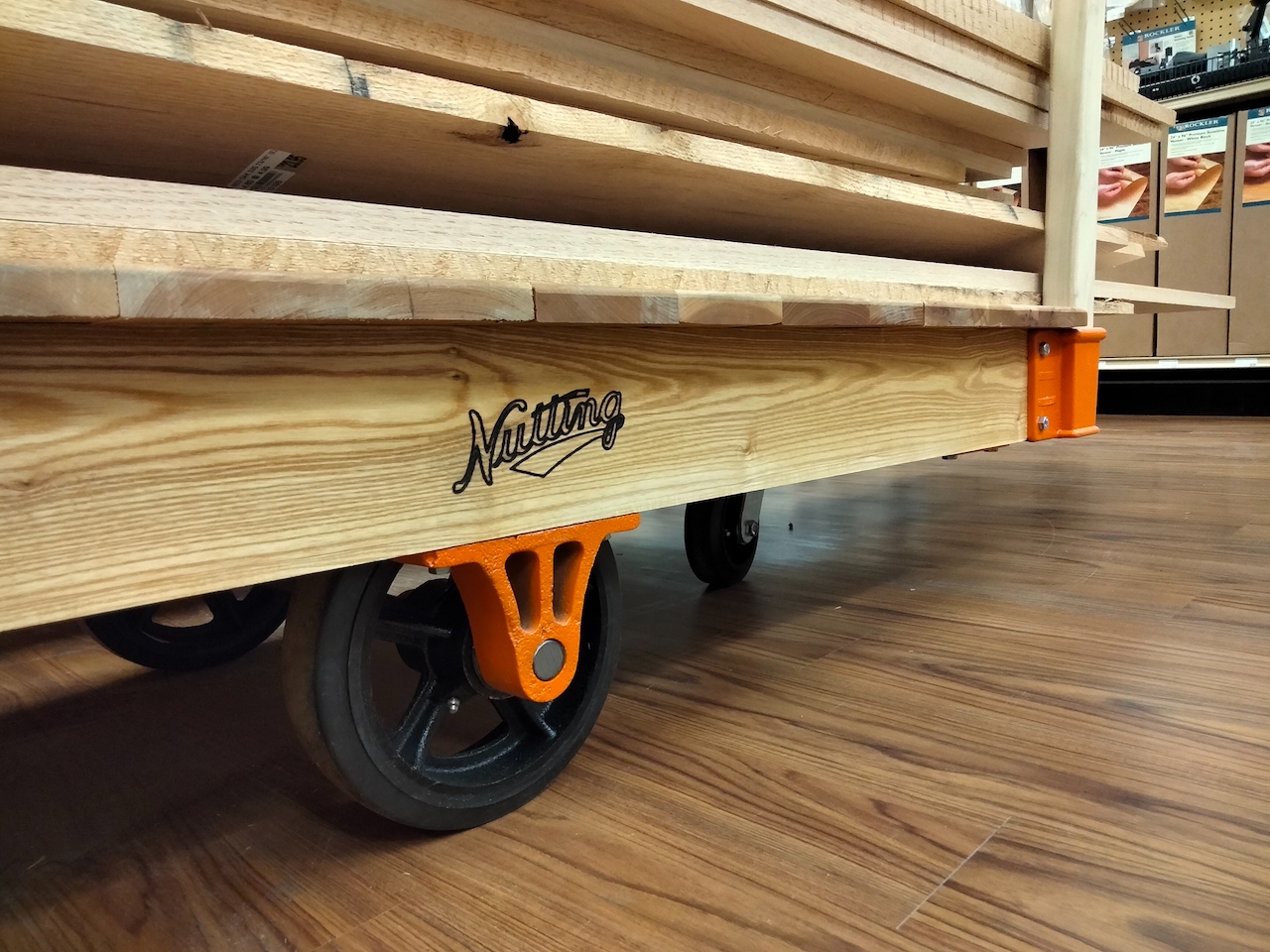
The original carts, like those from Nutting Truck and Caster Company, are revered for their durability. While the company still operates today, primarily manufacturing heavy-duty steel industrial carts and trailers, finding the original wooden versions often means searching for antiques. They don’t appear to sell a kit for the classic wooden cart, which is exactly why building your own is the perfect solution for the home shop!
The Trick to the Steering
The real genius of this design lies in how the casters are mounted. The two central, fixed casters (often called rigid casters in professional terms) are slightly “proud” of the frame—meaning they are spaced down approximately to of an inch lower than the frame itself. This means that at any given moment, only three casters are truly in firm contact with the floor.
Why is this important? This slight elevation of the frame and the swiveled casters allows the cart to pivot easily on the two rigid center wheels, greatly aiding in turning and steering. When weight is shifted to one end, the cart tilts slightly, bringing one swiveled caster down to contact the floor, which helps guide the cart without the constant scrubbing and friction you get from four corner swivel casters.
My Cart Build
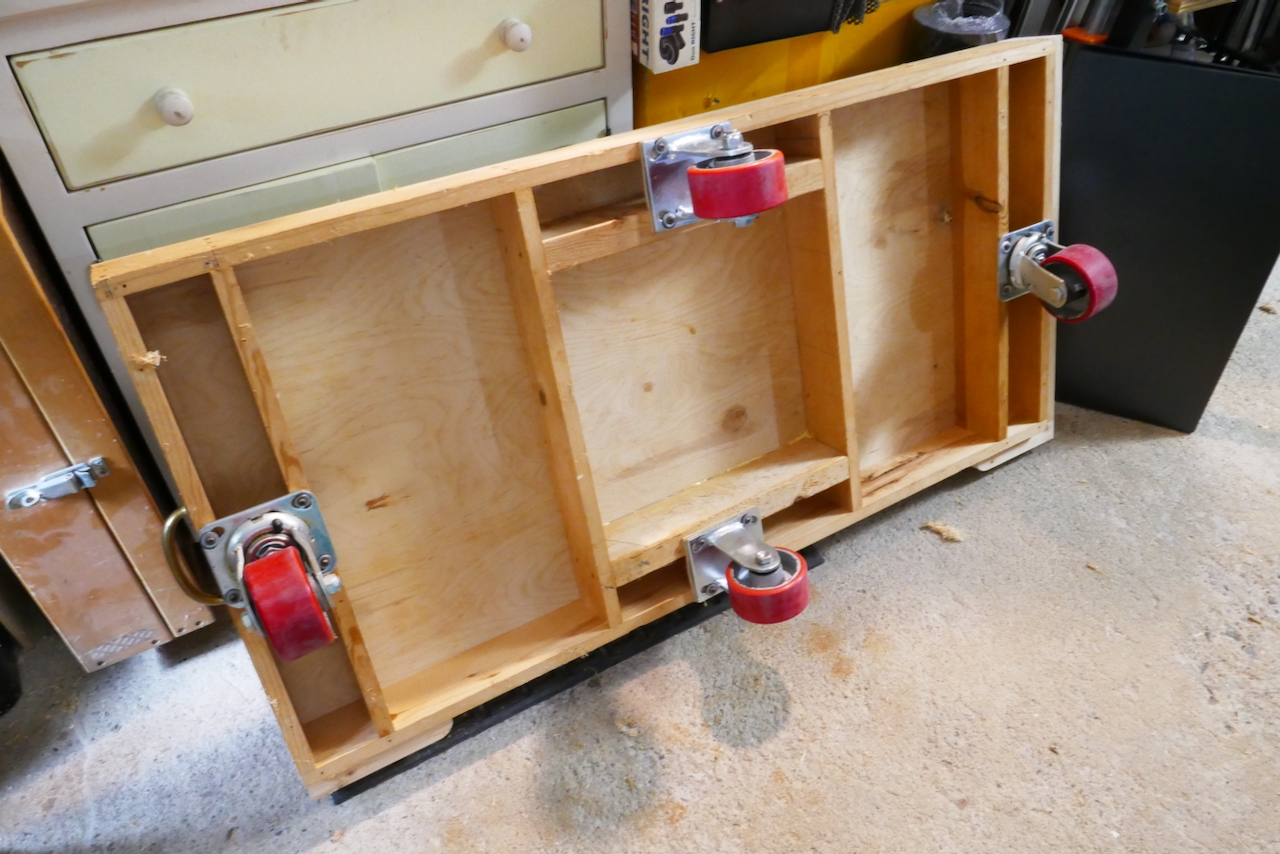
The cart I designed is true to this form. It features a sturdy wooden frame topped with a plywood plate. For the rolling hardware, I used two swiveled casters (one for each end) and two rigid casters for the center—the professional term for the fixed-direction type.
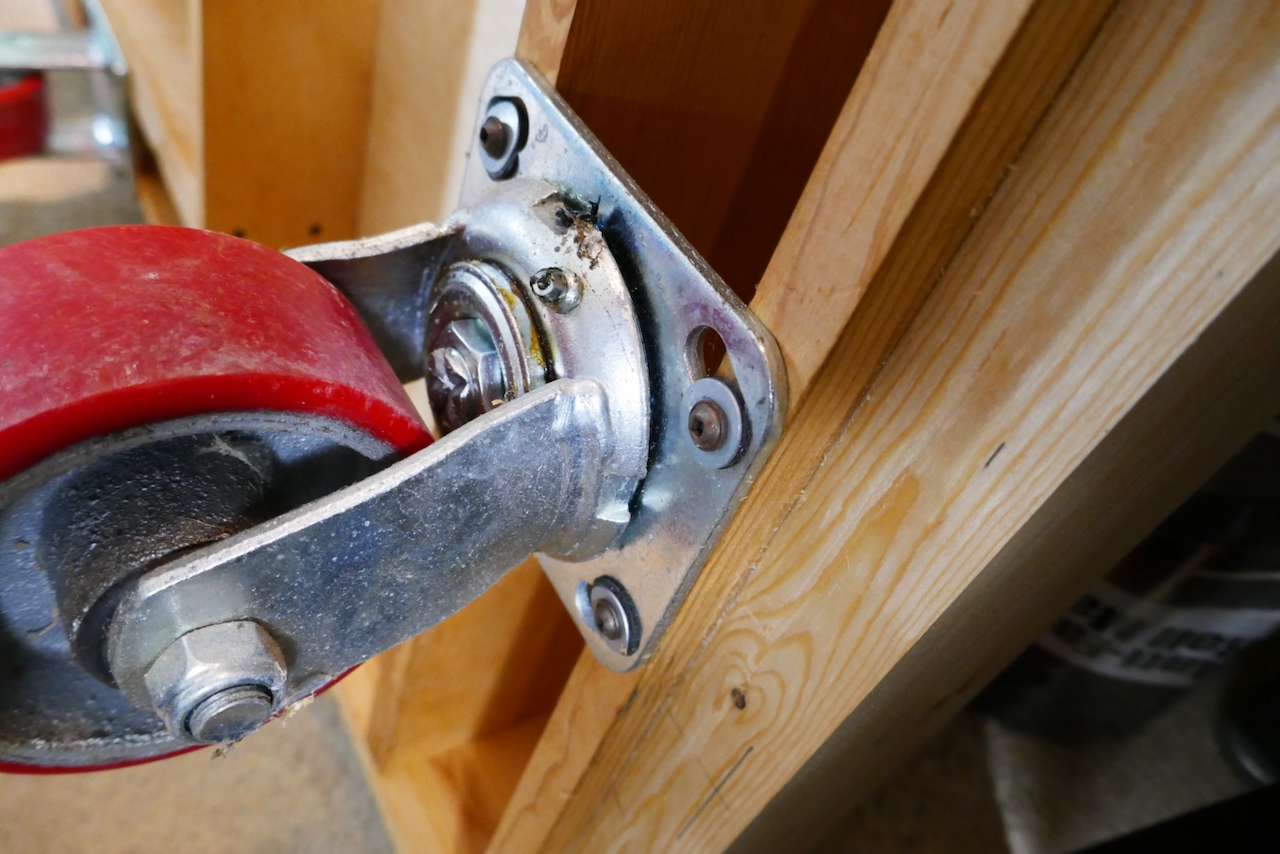
Swiveled casters at the front and back
The core of the wooden frame consists of two long beams on the edge, braced by shorter wooden crossbars. These crossbars are essential because they provide a solid mounting point for the main parallel, rigid casters. Crucially, I ensured the rigid casters were mounted using a spacer (the or shim we talked about) to achieve that critical clearance and smooth turning capability.
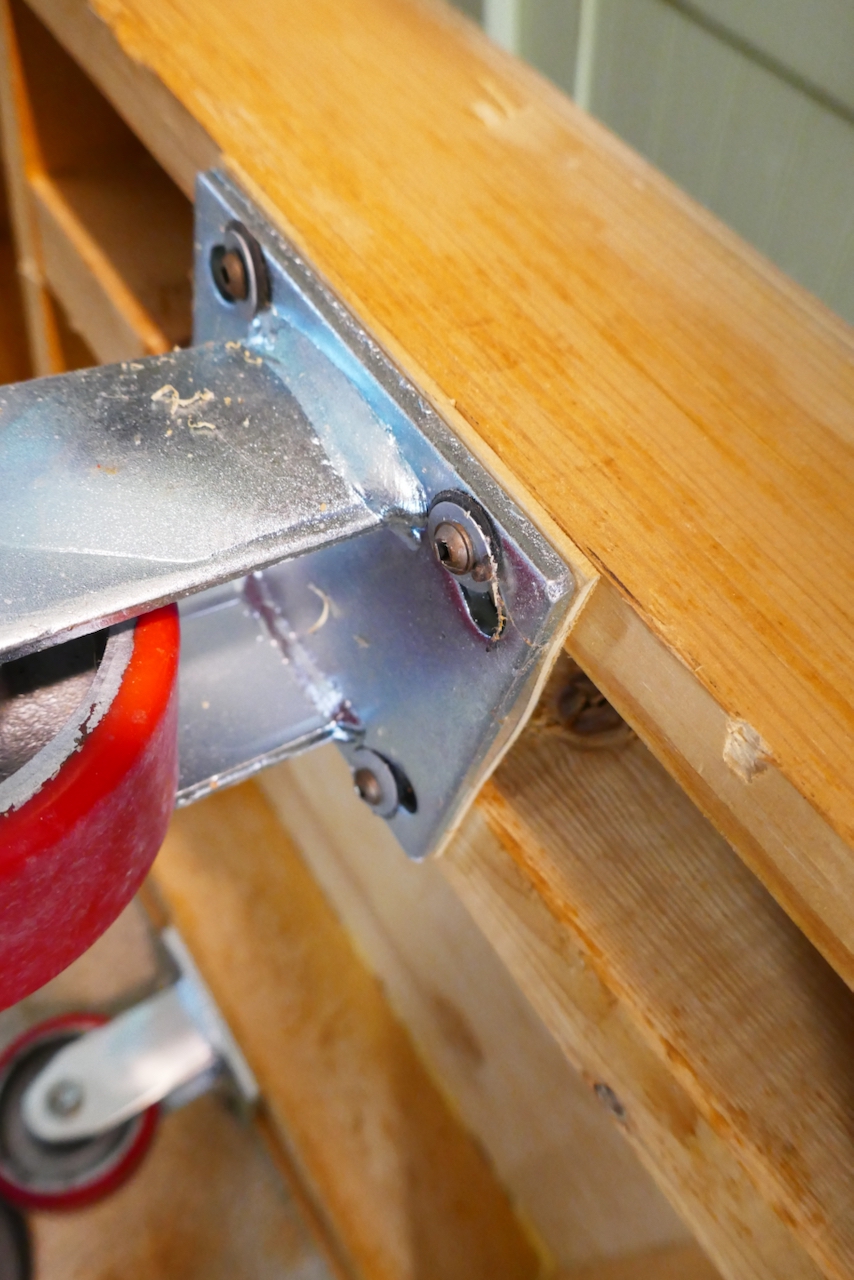
Note the thin plate of plywood that spaced down the middle, fixed wheels.
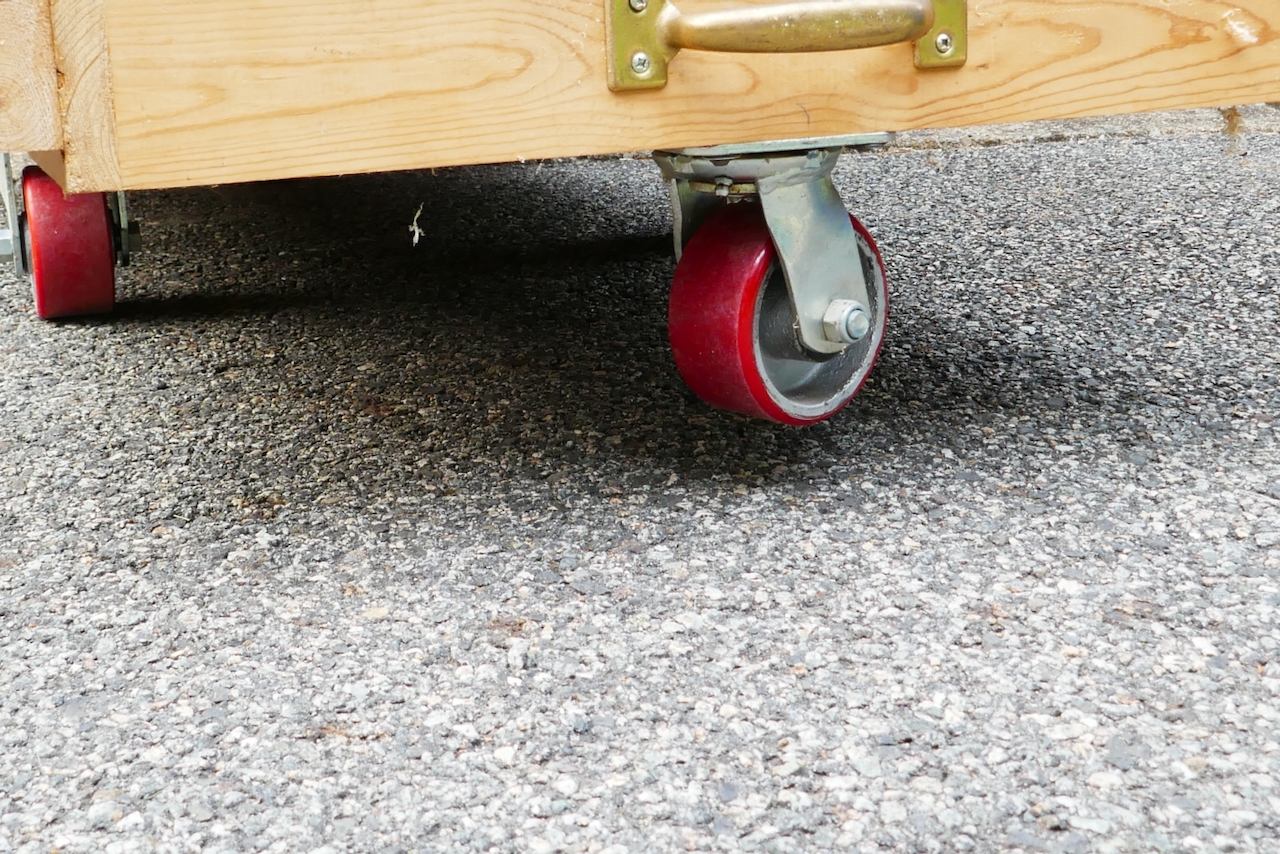
When first built, the carts were immediately put to use storing lumber and various shop supplies. More recently, however, I found a way to use them to hold metal storage racks, allowing me to optimize the garage space by storing things vertically. Next time, I’ll show you exactly how I modified the cart to integrate those metal racks.