We may receive a commission when you use our affiliate links. However, this does not impact our recommendations.
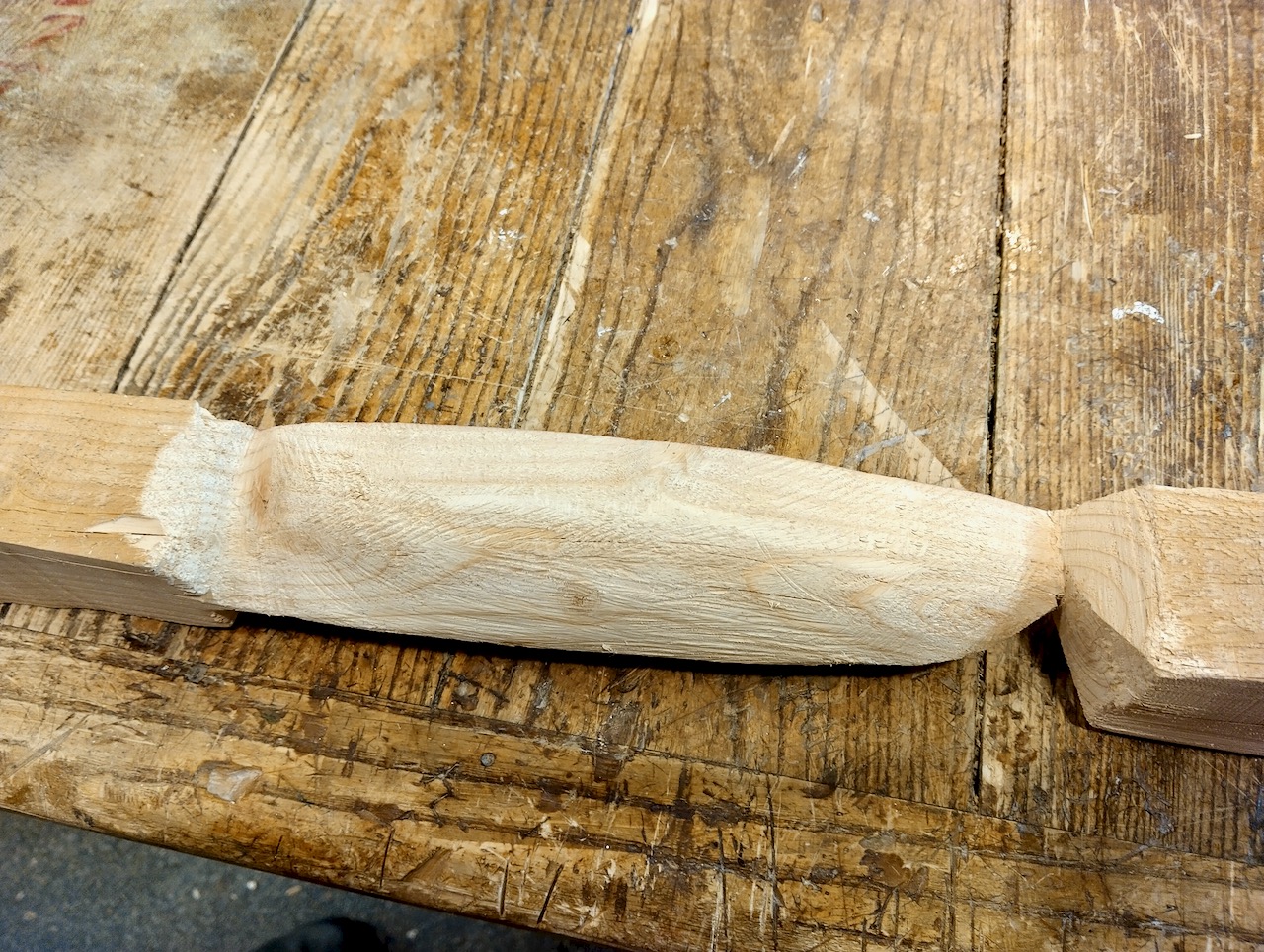 In our last entry, we left off just as the students began shaping the hull of their boats. I had explained the importance of leaving small vestigial blocks at the bow and stern—these sturdy tabs allow us to hold the boat securely in the vise during the intense rasping process. A smooth, tapering hull doesn’t clamp well and tends to shift under pressure, so we rely on those extra blocks until shaping is nearly complete.
Part 1 • Part 2 • Part 4 • Part 5
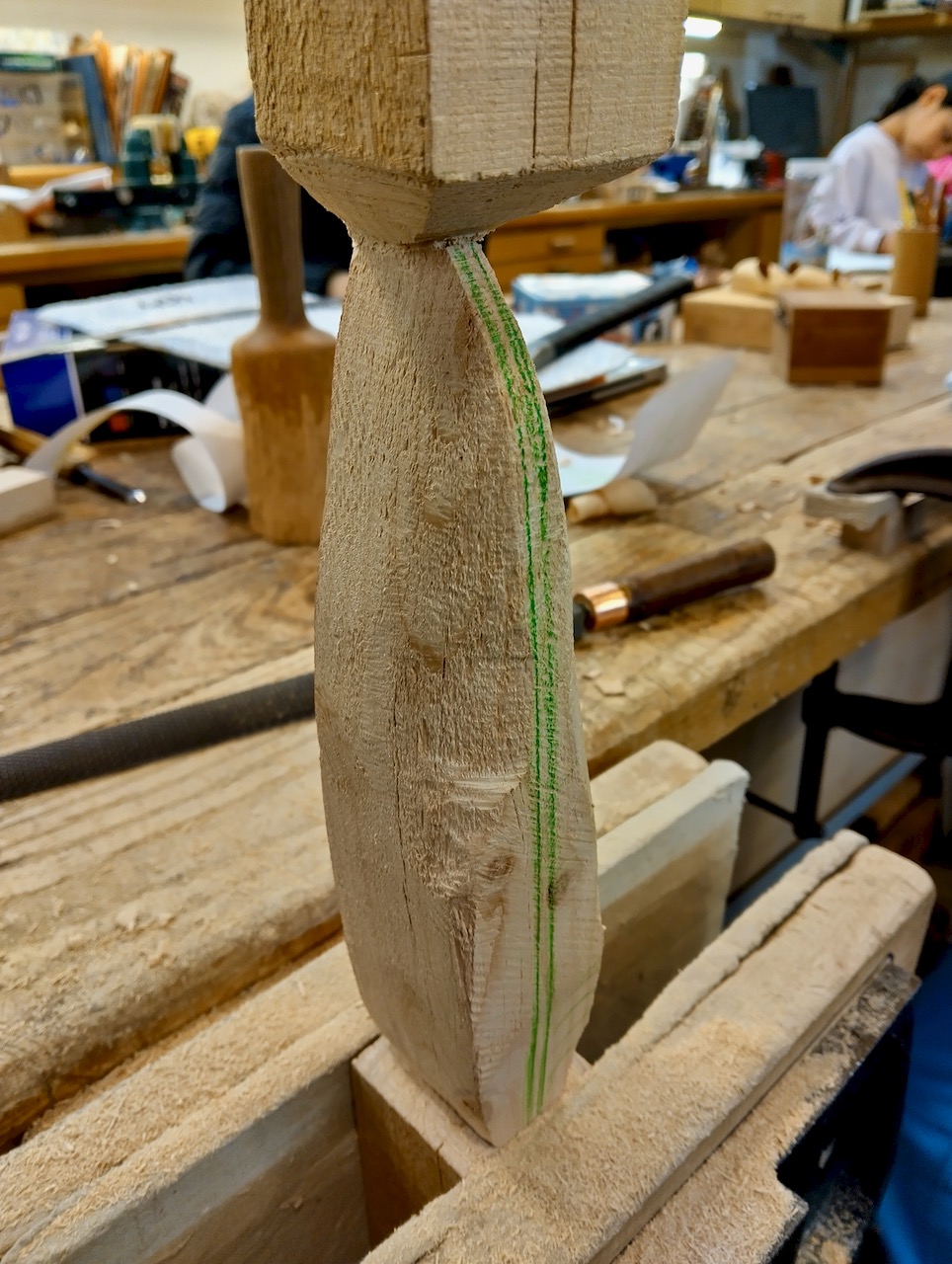
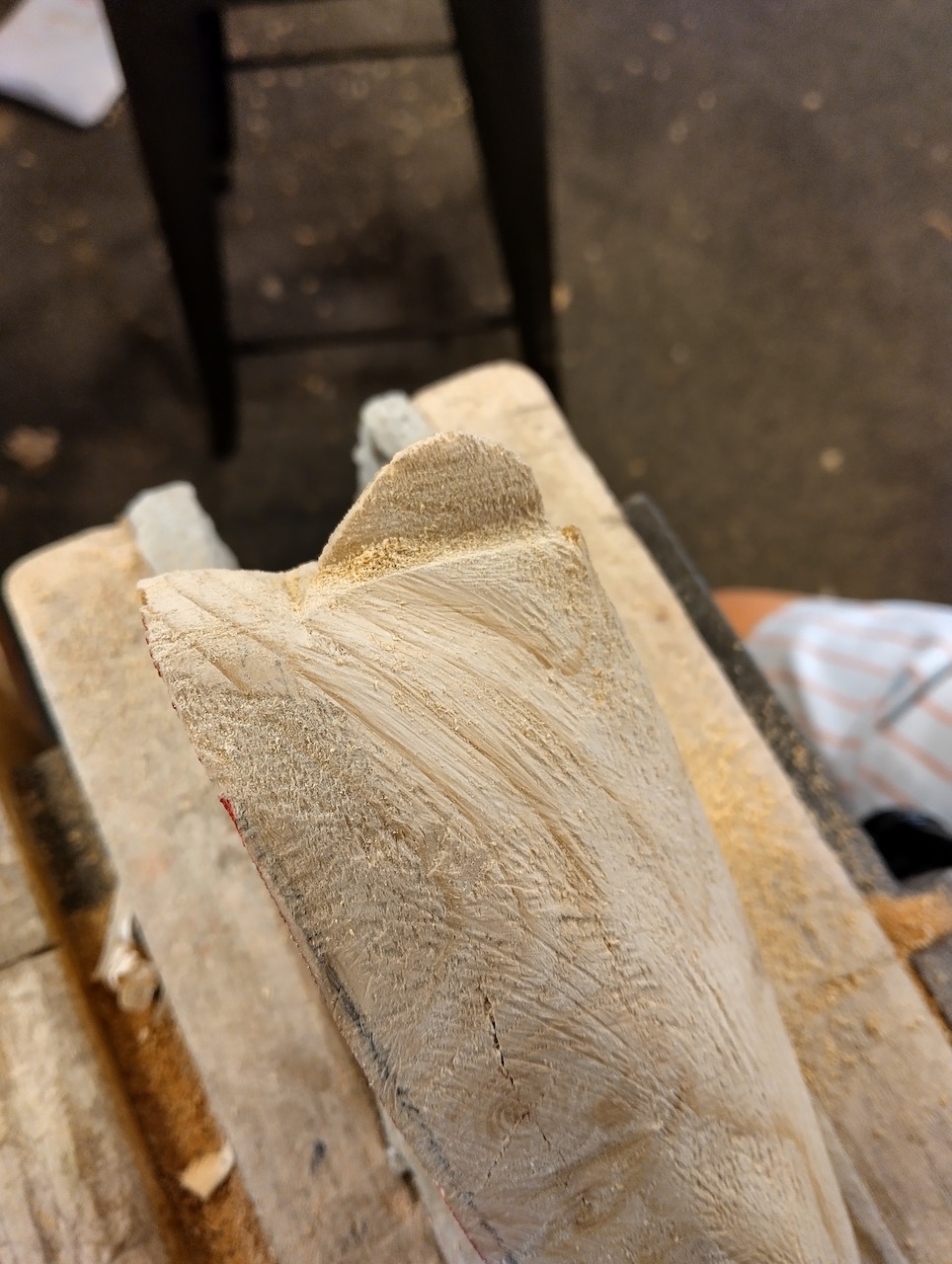
In the photos below, you can see the progression of this work. Each student begins rounding the square corners of their hull blank using a coarse rasp, transforming the blocky shape into the gentle curves of a boat. To guide their work, I mark two parallel green lines along the bottom of each hull. These lines indicate the outer edges of the keel—the central ridge running along the underside of the boat. You can think of the keel like a curved beam that has some thickness to it. The green lines show the boundaries of that thickness—roughly an eighth of an inch wide—and I remind the students often: Don’t rasp beyond these lines!
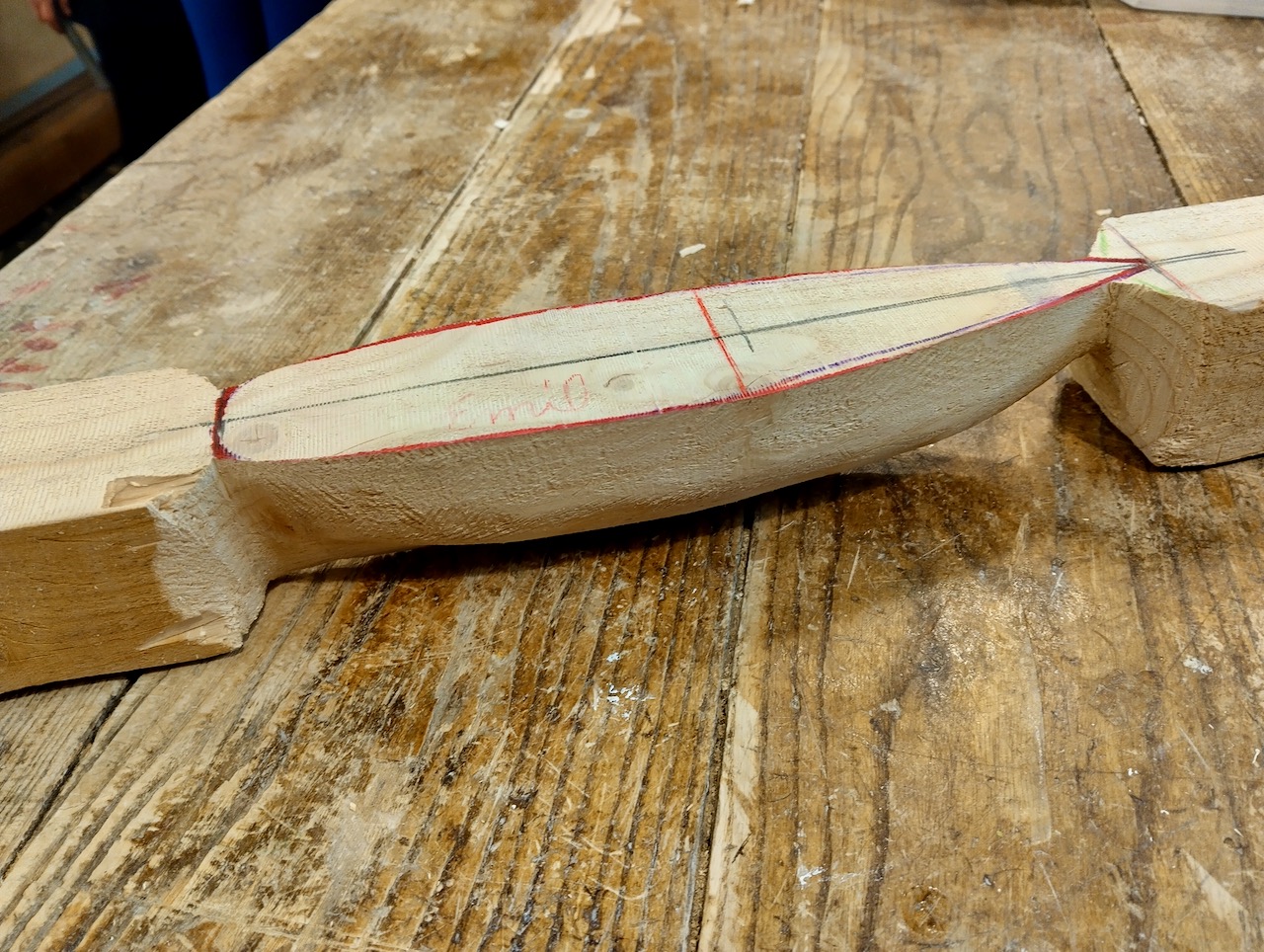
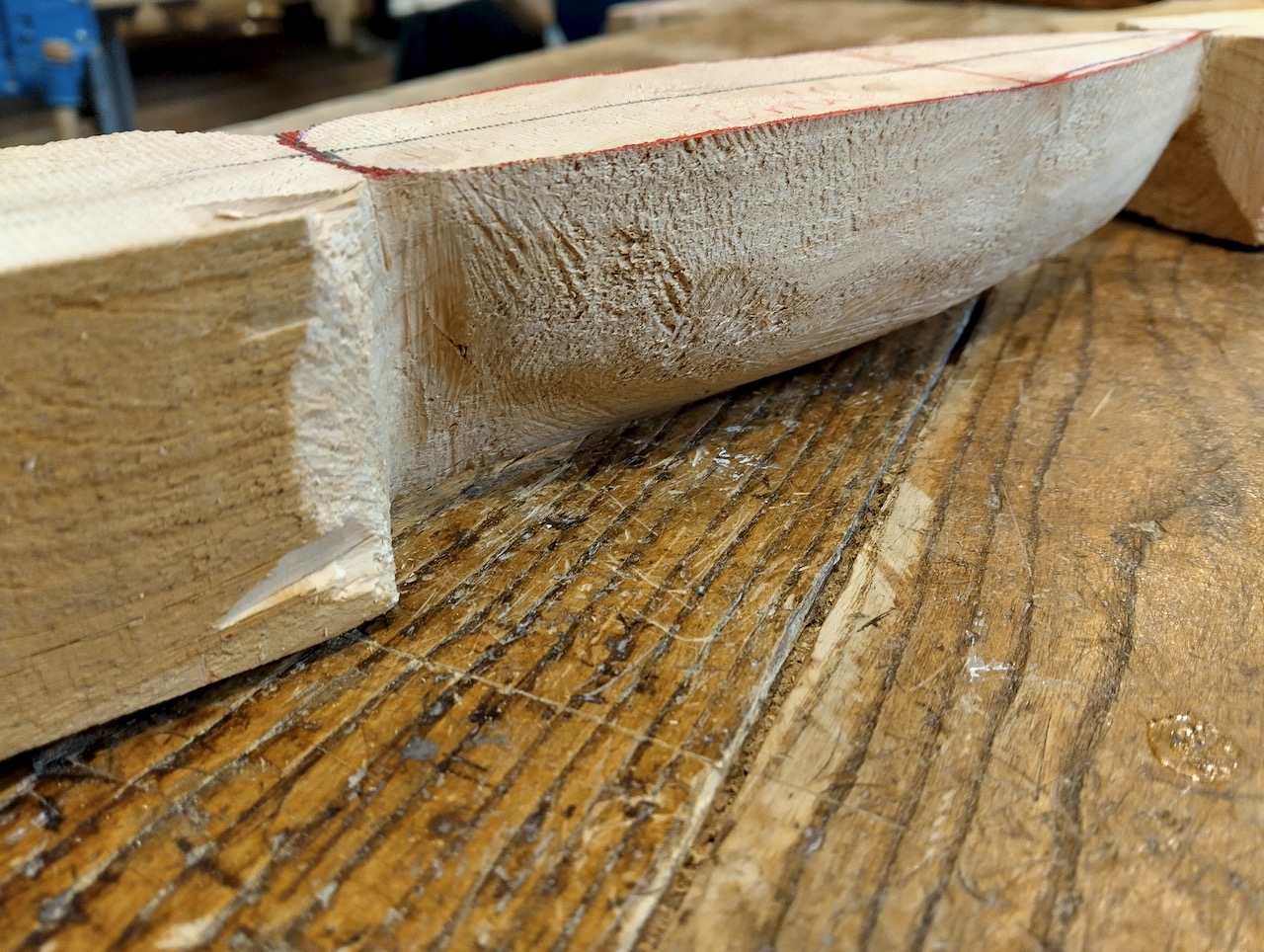
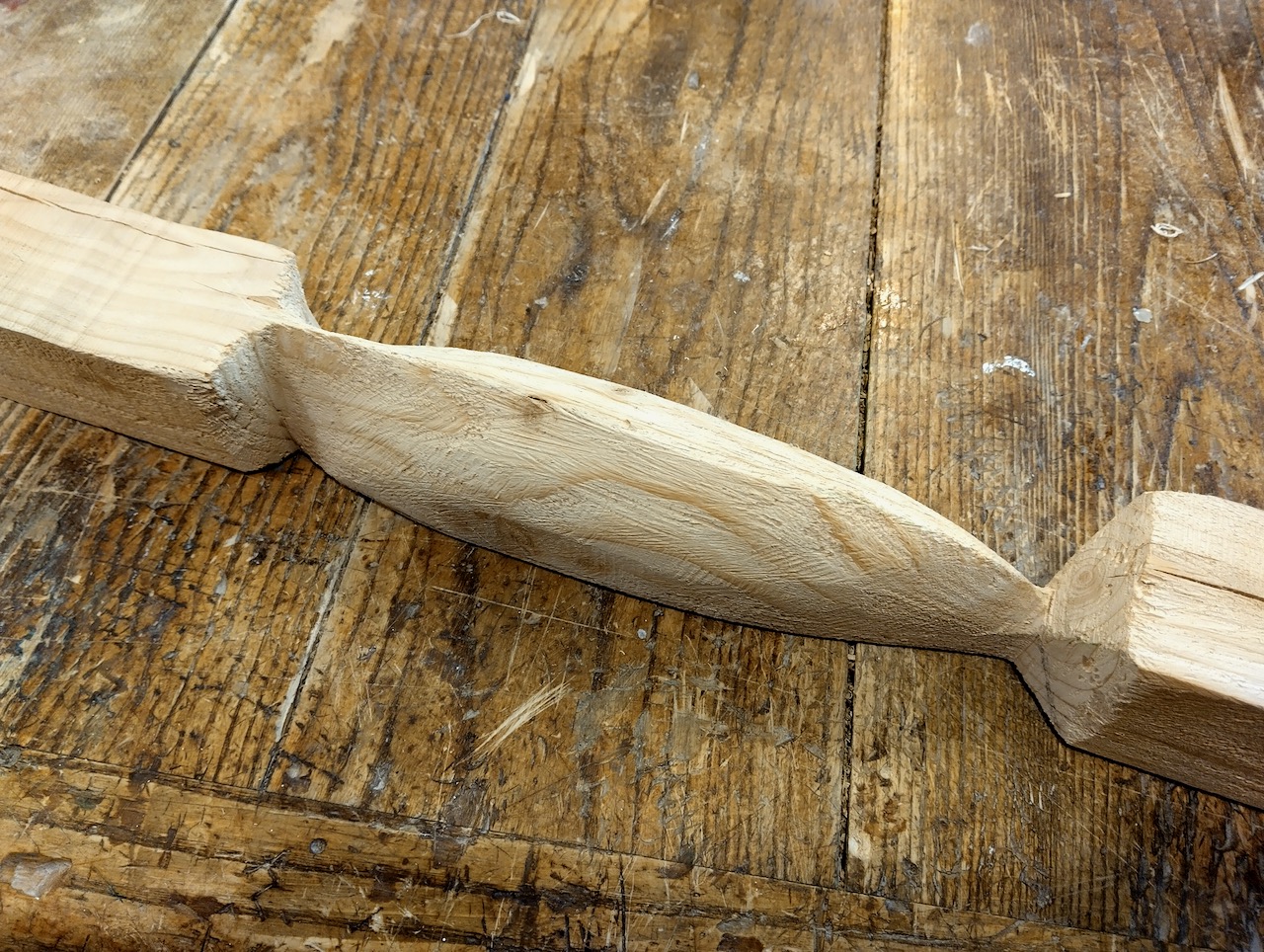
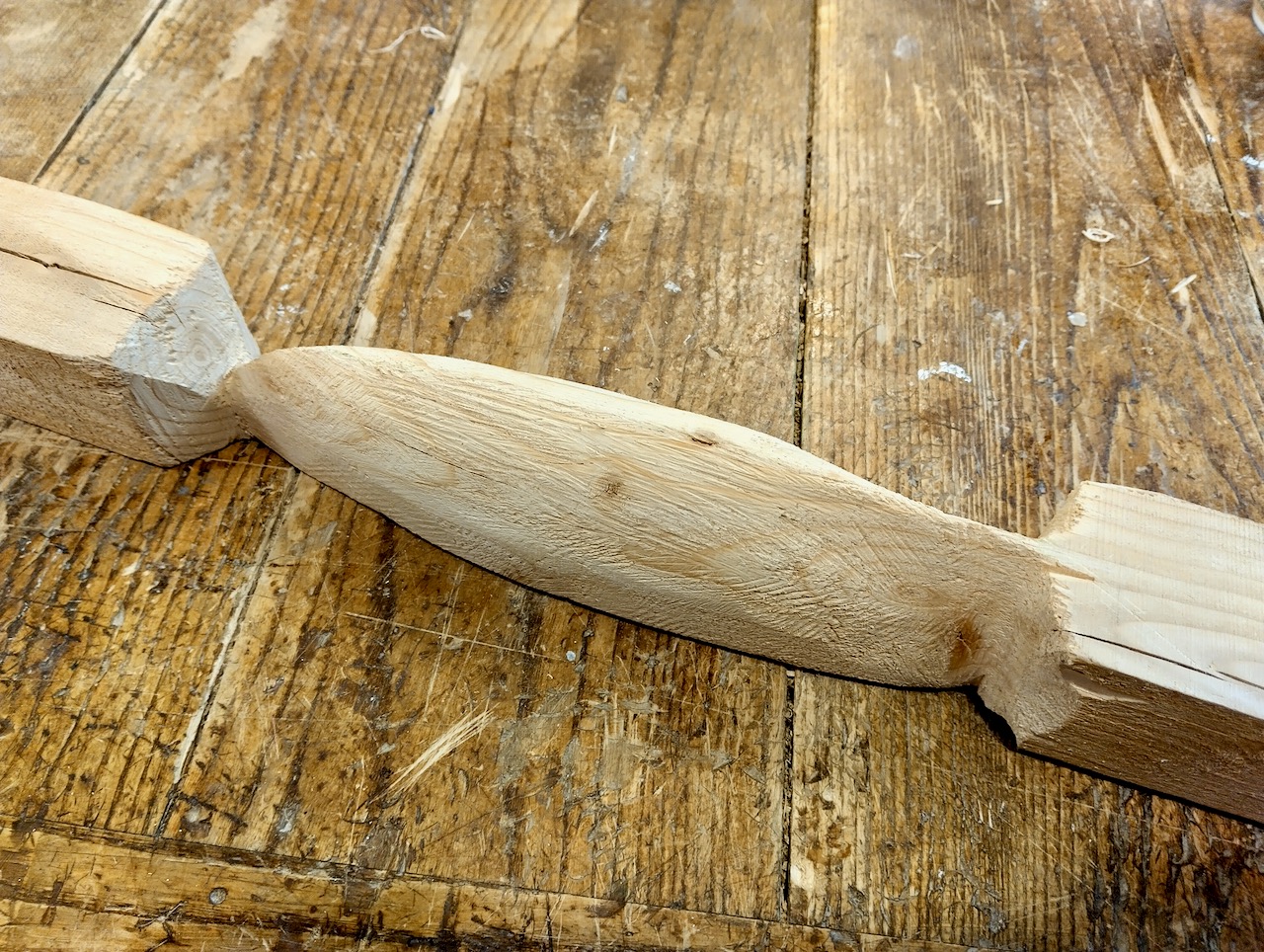
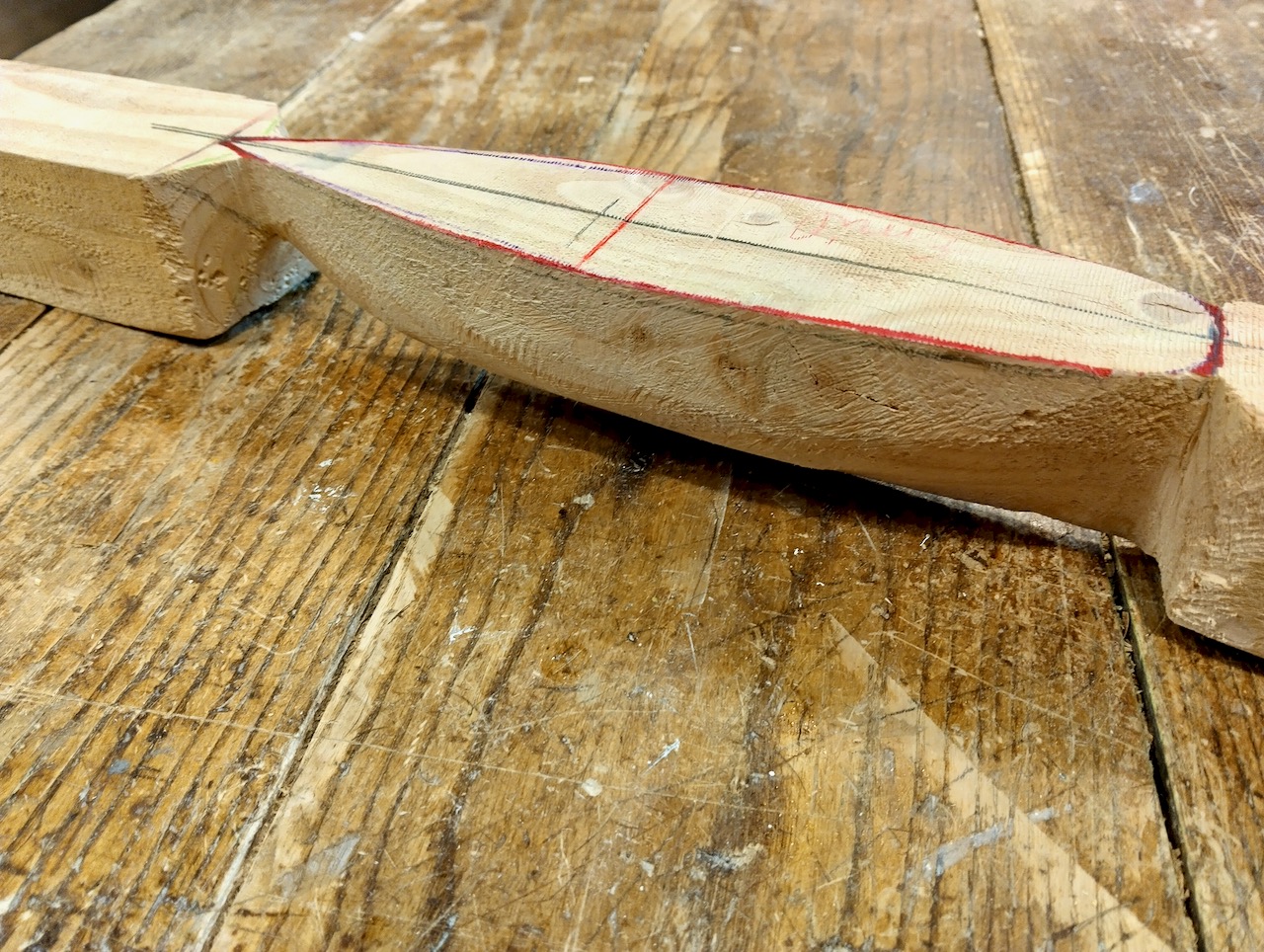
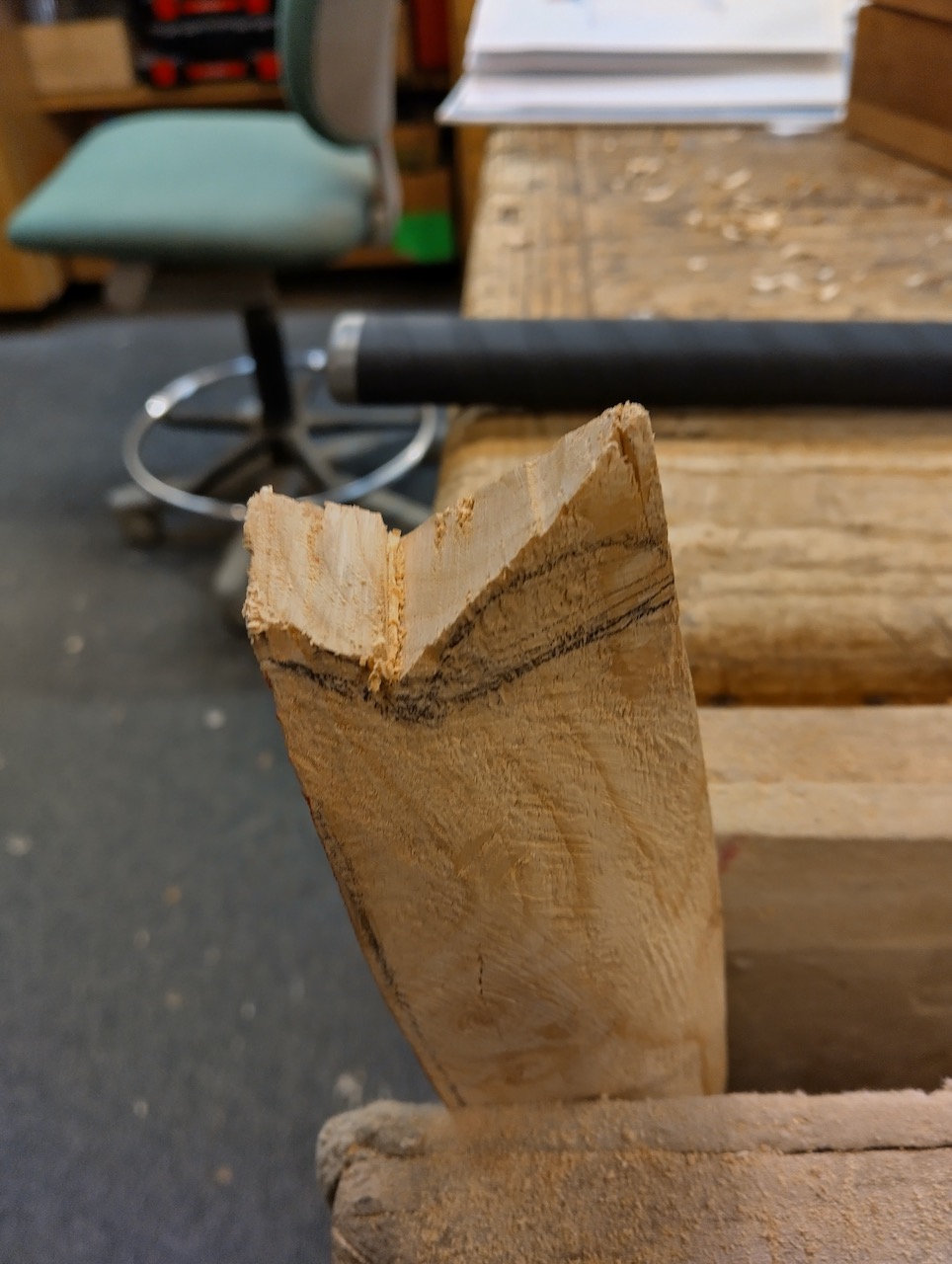
As the shaping progresses, we turn our attention to the stern. I draw a silhouette of the rudder on the back of the boat and explain how water flows around and past it. The students then begin forming the stern, using the concave side of their rasps to scoop and shape the rudder area with care.
Once the bow is nearly complete, we saw off the vestigial block in front. That frees the remaining wood so the student can refine and finish the bow’s profile. After that, we rotate the boat in the vise, remove the stern block, and complete the shaping of the rudder and the back of the keel.
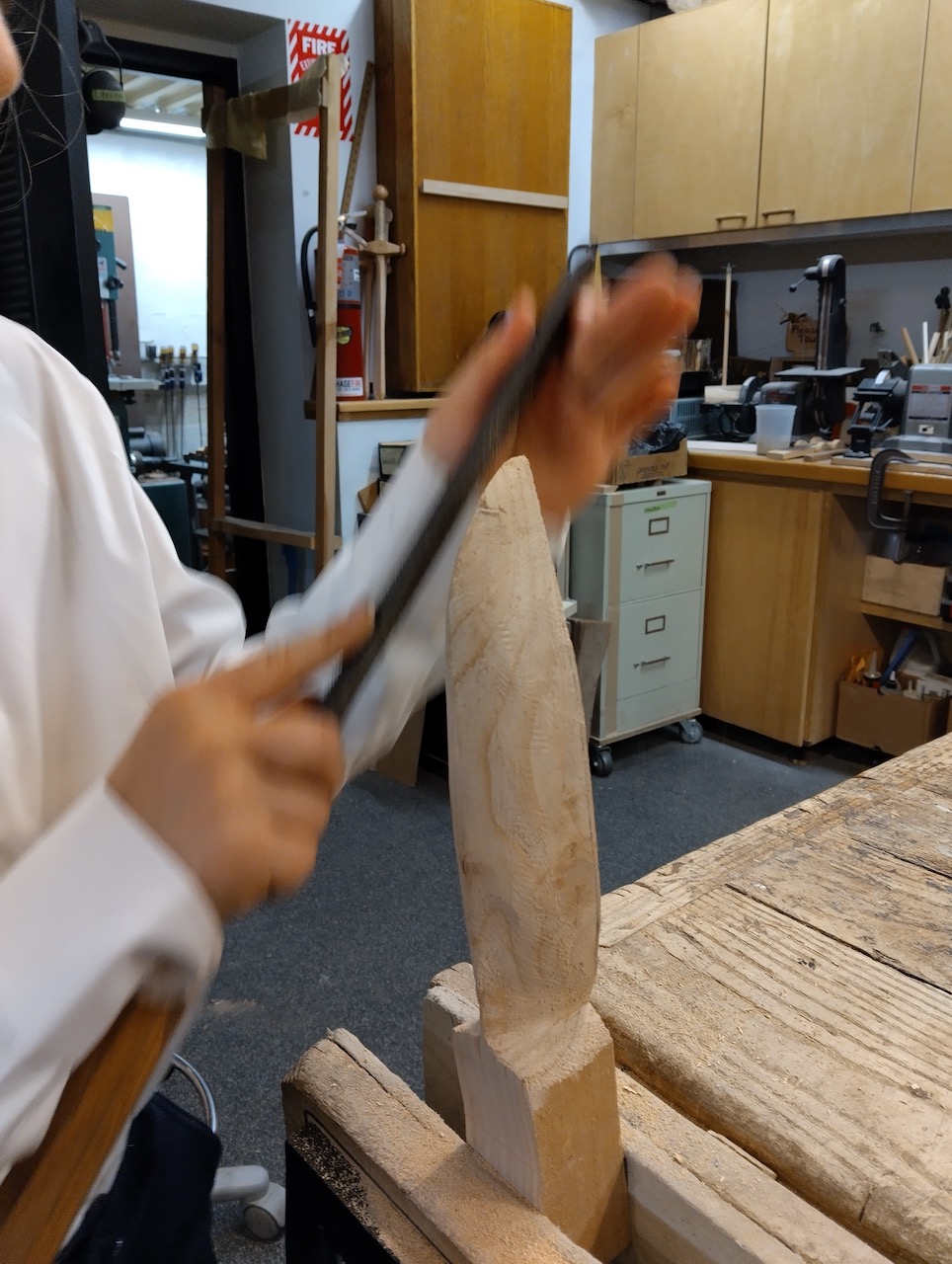
By this point, the boats have truly come to life—rounded, purposeful, and full of character. It’s always exciting to see that moment when students recognize their own work as something more than just wood—it’s now a boat, shaped by their own hands.
In our next session, we’ll begin work on the mast. Stay tuned!