We may receive a commission when you use our affiliate links. However, this does not impact our recommendations.
This past August, I had the pleasure of visiting the Jamestown Settlement in Virginia. While the original 1607 archaeological site (Historic Jamestowne) is just down the road, this living-history museum features incredible reconstructions—most notably the three ships that brought the first settlers: the Susan Constant, the Godspeed, and the Discovery.
As a woodworker, I was fascinated by every detail of the maritime carpentry on display. From the massive masts to the specialized use of Lignum Vitae—the “wood of life”—for the pulley blocks because of its self-lubricating density, the site is a masterclass in functional woodworking. You can see the intentionality in the timber selection: flexible woods for the masts, rot-resistant species for the decks, and heavy oak for the structural ribs.



However, what truly captivated me were the fascinating parallels between the precision measuring tools used to locate a ship’s position at sea and the marking and measuring tools we use in the shop today. From the simple cross-staff to the sophisticated sextant and dividers, the lineage of our craft is written in these instruments.
The Ancestors of the Sextant
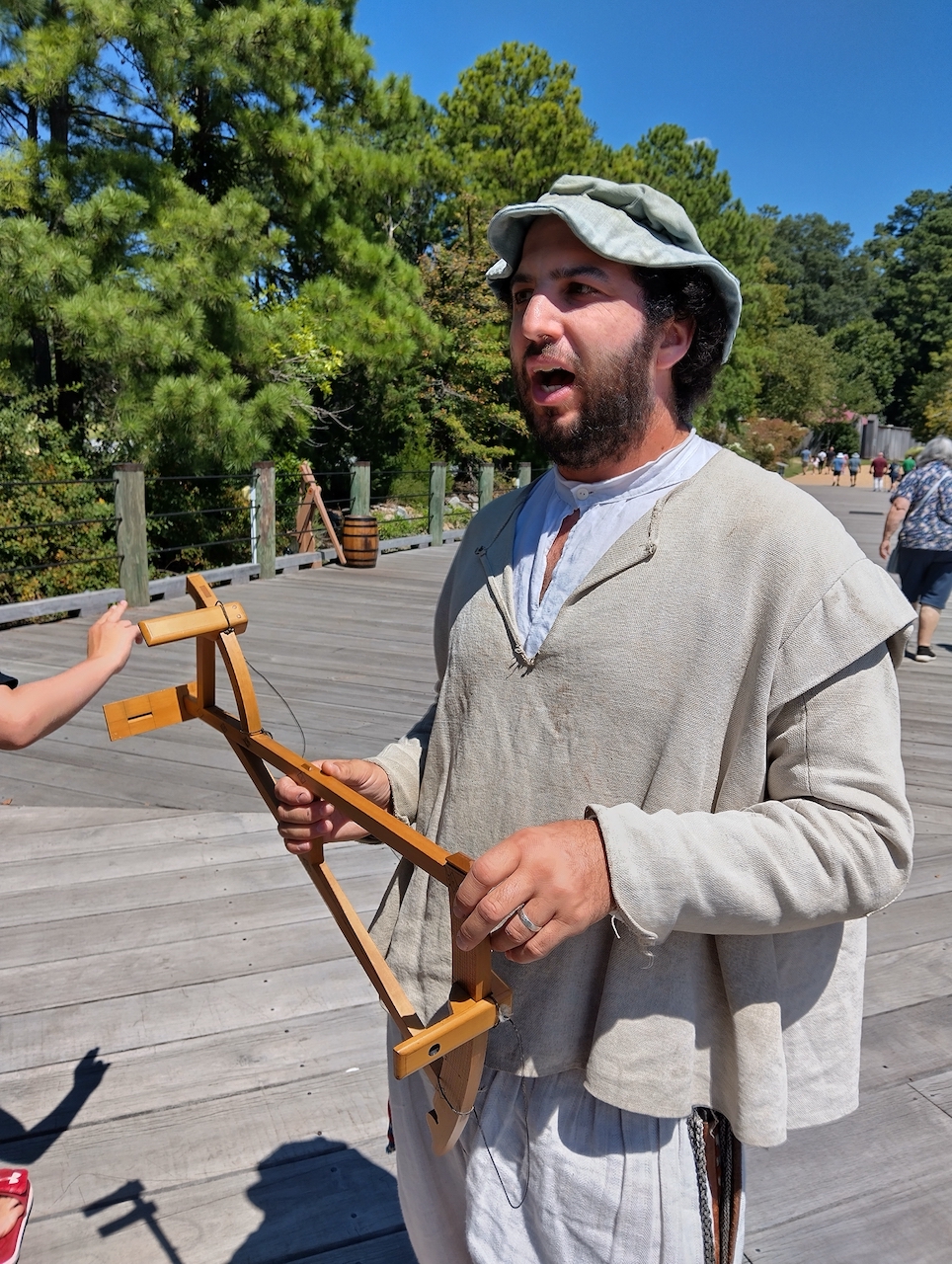
Under the tutelage of a museum docent, I witnessed a demonstration of two specific precursors to the modern sextant. These tools were used to measure the altitude of the sun or stars to determine latitude.
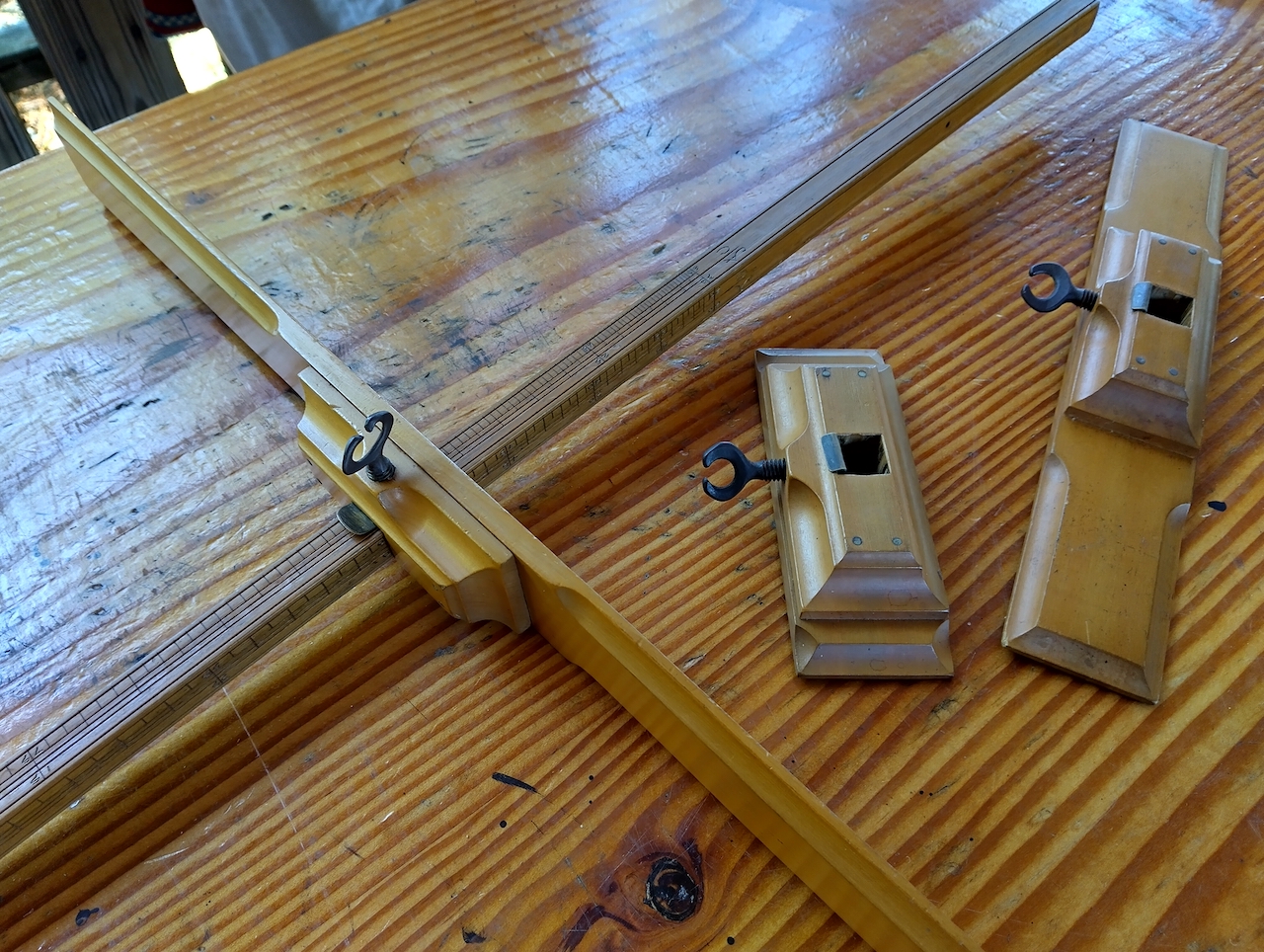
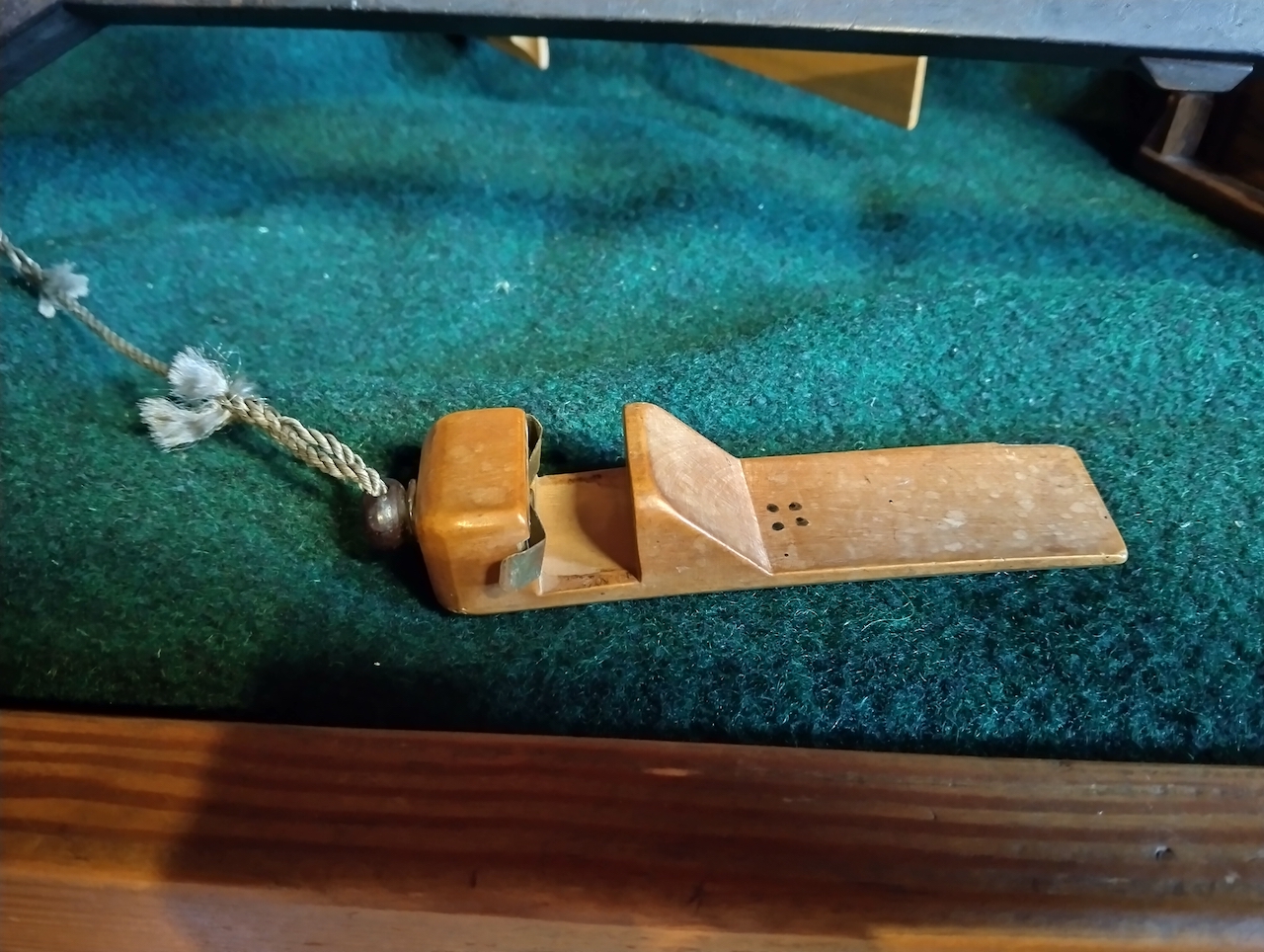
1. The Cross-staff: The Giant Marking Gauge. The first tool is the earliest and simplest: the cross-staff. To any woodworker, the resemblance is immediate and striking—it looks exactly like an enlarged marking gauge.
- The Woodworking: It consists of a main square-sectioned staff (the beam) and a sliding perpendicular piece called a “transom” (the fence). These were often made of pearwood or boxwood for their stability.
- The Friction Lock: This is where the resemblance to a shop tool becomes uncanny. The transom is held in place by a friction lock. I noticed a beautiful mechanical detail—a wrought iron screw that tightens over a metal plate inside the tool’s head. This plate distributes pressure onto the wooden bar to lock the position without marring the wood, much like the high-end brass-wear plates found on premium woodworking gauges.
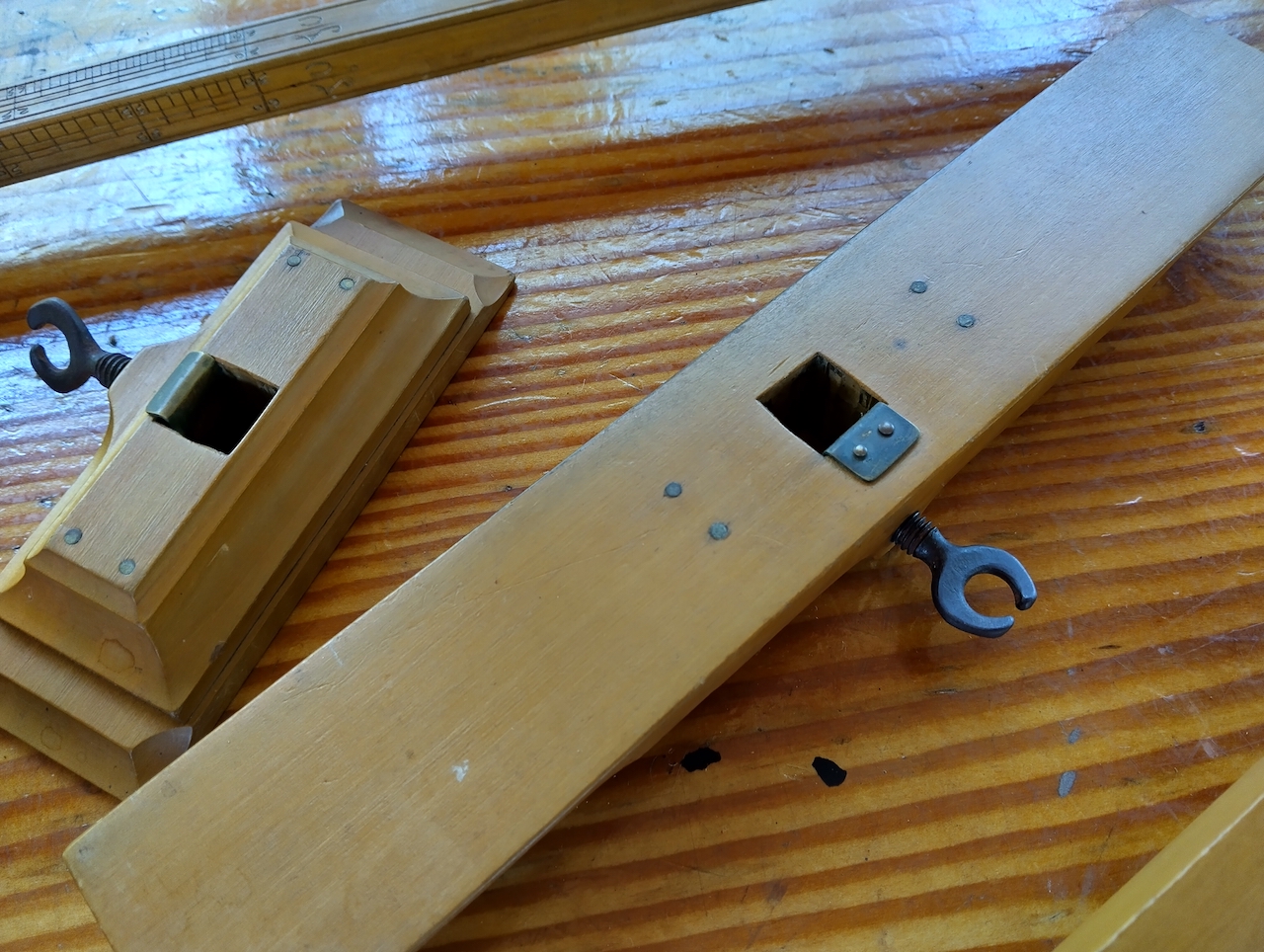
- The Use: The navigator holds the end of the staff to their eye and slides the transom until the bottom edge aligns with the horizon and the top edge touches the sun.
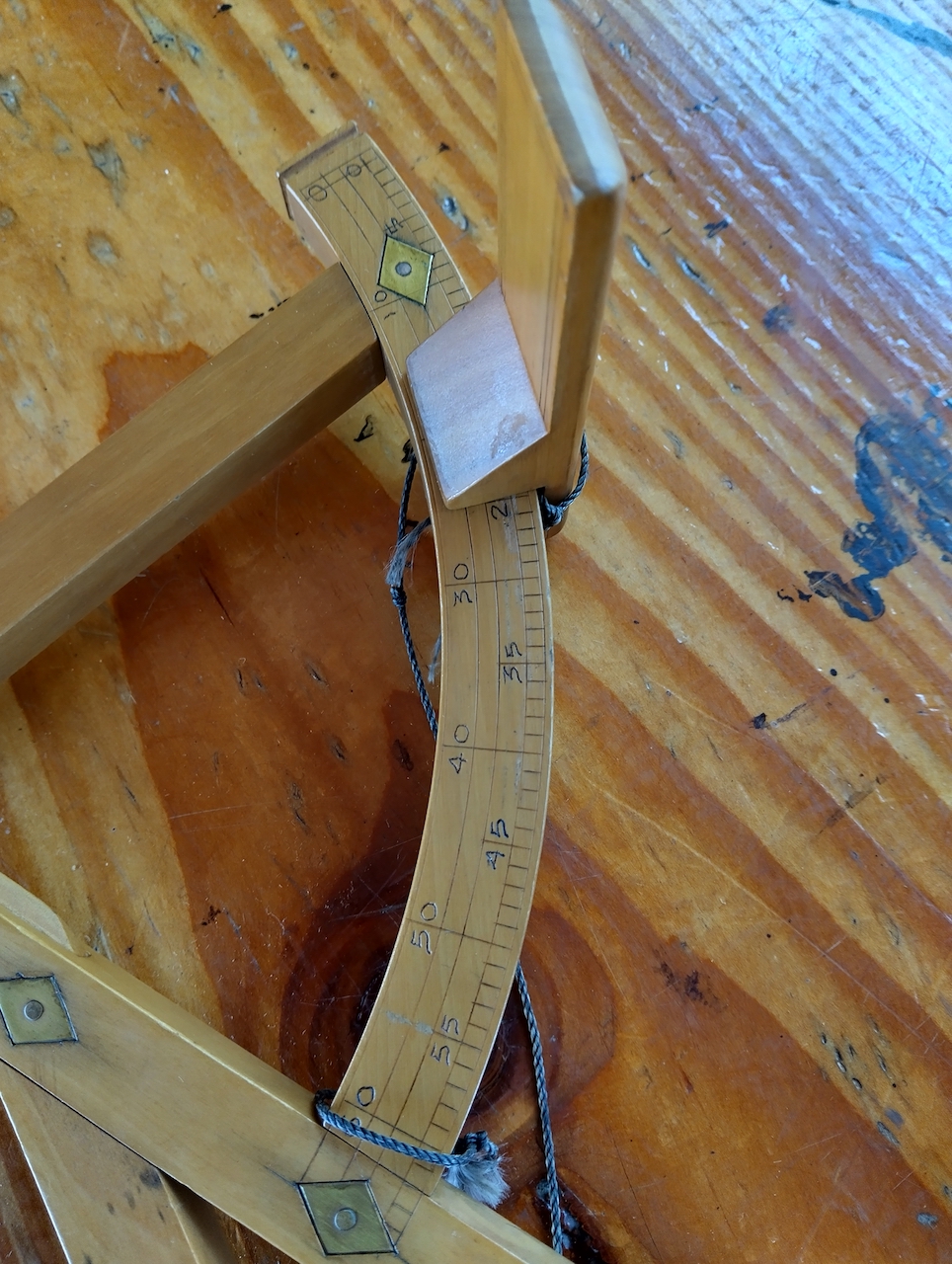
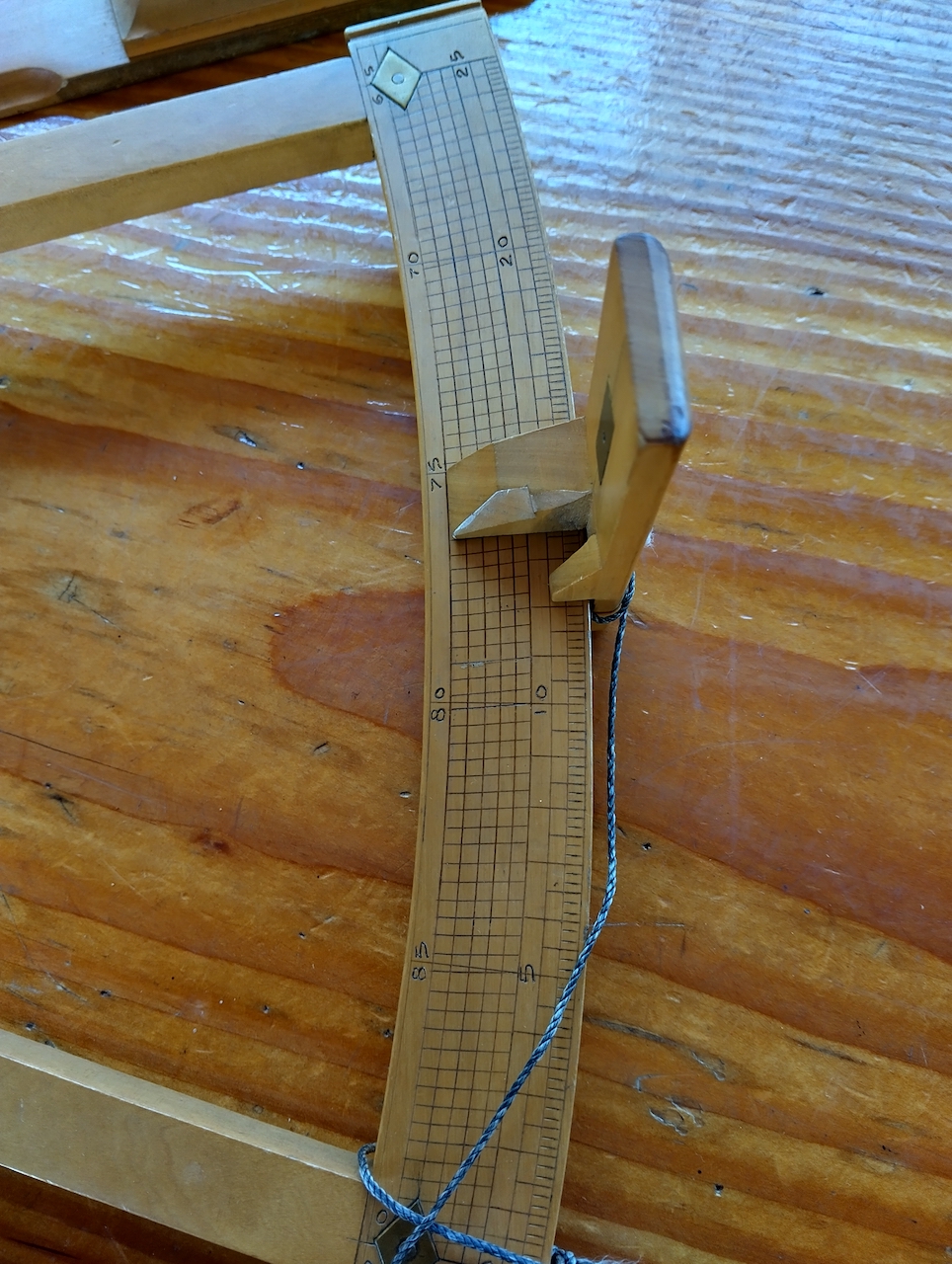
- Precision Markings: The staff is graduated along its length with degree marks that are scribed or incised directly into the wood with incredible precision.
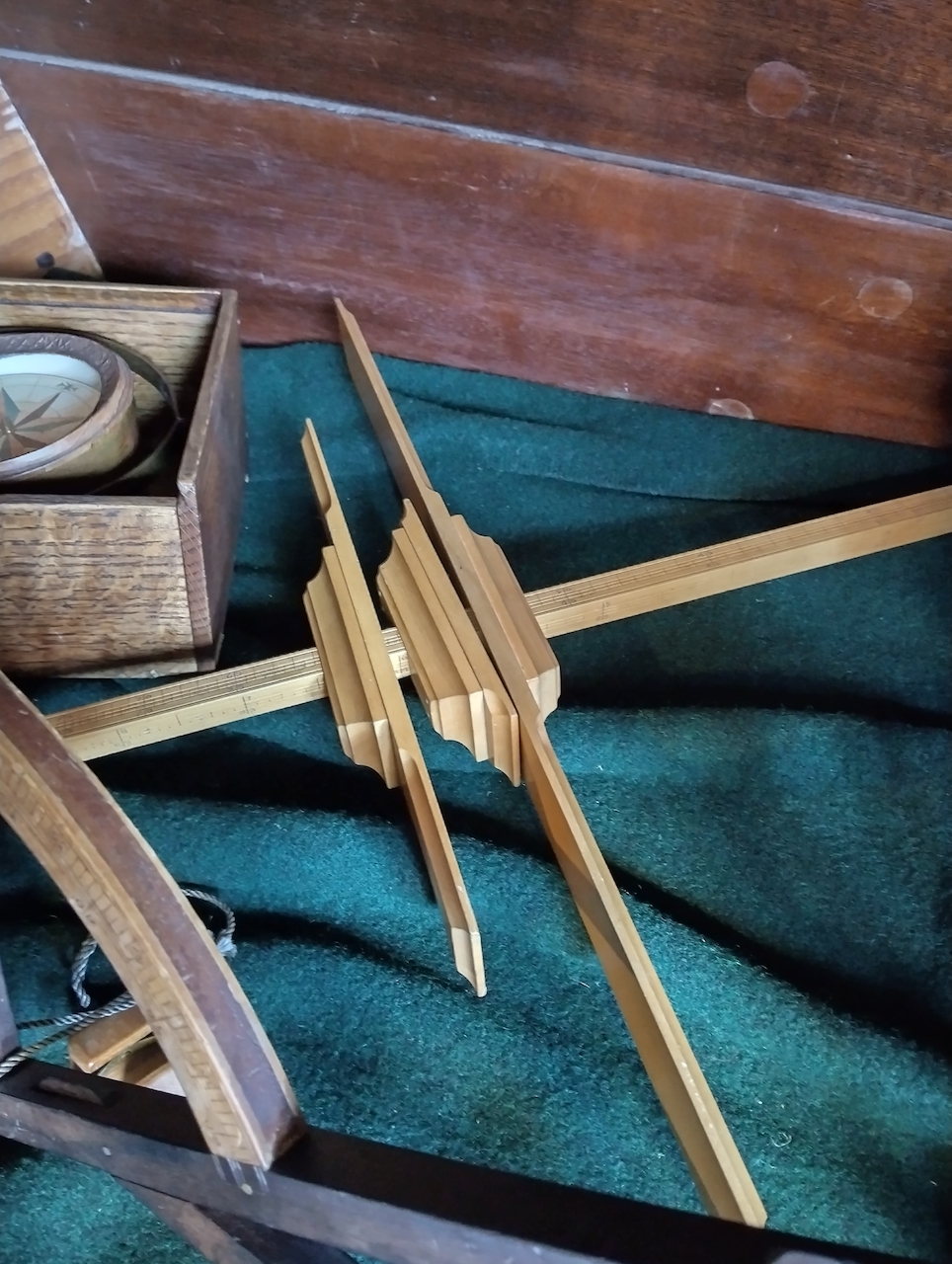
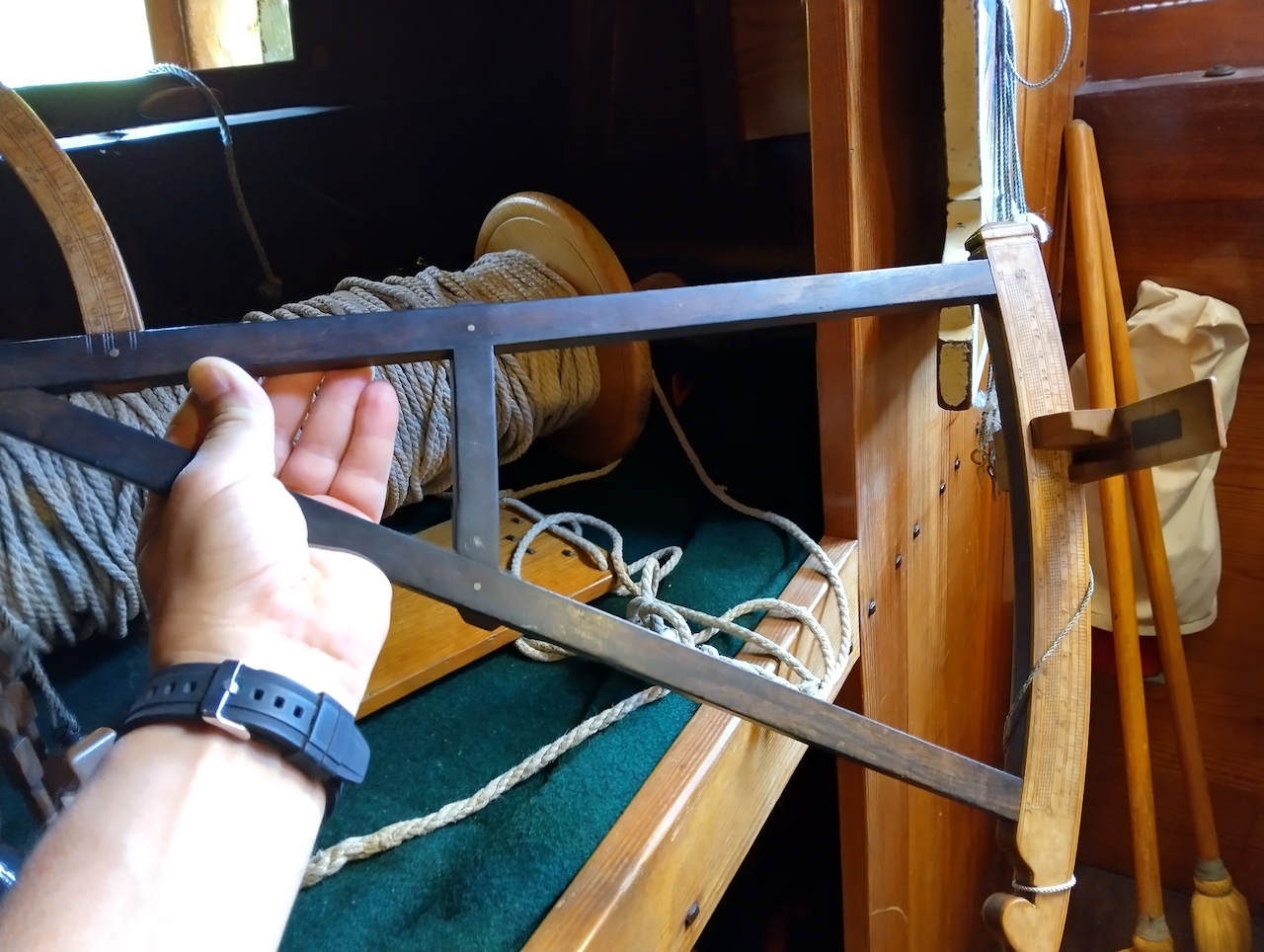
2. The Backstaff (Davis Quadrant) The second, more sophisticated tool is the backstaff. While it has a more complex shape, it marks the bridge between the simple cross-staff and the modern metal sextants we recognize today.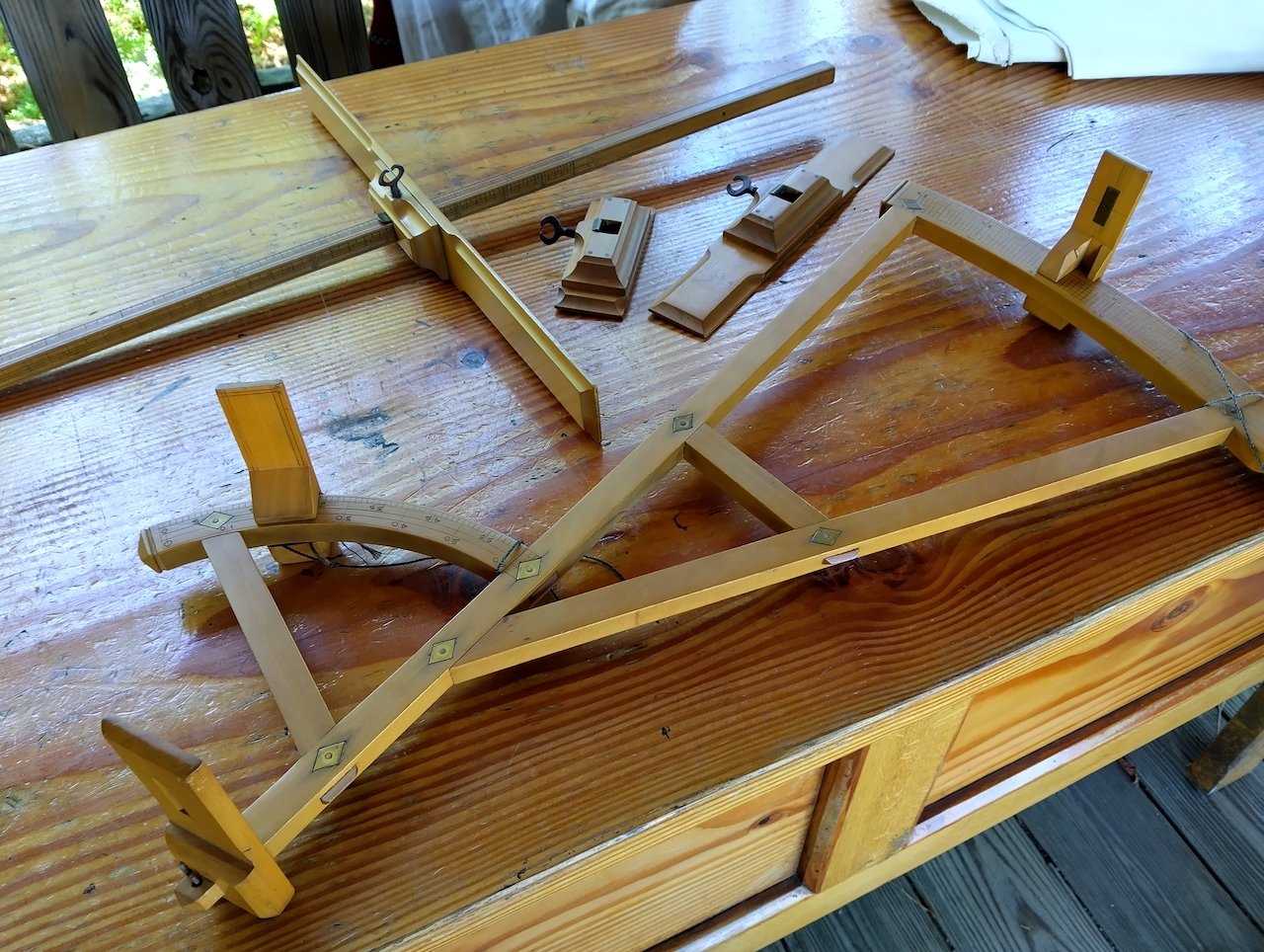
- The Benefit: Unlike the cross-staff, the navigator stands with their back to the sun, aligning shadows rather than looking directly at the light. This was a massive improvement for the sailor’s eyesight during long voyages.
- The Construction: It features multiple arches and sliding vanes that allow for much finer measurements. The joinery here is exquisite, incorporating delicate curves and precise sliding fits.
Exquisite Ornamentation and Joinery
What struck me most was the joinery. These weren’t just rough-hewn tools; they were exquisite examples of “instrument-grade” woodworking. I noticed:
- Mortise and Tenon Joints: Used to connect the frames and arches, ensuring the tool wouldn’t rack or lose its calibration in the humid, salt-air environment of a ship.
- Ornamentation: The scrolls and carvings on these reconstructions (based on period originals) show the high regard in which these tools were held. A navigator’s tools were his most precious possessions.
The Compass Box and Gimbals
I also managed to get a photo of a compass box. It’s a beautiful wooden housing containing a metal gimbal—a pivot system that allows the compass to remain level even as the ship pitches and rolls in rough weather. Except for the gimbal rings and the needle itself, the entire protective assembly is a masterclass in small-box construction.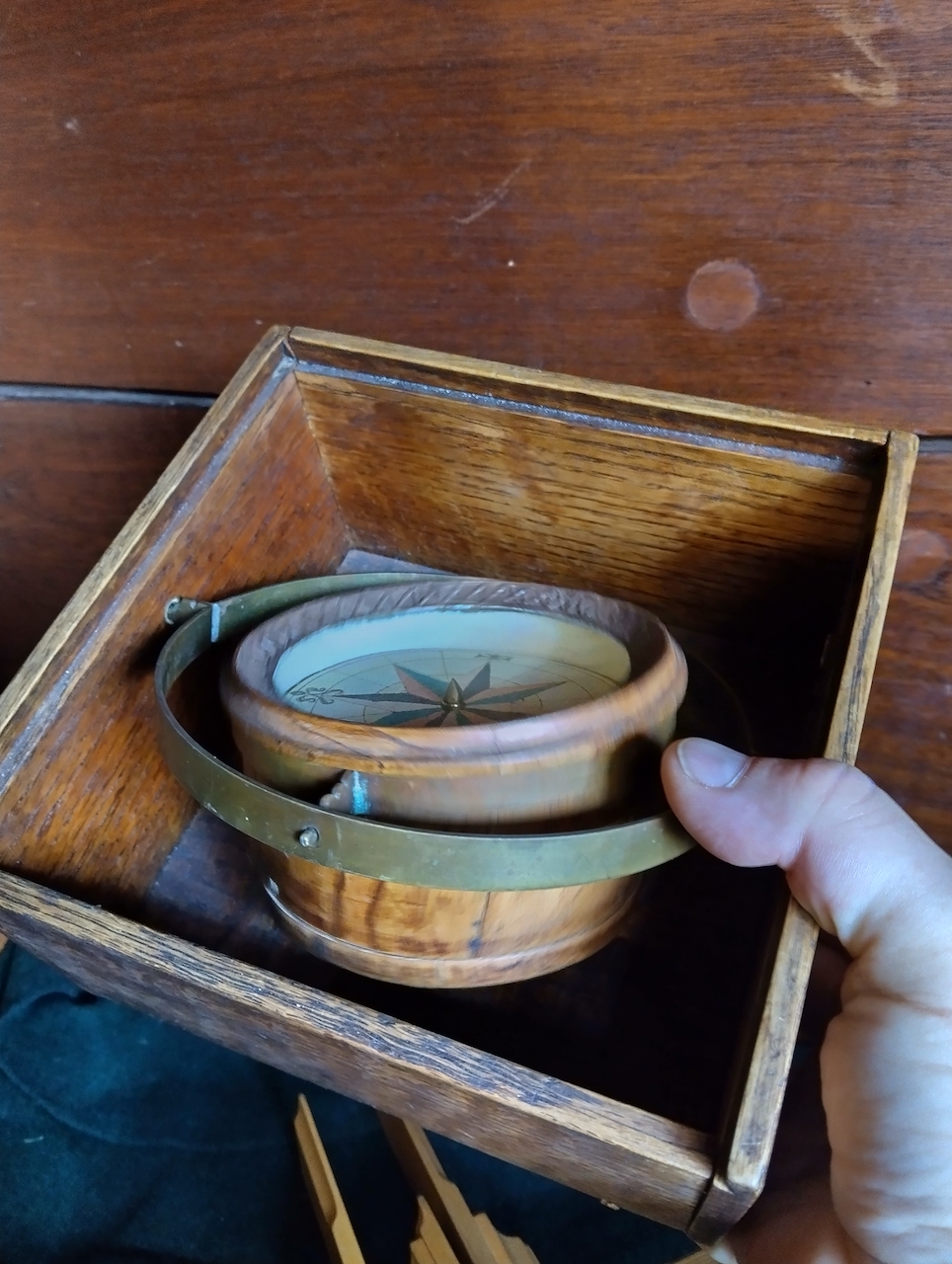
A Treat for History and Woodworking Buffs
If you find yourself in Virginia, a visit to the Jamestown Settlement is a must. Seeing these wooden instruments reminds us that for centuries, the “software” of global exploration was written in grain, joinery, and hand-scribed scales. It’s a reminder of the noble history of our craft and how a simple friction clamp helped map the world.