We may receive a commission when you use our affiliate links. However, this does not impact our recommendations.

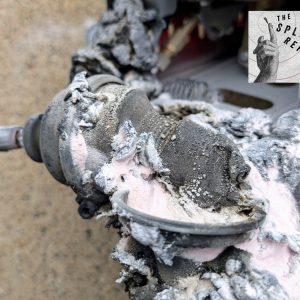
Pictures were difficult to take because of reflections. This picture is pretty good, you can see the scratches that needed to be rubbed out.
I have a friend who did a stupid thing. Before explaining what happened, I want to remove any reference to a real name or a sex. So I’m going to call my friend “Pat” in memory of that wonderful androgynous fictional character on Saturday Night Live from a few decades ago, performed by Julia Sweeney.
Pat has a fairly new black-painted car and managed to put some scratches in the paint by rubbing up against some bushes while parking. The scratches were bothersome, so Pat took a green Scotch-Brite scrub pad from the kitchen sink and rubbed the paint on most of the car (I can see you cringing). The light was apparently not good enough to allow Pat to see the additional damage being caused, in the form of pretty deep scratches.
So I came along and Pat asked me if anything could be done. Yes it could, I said, but it’s a pretty big job. The way a car is typically painted is with several color coats followed by a clear coat, which is usually a urethane. So it is resistant to heat, unlike the lacquer referred to in my previous post.

This picture shows progress on the right side of the hood, in contrast to the left side.
The way to remove the scratches is to rub them out, either by hand, or with an electric polisher and rubbing pad, together with some rubbing compounds. Auto stores carry several brands of these compounds in increasingly fine grits. They are water-based and easy to use.

Here are the two grits of rubbing compounds I used.
Progress was slow, and I had to be careful not to rub through the clear coat. But the process is actually no different from rubbing a finish.
– Bob Flexner