We may receive a commission when you use our affiliate links. However, this does not impact our recommendations.

We need more workbenches for Woodworking in America. The event, Oct. 1-3 here in the Cincinnati area, is by far bigger than the last three events we’ve held.
And me, I’m going a little stir crazy. I’ve spent the last three weeks writing the remaining chapters to a follow-up book to “Workbenches: From Design & Theory to Construction & Use.” (While my first workbench book is like the Old Testament, this new book , tentatively titled “The Workbench Design Book” , will be the New Testament. But more on that topic later.)
In any case, I am not getting enough time in the shop. So yesterday evening I was excited when a neighbor summoned me to his shop and pulled open a cardboard box.
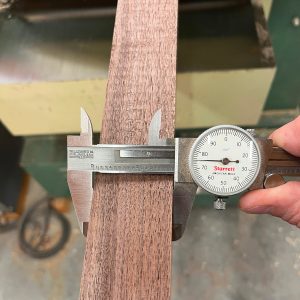
Inside was a 1-5/8″ x 36″ x 6′ long mahogany top. He had come into about 40 of these tops through his job with the railroad. He had sold most of them through Craigslist (and donated the money to his church, by the way). But he had a few left and thought I might like one.
The top was made from finger-jointed mahogany and covered in purple stain. But boy was it heavy. And flat. And hey , don’t we need more workbenches for Woodworking in America?
For many years I’ve wanted to make a workbench top using a piece of butcher block. We have a weird warehouse store here in Cincinnati named Home Emporium that sells giant 8′ Buddha heads and maple butcher-block countertop. You can get an 8′-long run of the stuff for about $80. Laminate two of those suckers face-to-face and you’d have a thick and heavy and somewhat ugly benchtop. Ikea also sells tops like this.
So this morning I ripped this mahogany behemoth down the middle, planed off the finish and decided to glue this sucker up into an 18″-wide benchtop that is more than 3″ thick. The whole process took about an hour, a half bottle of glue, some screws and some clamps.
When I do laminations like this, I like to drive screws through the underside of the benchtop to clamp the pieces together. I used three rows of screws with the screws placed 12″ apart. You can remove the screws when the glue is dry.
So I clamped the two pieces face to face and drilled clearance and pilot holes through the two pieces for #8 x 2-1/2″ screws. It’s best to drill all these holes before you put the glue on because things will start sliding around once glue gets involved. Then I unclamped the pieces and opened them like a book on some sawhorses.
Then I used a small paint roller to spread a film of glue on both open faces, folded them together and drove in the screws. And then, because I’m a bit retentive, I clamped all around the edge of the lamination, just because I could.
Total shop time: less than one hour.
The other big advantage to building this quickie bench is that I’m going to get to install some bench hardware on it that hasn’t been released to the public.
Like I really need an excuse.
– Christopher Schwarz
Other Bench-building Links and Products
– See this bench (and more) at Woodworking in America. The conference is almost sold out. We have already expanded our floor space to accommodate more attendees and vendors. But we are just about out of space.
– “Build an 18th-century Workbench.” To those of you who pre-ordered this DVD, thank you. I think there’s a good chance I’ll win some beer money as a result. The DVD is still on sale in our store.
– Free plan: “The 24-hour Workbench.” This is a bench I’ve built several times that uses Baltic Birch plywood for the top. Very easy and fast to build.
– Workbenchdesign.net. For all things workbench-related.