We may receive a commission when you use our affiliate links. However, this does not impact our recommendations.
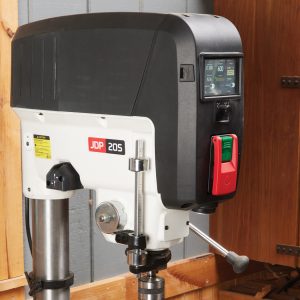
 Some machines are easy to set up to collect dust and chips while others defy all attempts. On the easy list are most stationary machines: Plug the hose into the port and it works pretty well. On the contrary list are miter saws (more to come on that, but part of my solution is a trash can below the saw), but the number one offender is the drill press. There are just too many different operations and set-ups to hook something up and forget about it.
Here’s a case in point: I’m making a new chisel rack and had to drill 22 one-inch diameter holes in a piece of oak about 42″ long. Here’s the pile of junk after drilling the first four holes. It’s quite a pile and those chips get between the work and the fence and they keep me from using my incredibly clever method of lining up the holes.
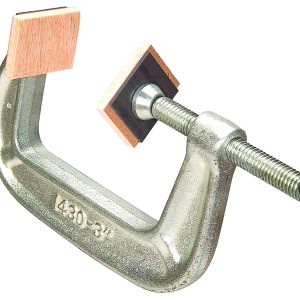
But there is a solution that works as advertised, the “Stay-Put” hose. In addition to being effective, it retails for $10-$15 at nearly every online woodworking supplier. It looks like a regular piece of hose, but instead of flopping back when you bend it, it stays bent.  That lets you twist it and scrunch it to nearly any conceivable shape so you can aim it right where you want it. I attached a clamp to the drill press column to hold the three-foot length of Stay-Put in place, and set it close to the business end of the Forstner bit. This picture is about seven holes later in the process.
I have this set up so that I can use it at the drill press, or at another nearby mess-maker, our hollow-chisel mortiser. It works great on either machine, my only gripe is that I would have preferred a longer length. But that’s a minor quibble, this is a great idea at a reasonable price. It let me place the hose to avoid a mess, and I can see my layout lines.
 After setting the fence, I made a mark from the center of the bit over to the fence. On one edge of my board, I used my combination square to step off equal distances along the length of the board. (This technique is detailed in the June 2011 issue of Popular Woodworking Magazine). Once the chips were out of the way, it’s easy to line up the pencil marks on the edge of the board with the line on the drill press fence.