We may receive a commission when you use our affiliate links. However, this does not impact our recommendations.
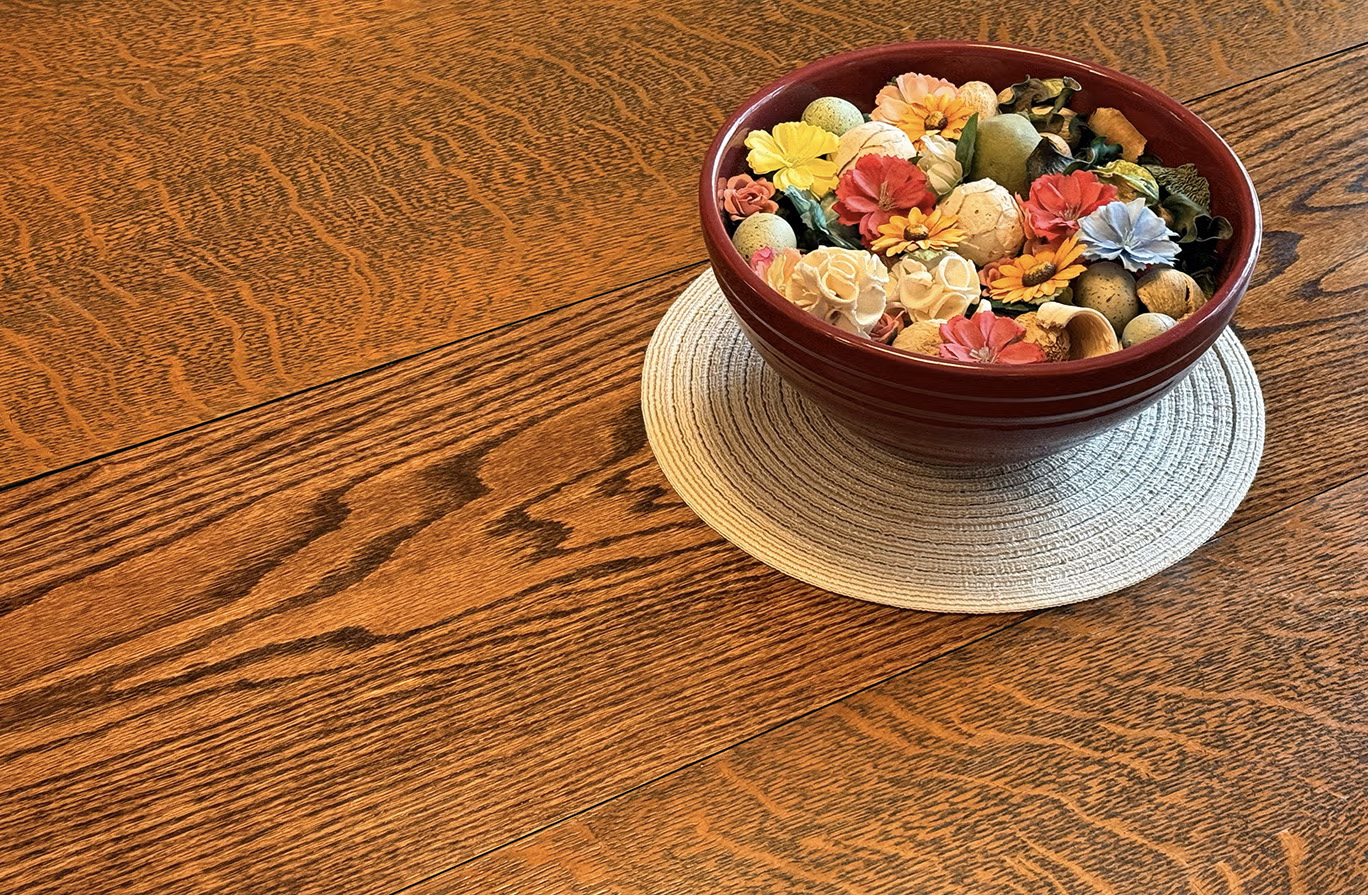 When matching stains, nothing is more pleasing than getting it right the first time.
Matching stain is one of the hardest things to do in the woodshop, especially when trying to match the color of something old. For one thing, there’s no way to know what that original stain was, even if you’re the one who stained it. Even if you remember, if it’s been a lot of years chances are good the stain is either no longer available, or a subtly different formula.
Then there’s the properties of the new wood that you’re trying to match to the old. The new stuff just might not take the stain the same way the old stuff did, even if you manage to match the stain closely.
Then there are the rare times when, without even trying too hard, you nail it with almost no trouble. That’s the case with the table above. That table is a round, pedestal-based piece with claw feet. I don’t know much about it, but it’s a good example of early 20th-century mass-produced furniture.
My wife wanted a leaf for the table to accommodate more seating, and I explained that chances of me getting a good color match were slim. Plus, I’d be using a piece of solid oak, not the quartersawn oak veneer the table has. She was fine with that, as long as it looked nice, fit well, and made the table larger. Besides, she noted, when accommodating guests we’d probably use a tablecloth anyway.
So, I cut the leaf to size, drilled it and the table for joining dowel pins, and then used a cutoff from the board to do some stain testing using a walnut stain as my base. I only had to do a couple tests, mixing a bit of cherry stain with the walnut, and got a pretty good match on the fourth try. Of course, the color of the test won’t necessarily be the same once fully dry and given a top coat (polyurethane, in this case), but it had the close-enough vibe that I knew would please her.
The result speaks for itself. Once stained and top-coated, allowed to dry thoroughly, and rubbed out a bit, it’s almost a perfect match. Of course, exposure to sun and seasonal humidity, plus the general aging of both the wood and polyurethane, the match may not be so exact in a few years. But then, there’s always that tablecloth.