We may receive a commission when you use our affiliate links. However, this does not impact our recommendations.
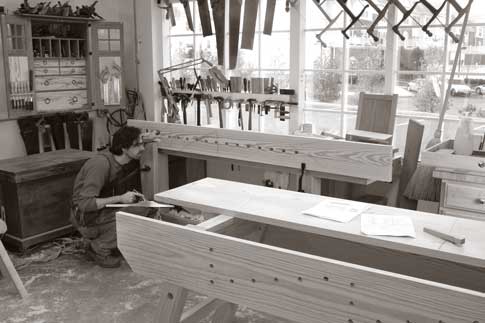
Tonight I attempted to make my first serious loaf of bread, and I learned something about woodworking benches.
Now, I don’t like to talk much about my life outside the magazine. It’s fairly dull, I can assure you, and it would be (even more) boring to read about than what’s on the blog now. But here’s an important detail: I’m just as passionate about cooking as I am about woodworking. Both are in my blood , my mother has run or cheffed for several restaurants and catering businesses; plus my father, uncle and grandfather were all woodworkers, carpenters or boatbuilders in their spare time.
This year I’ve been trying to improve my baking skills. And bread , traditional yeast, water, salt and flour , is at the top of my list. So for the last couple days I’ve been working hard in the kitchen , between bouts of editing and writing , and for dinner tonight, I served my first scratch loaf.
It looked beautiful. Smelled perfect. Was crispy on the outside and moist and tender on the inside. But it was not good bread. My poor family choked down one piece each (butter is an excellent lubricant). I stuck it out through three pieces.
I still don’t know what the heck went wrong. I’ve been studying for weeks. I practiced with several quick breaks (foccacia and Irish soda bread , both victories). But the simplest yeast bread is just not in my grasp yet.
So what does this have to do with workbenches? Glad you asked. This perfect loaf reminded me a lot of the workbenches I see in shops all over the country. They are beautiful. They look exactly like what we expect a bench to look like , classic Platonic realism.
But when we try to use them, one of two things happens. We immediately realize the bench’s shortcomings and either try to fix them or we turn our backs on them (and get a refund.) This is exactly like what my daughter Maddy did this evening. She took one bite of my bread, one huge gulp of milk and went back to the flounder.
Or we assume that this is the way all workbenches are. That our frustrations with it are caused by our own lack of skills or knowledge. That perhaps we need to just keep plugging away at it and then we’ll finally get it.
This is me in a nutshell. I ate three pieces of that mass of weird-tasting flour. And I’ve also worked for years with workbenches that have held me back.
I’m not saying I have all of the answers here , not for bread and not for benches. But I do know that to really make progress on bread, I’m going to have to do what I did to build a better workbench. I’m going to have to look outside of my own experience. I’m going to have to admit that I cannot fix this myself and consult someone who can.
For workbenches, I started reading and listening to people who seemed on the fringes of modern woodworking. For bread, I’m going to head downtown to a tiny flour-covered bakery in the early morning and start asking questions.