We may receive a commission when you use our affiliate links. However, this does not impact our recommendations.
When I cook a pot of chili, I tend to keep throwing in ingredients until I run out of room in the pot. Often I have to switch to a bigger pot, or split the batch among two pots. When we build projects for Popular Woodworking we go through a similar process. We try to photograph and write about all the things we think are interesting, but there rarely is enough room to print everything. We only have so many pages to work with so most of the time good things are left out. One of the great things about the blog is we now have a place to put this stuff. When the November issue comes out, I’ll be posting extra photos of the project I built.
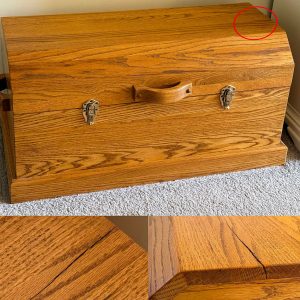
In the meantime, here is a short lesson on veneering that I found in the back of the fridge. In the November 2005 issue I built a reproduction of a Gustav Stickley Bridal Chest.

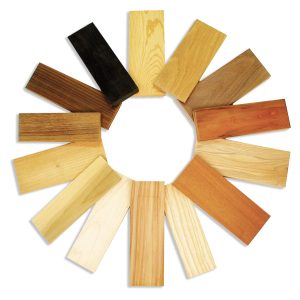
I had hoped to include information about making the veneered panels, but there wasn’t space available. The panels are 1/2″ thick MDF with quilted, mottled maple veneer on the show side, and “backer” veneer on the inside. The larger panels are bookmatched. When the veneer is cut from the log, the leaves of veneer are kept in order. If you use two adjacent pieces and flip one over, the grain pattern is a mirror image. I got the veneer from Joe Woodworker who has a great website. You can see pictures of the actual veneer he has for sale, there are some great turorials, and he has the glue, tools and other stuff you’ll want to make the veneering go smoothly. He also gives good service, if you ruin a bookmatched panel, he can get another piece of veneer to you right away. Or so I’m told.
You need to be able to cut the veneer both across the grain and with the grain. You probably have what you need to make the cross-grain cuts:

With a knife and a straight edge, you make scoring cuts until you get completely through the veneer. Don’t push too hard, just make 3 or 4 light passes. To cut with the grain, you also use a straight edge, but you really should have a veneer saw. If you get it from Joe, go ahead and spend the $6 to get it sharpened.


Working from the back side, line up the seam and hold it together with a few pieces of blue painter’s tape. Your lines should be nice and straight so you don’t have to force the joint together. If they aren’t, go back to the straightedge and saw and make them straight. This is another good reason to cut the veneer oversized.

Flip the veneers over and hold them together with gummed veneer tape
It’s a paper tape with a water soluble adhesive on one wide. Don’t be frugal and try to use something else. The gummed tape shrinks just the right amount as the water evaporates, holding the seam tightly together. I stuck a damp rag in the top of a spray paint can, then ran the tape over that to get it moist.

Start taping with a few pieces going across the seam, then one piece down the length of the seam.
 I
I
t helps to keep the veneer flat if you can press it between something heavy while the moisture evaporates form the tape. I stacked up the veneers with sheets of paper in between, and laid a thick piece of wood on the seem and let it dry overnight. Don’t forget to take the blue tape off the back before you press the veneer.

Some people will use regular woodworking glue for veneering, but I think that’s asking for trouble. Yellow and white glues dry to a flexible glue line and tend to creep over time. That’s good for most furniture making-joints will stay together as the parts move without breaking the glue line. It’s not good for veneering,you want a more rigid glue line. If you want some solid information on gluing, here is a link to an excellent resource for technical info. I used a glue made for cold press veneering, and applied it to the back of the veneer with a disposable paint roller. Below the veneer is the 1/2″ thick substrate, and the bottom half of my “press”. It’s a piece of 3/4″ thick MDF with some solid wood cleats screwed to the bottom to keep it stiff. The cleats are about 1-1/4″ thick and about 2-1/2″ wide. The dimensions aren’t critical, the cleats just need to be straight and stiff. I cut it the MDF a little larger than my largest panel.

After applying the glue, I flipped it over and laid it down on the substrate. A couple of pieces of the blue painter’s tape will keep the veneer from sliding around. I pressed about half the panels for the project at one time, stacking them on the press. To keep the panels from warping you need to veneer both sides. I only veneered one side of each panel at a time to keep the pressing simple. I did a stack with the face veneer, let the glue dry overnight and then glued the backing veneer on first thing the next morning. That stack was dry at the end of the day, so I was able to glue another stack at the end of the day.

The top part of the press is another piece of 3/4″ thick MDF. The pieces of solid wood aren’t attached, and I planed about 1/16″ off each end of these, tapered from the center of the board. This gentle curve on the bottom edge of the cauls puts pressure from the middle of the panels out to the edges. After letting the glue dry, the panels get trimmed to their finished sizes. I cut a rabbet around the edges to fit in the 3/8″ wide groove in the stiles and rails.

Using veneer lets you do some things that are quite difficult to do with solid wood. In addition to the differ ent spectacular figure you can find in veneer, you can also have matched panels all the way around a piece. It really isn’t difficult to do, the investment in the saw, tape and glue is minimal, and the results are well worth the effort.
If you have any questions, or want to show off your own veneer work, just drop m e an e-mail. You can also e-mail me for my chili recipe. It’s spicy but not too hot, really tasty and nothing at all like what people here in Cincinnati call chili.
Bob Lang