We may receive a commission when you use our affiliate links. However, this does not impact our recommendations.
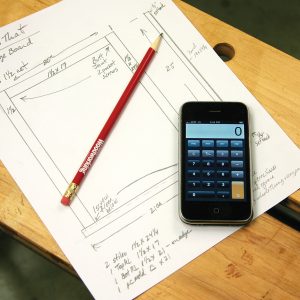
Whenever we convene a meeting of the “Should We or Should We Not Print Cutlists Debating Society”, we get tons of responses. In the latest instance an overwhelming number of poll participants voted yea, while most of the commenters said no, or gave a qualified yes – as long as we provide the lists online. So how do you use the cut list? There were many mentions of using it to plan wood purchases.
That’s one of the things you can use a cut list for, but generally I take the easy way out. If I’m planning a case piece, for example, I pretend it’s a big box and round up the width, height and depth to the next foot. Then I’ll multiply the width times the height to find out how many square feet of finished material is in the front, and depth times the height times two for the sides. Width times depth equals the top. This doesn’t take long at all and it gives me an approximation of how much primary wood will be in the finished piece. I factor in 50 percent more and I know I’ll be close.

In our neighborhood, there are places to buy nice hardwoods by the piece, at a cost of $5-$10 per board foot. This video gives an example, although I don’t have the cut list in hand. The method works, and it minimizes waste, but the cost per board foot is as high as it can be. My other option is to call a hardwood supplier out in the country and have a quantity of lumber delivered. This cuts the cost per board foot about in half, and if I purchase 100 board feet or more, I get a break in the price and delivery.
If I go through a cut list and do the math, I can determine the exact quantity of board feet in the finished piece, but that’s a serious waste of time. Board feet is a measure of volume, similar to a cubic yard of concrete. If I have a three-cubic-yard hole I want to fill, I can make a phone call and a truck will come out and pour that amount of concrete into the hole. Wood doesn’t work that way. If I call the lumber yard and order 25 board feet of hardwood, it could arrive in any number of configurations of random widths and lengths. Doing the math doesn’t do much good; in the end I either need to guess high to be sure I have enough, or work through the stack with my cut list in hand.

Most of the time the final cost will be close whether I go out and pick and choose, or order way too much and have it delivered. Where the cut list is important, to me at least, is when deciding which piece of wood goes where in the finished piece. I’m looking for different characteristics in boards that are mostly visual, as in tabletops or panels than I am for pieces that will become door frames. Having a lot of wood to root through to find the best piece available makes for better furniture. I guess I just don’t grasp the concept of “too much wood.”