We may receive a commission when you use our affiliate links. However, this does not impact our recommendations.

In celebration of the 100th anniversary of the Boy Scouts of America (BSA), the organization has for one year only brought back four retired merit badges: pathfinding, signaling, tracking and carpentry.
The requirements for the Carpentry Badge are from 1911, which predates the powered home shop. Accordingly, the skills that must be demonstrated are wholly from the hand tool world:
- Demonstrate the use of the rule, square, level, plumb-line, mitre (sic), chalk-line and bevel.
- Demonstrate the proper way to drive, set, and clinch a nail, draw a spike with a claw-hammer, and to join two pieces of wood with screws.
- Show correct use of the cross-cut saw and of the rip-saw.
- Show how to plane the edge, end and the broad surface of a board.
- Demonstrate how to lay shingles.
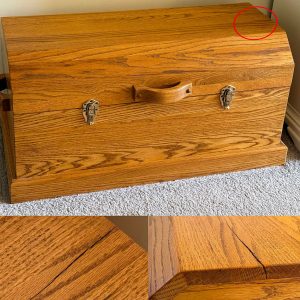
- Make a simple article of furniture for practical use in the home or on the home grounds, finished in a workmanlike manner, all work to be done without assistance.
The majority of these skills get used in our shop on a daily basis (Editor Christopher Schwarz is quite fond of the clinched nail) , though we don’t have much call for plumb lines or laying shingles. And we’ve now heard from several troop leaders who are using our I Can Do That projects for No. 6 , a simple, practical piece of furniture. (In fact, that’s one of the driving reasons behind that column , the projects, which use dimensional lumber and a small kit of tools, are great for beginning woodworkers , and they’re also a great opportunity to introduce young people to the craft.)
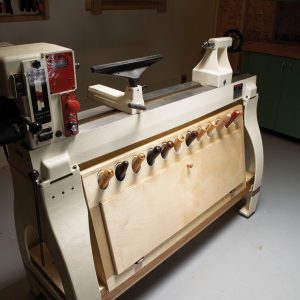
While the Carpentry Badge is only on the books for this centennial year, BSA does have a “modern” Woodwork Badge available, and it’s interesting to look at the differences between the old and the new , and frankly, the new badge sounds harder to earn. Not only must a scout demonstrate that he can use tools to make a wooden project, he must also know how to sharpen and care properly for his tools, demonstrate safety and first-aid knowledge for the shop, know the cycle of timber from a seedling to the lumber yard and interview a cabinetmaker or carpenter. The named tools are still mostly hand tools: A saw, plane, hammer, brace and bit, and a lathe.
So I’m curious , would you qualify for either of these two badges with the skills you have right now (check out the full list of requirements for the modern badge here)? I’ll give you a pass on the interviewing of a professional cabinetmaker or carpenter.
I think I’d be OK…if it weren’t for those shingles.
– Megan Fitzpatrick
p.s. The badge picture at the top is not the Boy Scout badge , that’s one Chris was awarding to readers five or so years ago. The deal was, you had to correctly set up a jack plane, then send Chris a shaving. If it passed muster, he’d send a badge. I’m proud to say that today I was awarded my Jack Plane badge. Now if only I could find my old Girl Scout sash…