We may receive a commission when you use our affiliate links. However, this does not impact our recommendations.

Construction on the bed wrapped up on Sunday. There was little time in the shop on Saturday, but luckily the wife, my inpatient customer, was busy all day Sunday and I had the entire day to make wood dust.
I had previously attached the legs to the panels with biscuits and glue. Someone mentioned in a blog comment that I should have left the design as I had originally planned because the upper and lower rails were tenoned into the legs and the strength of the bed would be increased if built that way. His comment made me think, but in the end I believe I did the best thing with the change. (Take a quick look back at the original design here.)
To my eye the panels look best with the end stiles running from top to bottom. And as for strength, the bulk of the weight , that of the bed and of those using the bed , is carried in the side rails. Those rails are tenoned into the legs and held firm with bolts. Therefore, the panels, held between the legs with biscuits and glue, are not the main strength of the design. The connection between the panels and the legs is long-grain to long-grain and is sufficiently strong.

After working through that detail, I made and installed the wrap mouldings for the panels. Each of 14 pieces needed to complete the one-face, two-panel wrap were produced with two passes at the router table (that’s 28 passes if you’re keeping track). I added a hold down and hold back featherboards, then ran the pieces to make the mouldings.
Installation of the mouldings was easy. I moved back from the plywood panels a 1/4″ for an added shadow line, mitered the corners of the moulding and simply faced-nailed the pieces in position. A thin bead of glue was added for extra strength.

Next up was the connection of the top rails. Each piece was added just like the legs, using biscuits and glue. The biscuits helped align the piece to the panel assembly. As it was with the legs, the connection was long-grain to long-grain, except for the top edge of the stiles, so glue was all that was needed to provide a secure joint.

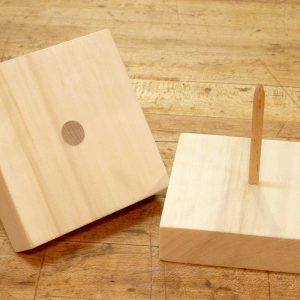
Finally came the side rails, the strength and support for the entire mattress. These rails have 1/2″ stub tenons that fit into mortises that are cut into each leg. I scribed a line around each rail end and used my square platform jig, router and a 3/4″ pattern bit to form the tenon.
As expected, the jig works great and the task was complete in no time. For a good look at this jig, pick up Popular Woodworking November 2008 (issue #172). If you don’t have a copy around the shop, you can purchase this issue from the Popular Woodworking Shop for $5.99 (Click here).
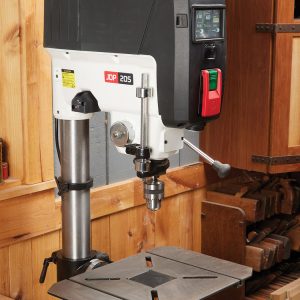
After the tenons were formed, I drilled 1-1/2″ holes on the inside of the rails , staying at a depth just shy of the show face , to accept the bed-bolt nuts. I assembled everything on top of my table saw and outfeed table, then with a long 7/16″ drill bit guided by the holes previously drilled through the legs, I drilled into the large holes to complete the bolt pathways.
I finished the build when I milled the lumber for the slats. If you notice in the photo, each of the four slats has a post that extends to the floor. That’s a king-size bed requirement due to the split box springs.

That does it for construction, but finishing the bed is another topic. Should I bore you with the aniline dye, shellac and top coat of pre-cat lacquer photos and descriptions? Let me know; and while you’re at it, if you have any questions about the construction, post those in the comments section as well and I’ll make sure to provide answers.